

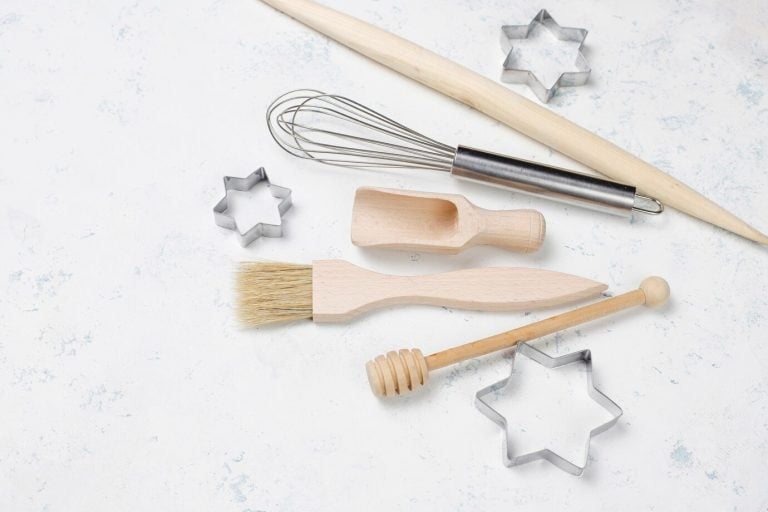

Starting a home baking business in 2025 requires more than just passion, recipes, and high quality baking tools. Behind every perfect pastry and consistent cookie batch stands an arsenal of tools that separate hobbyists from professionals.
The truth? Many home bakers fail not because their products taste bad, but because they’re fighting an uphill battle with inadequate baking tools and equipment, including a digital food scale.
As home baking businesses continue to grow in 2025, the difference between thriving and barely surviving often comes down to what’s in your kitchen. Professional bakers don’t just bake differently—they use different baking tools.
What equipment matters for following baking recipes? With countless gadgets flooding the market, which investments genuinely impact your bottom line?
Some bakers waste thousands on flashy kitchen tools while missing the fundamental tools that ensure consistency, efficiency, and scalability. Others try to save money by using consumer-grade tools that break down under professional use, costing more in the long run.
The essential baking tools we’ll cover help solve specific problems that home baking businesses face when baking cookies: inconsistent results, inefficient processes, and unnecessary waste of ingredients and time.
Whether you’re just launching your home bakery or looking to upgrade your existing setup for cookie dough, these tools represent the foundation of a professional baking operation in 2025, where quality, efficiency, and consistency aren’t just goals but requirements.
Metrobi drivers are rated 4.97/5
Trusted by local businesses for:
- Background-checked professionals
- Specialized in business deliveries
- Same drivers for consistency
- 4.97/5 average delivery rating
Must-Have Equipment for Home Baking Professionals
Professional-grade tools separate hobby bakers from business owners
Proper equipment ensures consistent product quality and efficient production
Strategic investments in high-quality tools will save time and money long-term
High-Quality Stand Mixer and Hand Mixer with Bundt Pan
A professional stand mixer, often highlighted in a bundt pan photo, is the cornerstone of any home baking business. It’s not just about convenience—it’s about production capacity and consistency. The KitchenAid Professional 600 Series and the Ankarsrum Original stand out as industry leaders in 2025, with the Professional 600 offering a 6-quart capacity ideal for small business production volumes.
When selecting a stand mixer, focus on motor power and bowl capacity. A motor rated at 500 watts or higher will handle dense doughs without straining, while a 5-6 quart bowl allows for making multiple batches simultaneously. The best mixers feature planetary mixing action, where the attachment rotates while traveling around the bowl, ensuring thorough incorporation of ingredients without manual intervention.
Attachments transform your mixer into a multi-functional tool. Beyond the standard flat beater, wire whip, and dough hook, professional bakers benefit from pasta rollers, meat grinders, and food processors that connect to the power hub. These additions, including a silicone spatula, eliminate the need for separate appliances and save valuable counter space. According to a 2024 survey by Baking Industry Research Group, bakers who invested in high-quality mixers with multiple attachments reported a 30% increase in production efficiency and a 25% reduction in physical strain.
Precision Digital Food Scale
Weight measurements in baking far outperform volume measurements for accuracy and consistency. A professional digital scale with 0.1g precision is non-negotiable for recipe development and production. The OXO Precision Scale and the Escali Primo Digital Scale represent excellent entry-level options, while the KD-8000 Baker’s Math Scale offers advanced percentage weighing features specifically designed for professional bakers.
The tare function allows you to zero out the weight of containers, making ingredient measuring seamless and reducing cleanup. Look for scales that are dishwasher safe with multiple unit conversions (grams, ounces, pounds) to adapt to any recipe format. Water-resistant models withstand the inevitable spills in a busy kitchen environment.
Professional bakers understand that even small measurement discrepancies significantly impact final products. A recipe calling for 500g of flour measured by volume could vary by as much as 50-75g depending on how the flour is scooped or packed. This 10-15% variance dramatically affects texture, rise, and moisture in the final product.
Calibration and Care
Maintain scale accuracy with regular calibration checks. Most digital scales come with calibration weights or instructions for testing with standardized objects. Keep scales away from heat sources and magnetic fields, which can affect electronic components. Clean with a damp cloth rather than submerging, and remove batteries during long periods of disuse to prevent corrosion. Replace a scale immediately if you notice inconsistent readings, as inaccurate measurements directly impact product quality and customer satisfaction.
Professional Bakeware Set
Commercial-grade baking sheets differ significantly from consumer options in materials, thickness, and durability. Aluminum conducts heat rapidly and evenly, making it ideal for most baking applications. Aluminized steel combines durability with excellent heat distribution. Silicone offers flexibility and non-stick properties but lacks the heat conductivity of metal options.
For a comprehensive starter set, include: half-sheet pans (at least 4-6), round cake pans in 6″, 8″, and 10″ diameters (2 of each size), loaf pans (4-6), muffin tins (2-3), pie plates (3-4), and cooling racks sized to fit your sheet pans. Commercial brands like Chicago Metallic, USA Pan, and Nordic Ware offer professional-quality options with extended warranties.
The difference between consumer and professional bakeware becomes evident in daily use. Commercial-grade half-sheet pans typically use 18-gauge aluminum (approximately 1.3mm thick), while budget home versions might use 22-gauge (0.8mm) or thinner. This thickness differential prevents warping at high temperatures and provides more even heat distribution. Professional cake pans with straight sides and sharp corners produce more consistent, professional-looking results than sloped home versions.
Material Selection Considerations
When choosing between non-stick and natural finish bakeware, consider both advantages and limitations. Non-stick surfaces ease release and cleaning but typically have shorter lifespans and lower maximum temperature ratings. Natural finishes (like uncoated aluminum) may require parchment paper or greasing, but maintain their performance indefinitely with proper care. Many professional bakers maintain separate sets for different purposes—non-stick for delicate pastries and natural finish for crusty breads and high-temperature baking.
Convection Oven with Steam Injection
Home baking businesses require oven capacity and features beyond standard residential models. Convection technology circulates hot air throughout the oven cavity, reducing baking time by approximately 25% and producing more evenly baked goods. Look for models with multiple racks to maximize production capacity within a limited footprint.
Steam injection capabilities transform ordinary baking results into professional-quality products. Steam applied during the first phase of baking, especially when using a sourdough starter, creates the shiny, crackly crusts characteristic of artisan breads and certain pastries. It also promotes optimal oven spring (initial rise) in bread by keeping the exterior dough supple while the interior expands. The Anova Precision Oven and Balmuda Steam Toaster Oven have brought this professional feature to compact formats suitable for small business kitchens.
Temperature accuracy and stability directly impact baking success. Most residential ovens can fluctuate 25-50°F from their set temperature. Professional and prosumer models maintain temperatures within 5-10°F of the setting. Consider installing a separate oven thermometer to verify readings and adjust accordingly. When selecting an oven, prioritize those with temperature presets, delayed start functions, and programmable multi-step baking cycles to improve workflow efficiency.
Energy Efficiency and Space Considerations
Energy consumption significantly impacts operating costs for baking businesses. New energy-efficient convection ovens typically use 30-50% less electricity than older models while maintaining superior performance. Double ovens maximize production capacity, but consider your kitchen’s electrical capacity—most require 240V circuits rather than standard 120V household outlets. Countertop commercial convection ovens offer excellent performance in limited spaces, but verify that your electrical system can support their requirements.
Temperature Control and Heat-Resistant Tools
Precision temperature measurement extends beyond oven settings to the ingredients and products themselves. An instant-read digital thermometer with a temperature range from 0°F to 450°F (-18°C to 232°C) allows you to verify doneness in everything from bread (internal temperature 190-210°F depending on type) to custards, candies, and chocolates.
Infrared thermometers measure surface temperatures without contact, ideal for checking preheated pans or monitoring cooling rates. Combination probe-and-infrared models like the ThermoPro TP30 offer versatility for different applications. For chocolate work, specialized chocolate thermometers with narrower temperature ranges provide greater precision in the critical 80-115°F working range.
Temperature directly affects fermentation rates in yeasted goods and bacterial cultures in sourdough. Ambient thermometers help maintain optimal proofing environments. For those working with temperature-sensitive products like laminated pastries, a laser thermometer helps verify butter temperature during the lamination process, ensuring it remains cold enough to create distinct layers without melting.
Beyond Basic Temperature Tools
Advanced bakeries implement environmental controls to maintain consistent conditions year-round. Proofing boxes with temperature and humidity controls create optimal environments for dough fermentation regardless of weather conditions. The Brod & Taylor Folding Proofer provides this functionality in a compact, affordable format suitable for small businesses. Temperature loggers record environmental data over time, helping identify and address inconsistencies in your production environment that might affect product quality.
Research from the Bread Bakers Guild of America shows that controlling fermentation temperature within ±2°F can improve consistency in flavor development and final texture by up to 40% compared to ambient proofing in variable conditions. This level of control transforms baking from an intuitive art to a repeatable science, essential for building a reputation for consistent quality.
While these five equipment categories form the foundation of a professional home bakery, your specific business model may require additional specialized tools. The key is investing strategically in quality equipment that directly impacts your production capabilities and final product quality. As you grow, monitor which tools are creating bottlenecks in your workflow and prioritize upgrades accordingly.
Modern Baking Gear for Startups
Smart equipment transforms amateur bakers into business owners
Technology-driven tools save time while improving product quality
Right gear selection helps control startup costs
Starting a home bakery business requires careful equipment selection. The right tools can make the difference between success and failure for new baking entrepreneurs. This section explores the essential modern equipment that helps bakery startups work efficiently while producing high-quality products.
Smart Oven with Programmable Settings
Smart ovens have changed how home bakers operate their businesses. These advanced appliances offer precise temperature control that standard ovens simply can’t match. For professional-quality baked goods, temperature accuracy within 5-10 degrees can make all the difference between perfect and mediocre results.
Modern smart ovens come with preset functions for different recipes, taking the guesswork out of baking. You can program settings for bread, cookies, cakes, and pastries, ensuring consistent results every time. This consistency is crucial when building a brand reputation for quality. The Breville Smart Oven Air and the June Oven are leading models in 2025, offering multiple cooking modes and precise temperature controls that professional bakers need.
Energy efficiency is another significant advantage of newer smart oven models. With rising energy costs, bakery startups need to control operating expenses. Energy-efficient ovens can reduce power consumption by 20-30% compared to conventional models, according to recent industry data. This efficiency adds up to substantial savings over time, especially for businesses that bake daily.
Cost vs. Benefit Analysis
When starting a bakery business, equipment costs can add up quickly. Smart ovens typically range from $800 to $3,000 depending on size and features. While this represents a significant investment, the benefits often justify the cost. A typical small bakery startup requires approximately $25,000-$50,000 in total equipment costs, with ovens being one of the largest investments.
Smart ovens reduce labor costs by freeing up time that would otherwise be spent monitoring baking progress. Their precision also decreases waste from under- or over-baked products. Many bakers report that their smart ovens paid for themselves within the first year through improved efficiency and product quality.
Advanced Rolling Pin with Thickness Guides
Consistent dough thickness directly affects baking time, texture, and overall product quality. Advanced rolling pins with thickness guides have become essential tools for professional bakers who need precision in their work. Unlike basic wooden pins, these modern tools help create uniform dough every time.
The latest models feature adjustable thickness rings or bands that act as guides, allowing you to roll dough to exact specifications, typically from 1/16″ to 3/8″ thick. This precision eliminates guesswork and creates consistent products, which is especially important when producing items for sale. Customers expect uniformity, and thickness guides help deliver this consistency, batch after batch.
Material selection for rolling pins matters significantly. Stainless steel rolling pins conduct cold, making them ideal for pastry work where keeping butter cold is crucial. Silicone-coated pins prevent sticking without additional flour, which can alter recipes and create a cleaner work process. For the most versatility, consider adjustable models like the Joseph Joseph Adjustable Rolling Pin or the Prokitchen Stainless Steel model, which combine durability with precision.
Production Efficiency Improvements
Time is money in a bakery business. Studies show that using thickness-guided rolling pins can reduce preparation time by up to 25% for dough-heavy products. This efficiency becomes crucial as order volumes increase. A bakery producing 100 cookies daily saves approximately 30 minutes of preparation time by using guided rolling pins versus traditional methods.
The consistency provided by these tools also reduces waste. When dough is rolled unevenly, thin sections may burn while thicker parts remain undercooked. This inconsistency often leads to rejected products that hurt the bottom line. Bakeries report up to 15% reduction in waste after switching to guided rolling pins, especially when it comes to dusting powdered sugar directly improving profit margins.
Silicone Baking Mats
Environmental concerns are increasingly important to consumers, making eco-friendly practices good for both the planet and business. Silicone baking mats represent a sustainable alternative to disposable parchment paper, potentially saving hundreds of dollars annually while reducing waste. A typical bakery that produces 50 items daily might use 2-3 rolls of parchment paper weekly, costing $15-20 per week or $780-1,040 annually.
Heat distribution is another key advantage of silicone mats, which are also great for preventing powdered sugar from sticking. They conduct heat evenly across the baking surface, preventing hot spots that can cause uneven baking. This property is particularly valuable for delicate items like macarons or thin cookies that require precise baking conditions. The consistent heat helps create professional results that enhance your business reputation.
Cleaning and maintenance of silicone mats is straightforward, making them practical for busy bakery operations. Most high-quality mats can be washed in warm, soapy water or placed in the dishwasher. They typically last for 2,000-3,000 uses before showing signs of wear, making them an excellent long-term investment. Popular brands like Silpat and Amazon Basics offer commercial-grade options that withstand daily use in professional settings.
Addressing Common Equipment Questions
What equipment is needed to start a small bakery, including tools for making a pie crust? Beyond the tools discussed in this section, a small bakery typically requires mixing equipment, storage solutions, display cases, and packaging materials. The essential equipment list varies based on your specific products, but most successful bakery startups invest in quality versions of the tools that directly impact their signature products.
The major equipment used in bakeries includes ovens, mixers, proofing chambers, cooling racks, and specialized tools for specific products. For home-based bakery businesses, space-efficient versions of these items are available. Multi-functional equipment that serves multiple purposes helps maximize limited space while controlling costs.
Regarding profitability, bakery businesses show varied results depending on location, product specialization, and operational efficiency. Recent industry reports indicate that small bakery businesses typically see profit margins between 5-and 20% after expenses. Equipment selection plays a significant role in these margins—efficient tools reduce labor costs and waste while improving product quality, directly enhancing profitability.
As your bakery grows, thoughtful equipment selection becomes increasingly important. The modern tools discussed here—smart ovens, advanced rolling pins, and silicone mats—provide the foundation for efficiency and quality that successful bakery businesses need. Your equipment choices should reflect your specific products and production goals while balancing initial costs against long-term benefits.
Advanced Baking Tools for 2025 Success
The right tools can make all the difference between a struggling home bakery and a thriving business. As we move further into 2025, the baking tools market continues to grow, now valued at USD 13.47 billion and projected to reach USD 20.01 billion by 2031. Let’s examine two essential advanced tools that can help your home bakery business succeed.
High-Performance Blender
A high-quality blender, similar to the stand mixer photo you might have seen, is essential for creating smooth batters and perfectly blended ingredients. Look for these features:
Multiple speed settings for different mixing needs
Strong motor (at least 1000 watts) for tackling thick batter
Ability to process both wet and dry ingredients effectively
Heat-resistant glass or BPA-free plastic containers
Easy-to-clean components that can be disassembled
The best blenders for baking businesses can handle everything from fruit purees for fillings to grinding nuts for specialty flours. Consider models with preset programs specifically designed for batter mixing.
Ingredient Organizer
An organized kitchen is a productive kitchen. Professional bakers know that having ingredients ready and accessible saves time and reduces errors.
Clear, airtight containers keep ingredients fresh longer
Stackable systems maximize limited counter and shelf space
Labels (preferably reusable) prevent mix-ups between similar ingredients
Consider pull-out drawer systems for easy access to frequently used items
Modular designs allow your storage to grow with your business
How We’ll Compare These Essential Baking Tools
To help you make the best decision for your baking business, I’ll evaluate these tools based on these key criteria:
Durability and construction quality
Value for money
Space efficiency
Time-saving potential
Maintenance requirements
Versatility for different baking needs
Ergonomics and ease of use
Brand reliability
Customer support options
Warranty terms
Home Baking Business Equipment Checklist
Understand which specialized tools will boost your baking business production
Learn about proper temperature control, measurement, and decoration essentials
Discover how specific tools can save time and improve product consistency
Essential Measurement Tools
Accurate measurement is the foundation of successful baking. Unlike home baking, where approximations might work, a baking business needs precision for consistent results that customers expect time after time.
Digital kitchen scales are non-negotiable equipment for any serious home baking business. They provide gram-level accuracy that volume measurements simply cannot match. When customers pay for your products, they expect the same taste, texture, and appearance with each purchase. Digital scales with at least 5kg capacity and 1g precision are recommended for professional use. Many bakers prefer scales with tare functionality that allows you to reset the weight between adding ingredients to the same bowl.
Measuring cups and spoons still have their place in a professional setup, but they should be used as secondary tools. You can use them for small quantities where minor variations won’t significantly affect the outcome. For key ingredients that affect structure—flour, sugar, fats—always rely on your scale. Keeping both measurement systems helps when you’re adapting recipes from different sources.
Mixing and Processing Equipment, Such as a Hand Mixer, Cookie Scoop, or Cookie Sheets
The right mixing equipment dramatically affects your production capacity and product consistency. While stand mixers were covered in previous sections, additional processing tools deserve attention.
Food processors serve multiple purposes in a baking business. They quickly pulse butter into flour for pastry, grind nuts for specialty items, and blend ingredients for smooth batters. Look for models with at least 750-watt motors and various blade attachments. For professional use, machines with heavy-duty construction and safety features become worthwhile investments.
Hand mixers, along with tools like a cookie scoop, complement stand mixers for smaller batches or quick tasks. They’re perfect for whipping cream, mixing batters, or situations where setup time for a stand mixer isn’t justified. Professional-grade hand mixers typically offer multiple speeds and durable components that withstand daily use.
Immersion blenders offer advantages for certain baking applications, particularly for fruit fillings, ganaches, and other preparations where transferring hot mixtures to traditional blenders would be impractical. Their ability to blend directly in cooking vessels saves time and reduces cleanup.
Baking Surface Options
Your baking surfaces, especially cast iron, directly impact the quality of your finished products. Professional results require professional equipment.
Silicone baking mats have become standard in professional kitchens. They provide non-stick performance without added fats, ensure even heat distribution, and reduce waste from disposable parchment. For a baking business, investing in multiple high-quality silicone mats allows for continuous production. They typically withstand temperatures up to 480°F (250°C) and can be cleaned in dishwashers.
Baking stones and steel are essential for artisan bread production. They store and transfer heat effectively, creating the crisp crusts and proper oven spring that characterize quality bread. Stones are better for gentle heat transfer, while steels conduct heat more aggressively for styles like pizza or bagels. Many professional home bakers maintain both.
Specialized pans for different products help maintain consistency. Investing in multiple identical pans allows for efficient batch production. Commercial-grade aluminum pans provide durability and even heating, while specialized forms like tartlet pans, bundt pans, and specific cake shapes allow you to expand your product range without compromising quality.
Bakers’ Thermometer
Temperature control makes the difference between professional and amateur results. Digital thermometers have become essential tools in professional baking environments.
Instant-read digital thermometers provide accuracy within seconds, allowing you to check internal temperatures of breads, custards, and other temperature-sensitive items without significant heat loss. According to baking experts, digital thermometers are highly recommended for home baking businesses due to their speed and accuracy. When selecting a thermometer, look for models with quick response times (under 3 seconds), temperature ranges suitable for both cold and hot applications, and water-resistant designs for longevity.
Different baking applications require specific temperature knowledge. Bread is properly baked when the internal temperature reaches 190-210°F (88-99°C), with higher temperatures for whole grain varieties. Custards set properly at 170-175°F (77-79°C). Candy and sugar work demands especially precise temperature control, with variations of just a few degrees resulting in completely different textures.
Temperature monitoring extends beyond finished products. Proper proofing temperatures (typically 75-80°F/24-27°C) for yeast doughs, chocolate tempering temperatures (specific to the type of chocolate), and ingredient temperatures all affect your results. A comprehensive temperature management approach leads to consistent quality that builds customer trust.
Professional Pastry Tools For Cake or Cookie Dough
The finishing touches often define professional baking. Having the right tools for decoration and fine detail work allows your products to command premium prices.
Offset spatulas come in various sizes and are essential for smooth frosting application, delicate cake batter spreading, and precise decoration. Professional bakers typically maintain several sizes, from mini offset spatulas for intricate work to larger ones for efficiently covering sheet cakes. These baking tools help create the clean, professional finishes that customers associate with quality bakeries.
Dough scrapers serve multiple functions in a baking business. Bench scrapers help portion dough evenly, transfer chopped ingredients, and clean surfaces quickly. Flexible bowl scrapers ensure you capture every bit of batter or dough from mixing bowls, reducing waste and improving consistency. Many professional bakers keep multiple scrapers in different shapes and materials for various applications.
Piping bags and tips transform basic baked goods into professional products. A complete set of professional tips allows for diverse decorations from fine writing to elaborate flowers and borders. Reusable cloth piping bags are more sustainable for business use than disposable plastic, though having both on hand provides flexibility. Couplers that allow tip changes without emptying the bag improve efficiency during complex decorating projects.
Specialized Decorating Equipment
Taking your decoration capabilities further requires specialized tools that create professional finishes.
Turntables provide the even rotation needed for smooth cake frosting and decoration. Professional models have heavy bases for stability and smooth-turning mechanisms that allow one-handed operation. This seemingly simple tool dramatically improves decoration quality and efficiency.
Fondant tools are necessary if you offer custom cake designs. A fondant roller with thickness guides ensures even application, while specialized cutters, embossers, and smoothers create professional finishes. Investing in quality fondant tools is worthwhile if decorated cakes form part of your business model.
Stencils, stamps, and texturing tools add value to baked goods with minimal effort. Custom stencils with your business logo can brand products efficiently, while general designs allow quick decoration of cookies, cakes, and bread. These tools provide high visual impact with relatively low skill requirements—valuable for busy production schedules.
Storage and Transportation Solutions
Proper storage protects product quality, while appropriate transportation equipment ensures deliveries arrive in perfect condition.
Airtight storage containers preserve freshness and protect products from contamination. Commercial-grade containers with clear labeling systems help organize inventory and reduce waste. For a growing baking business, investing in uniform, stackable containers maximizes space efficiency.
Cooling racks are critical for proper moisture balance in baked goods. Professional wire racks allow air circulation, preventing soggy bottoms on pastries and breads. Having multiple racks helps manage workflow during busy production periods by freeing up counter space while maintaining product quality.
Transportation equipment prevents damage during delivery. Cake carriers with adjustable layers, insulated bags for temperature-sensitive items, and sturdy boxes with non-slip surfaces help maintain product appearance until delivery. These investments protect your reputation for quality and reduce replacement costs from damaged products.
For home bakers offering in-person sales, portable display equipment presents your products professionally. Collapsible shelving, branded tablecloths, and clear product information displays enhance the customer experience at farmers’ markets or pop-up events.
The comprehensive equipment checklist for a home baking business extends beyond initial investments. As your business grows, strategic additions to your tool collection will expand your capabilities while improving efficiency. Regular evaluation of workflow bottlenecks helps identify which new tools will provide the greatest return on investment.
Essential Home Baking Tools For Your Business
By equipping your home baker business with these ten essential tools for 2025, you’re setting yourself up for both quality and efficiency. A good stand mixer and precision scale form the backbone of your operation, while smart ovens and eco-friendly silicone mats help you stay current with modern baking trends. Think of these tools not as expenses but as investments in your craft and business growth. Understanding which bakery items are most popular can help you tailor your product lineup to meet customer demand effectively. Insights into top-selling bakery foods reveal trends that boost sales and customer loyalty. Incorporating these insights allows your home bakery business to align offerings with what truly flies off the shelves, ensuring your efforts translate into profitable results.
Remember that starting with just the basics is perfectly fine. As your business grows, you can add more advanced tools to your kitchen. The most successful home bakers know that quality equipment leads to consistent results, something customers always return for. To truly elevate your bakery and attract more customers, understanding the variety and appeal of different cake styles is essential. Exploring the spectrum of cake types not only diversifies your offerings but can also significantly grow your business by catering to varied customer preferences. For a deeper dive into how embracing diverse cake options can boost your bakery, check out this comprehensive guide on selecting and leveraging different cake styles: learn more about different cake varieties that can grow your bakery business.
Whether you’re just starting or looking to upgrade your existing setup, focusing on these essentials will help streamline your baking process and improve your final products. The right tools won’t just make your job easier; they’ll help you deliver the professional-quality baked goods that keep customers coming back. Additionally, understanding how to appropriately portion your baked goods can significantly impact customer satisfaction and sales. Utilizing resources like a detailed sheet cake serving chart can help you plan servings efficiently, maximizing both presentation and profit. Incorporating such tools into your business strategy ensures you meet customer expectations and optimize product pricing.
Properly portioning your baked goods is just as important as baking them well. One of the best practices to enhance customer satisfaction and boost sales is by accurately serving your cakes. Using a comprehensive sheet cake serving guide can help bakers determine the ideal serving sizes and quantities for any occasion. This tool enables you to standardize portions, reduce waste, and set clear expectations for customers, all of which contribute to a more profitable and organized business operation.
What’s your next step? Choose one tool from this list that would most improve your current setup and make that your first investment. Your future customers will taste the difference. Once you have the right tools in place, understanding how to price your baked goods effectively is crucial to ensuring profitability. Implementing simple pricing strategies for baked goods can help you balance costs, labor, and market demand to maximize your earnings while keeping customers satisfied.
Equally important to selecting the right tools is mastering the art of pricing your products correctly. Developing effective methods to price baked goods profitably allows you to cover costs, pay yourself fairly, and remain competitive. By understanding cost breakdowns, market demand, and customer willingness to pay, you can set prices that support your business growth without sacrificing quality or customer loyalty.