
Are you ready to take your brewery business to the next level in 2024?
Investing in the right equipment is crucial for crafting exceptional brews and staying ahead of the competition. But with so many options available, it can be overwhelming to know where to start.
That’s where this ultimate guide comes in. We’ve done the research and compiled a comprehensive list of essential brewery equipment that every serious brew business owner needs to succeed in the ever-evolving craft beer industry.
From the heart of your own beer brewing equipment and system to the latest trends in automation and technology, we’ve got you covered. Whether you’re just starting or looking to expand your operations, this guide will help you make informed decisions and optimize your equipment costs without compromising quality.
The Global Brewery Equipment Market
The global brewery equipment market size was valued at USD 16.52 billion in 2022 and is expected to reach USD 26.21 billion by 2030, growing at a CAGR of 5.9% from 2023 to 2030
Metrobi drivers are rated 4.97/5
Trusted by local businesses for:
- Background-checked professionals
- Specialized in business deliveries
- Same drivers for consistency
- 4.97/5 average delivery rating
Essential Brewery Equipment: Setting Up Your Brewery for Success
In 2023, the craft beer industry continued to evolve and adapt to changing consumer preferences and market conditions. Breweries focused on investing in essential equipment to improve efficiency, quality, and flexibility.
Brewing System: The Heart of Your Commercial Brewing Equipment
The brewing system is the centerpiece of any brewery, and in 2023, many breweries upgraded their systems to keep up with demand and improve beer quality.
Manufacturers introduced new brewing systems with advanced features like automated control systems, integrated CIP (clean-in-place) functionality, other features and modular designs for easy expansion. These innovations helped breweries streamline their processes and reduce labor costs.
Throughout the year, breweries invested in commercial brewing equipment and systems that offered greater flexibility and customization options. Many opted for smaller, more versatile systems that allowed them to produce a wider range of beer styles and experiment with new recipes.
Packaging equipment: Bottling, canning, or kegging
As consumer preferences shifted towards convenience and sustainability, breweries adapted their packaging design strategies in 2023.
Canning continued to gain popularity among craft breweries, with many brewers investing in high-speed canning lines to keep up with demand. Cans offered better portability, light protection, and sustainability compared to bottles.
Packaging equipment manufacturers introduced new technologies to improve efficiency and reduce waste. These included automated packaging lines, low-oxygen filling systems, and smart labeling solutions that provided consumers with more information about the beer.
Supporting equipment: Chillers, Pumps, Beer Brewing Equipment and Piping
While often overlooked, supporting equipment like chillers, pumps, and piping plays a crucial role in ensuring the quality and consistency of your beer.
In 2023, many breweries upgraded their chilling systems to improve energy efficiency and temperature control. Manufacturers introduced new technologies like adiabatic cooling and variable speed compressors that helped reduce energy costs and improve beer quality.
Breweries also focused on investing in high-quality piping and pumps to ensure the smooth and efficient transfer of beer throughout the brewing process. Proper piping and pump selection helped reduce the risk of contamination and improve overall beer quality.
Looking ahead to 2024, we can expect the craft beer industry to continue evolving and adapting to changing consumer preferences and market conditions. Breweries that invest in essential equipment and stay up-to-date with the latest technologies and trends will be well-positioned for success in the coming year.
Brewery Equipment in North America
North America is expected to be the fastest-growing regional market for brewery equipment from 2023 to 2030
Metrobi is transforming beverage deliveries
Specialized solutions for beverage businesses:
- Beverage-trained drivers
- Proper handling equipment
- Peak day delivery support
- 23% average cost reduction
Brewery Equpment for Business Owners: Balancing Quality and Cost
Investing in High-Quality, Durable Equipment
When starting a brewery, it’s crucial to invest in equipment that can withstand the rigors of daily use and produce consistent, high-quality beer. While it may be tempting to cut costs by opting for cheaper equipment, this can lead to more frequent breakdowns, inconsistent product quality, and ultimately, higher costs in the long run.
High-quality, durable equipment may come with a higher upfront cost, but it offers several benefits:
Longevity: Well-built equipment lasts longer, reducing the need for frequent replacements and repairs.
Consistency: Reliable equipment ensures consistent product quality, which is essential for building a loyal customer base.
Efficiency: High-quality equipment often operates more efficiently, saving time and resources in the brewing process.
When selecting equipment, prioritize items that are critical to your brewing process and have the most significant impact on beer quality. Research reputable manufacturers and read reviews from other brewery owners to make informed decisions.
Optimizing Equipment Costs Without Compromising Quality
While investing in high-quality equipment is important, it’s also essential to optimize costs to ensure profitability. Here are some strategies for balancing quality and cost:
Purchasing used equipment can be a cost-effective and affordable way to acquire high-quality items without breaking the bank. Look for well-maintained equipment from reputable sources, such as established breweries upgrading their facilities or equipment dealers specializing in the brewing industry.
When considering used equipment, thoroughly inspect each item and assess its condition. Factor in any necessary repairs or refurbishments into your cost calculations.
Leasing or financing equipment can help spread the cost of high-quality items over time, making them more accessible for new brewery owners. This approach allows you to acquire the necessary equipment without tying up significant capital upfront.
Before entering into a lease or financing agreement, carefully review the terms and conditions, including interest rates, payment schedules, and any restrictions on equipment use or maintenance.
Focus on Essential Equipment First ( Such as Brew Kettle, Whirlpool, etc.)
When starting, focus on acquiring the essential equipment needed to produce your core beer offerings. As your brewery grows and becomes more profitable, you can invest in additional equipment to expand your product line or increase production capacity.
Essential equipment typically includes:
Brewhouse (mash tun, brew kettle, whirlpool)
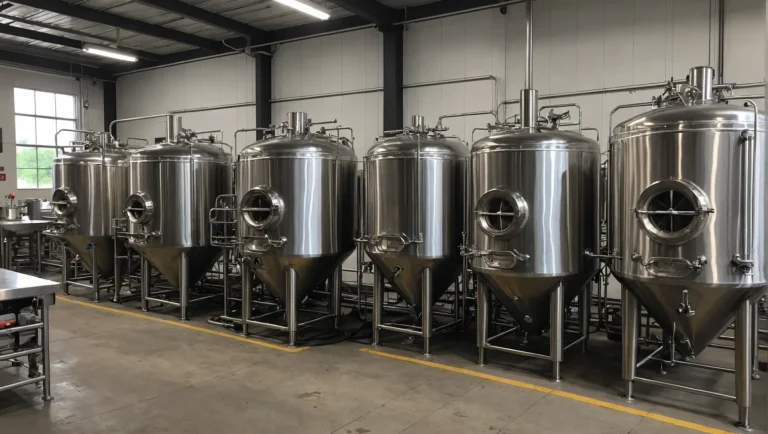
Fermentation tanks
Bright tanks
Packaging equipment (bottling or canning line)
Refrigeration system
By prioritizing essential equipment and gradually expanding as your business grows, you can effectively manage costs while ensuring product quality.
Macrobrewery Equipment
Macrobrewery equipment accounted for the largest share of the global brewery equipment market in 2022
Brewery Equipment Checklist: Ensuring Compliance and Safety
Regulatory Requirements: Federal, State, and Local Guidelines
Operating a brewery involves navigating a complex web of regulations at various levels. At the federal level, the Alcohol and Tobacco Tax and Trade Bureau (TTB) oversees the production, labeling, and advertising of alcoholic beverages. Breweries must obtain a Brewer’s Notice from the TTB and comply with their regulations, such as keeping accurate records and paying excise taxes. Some breweries also can need sanitary construction file for their work.
State and local governments also have their own set of regulations that breweries must adhere to. These may include licensing requirements, zoning laws, and environmental regulations. For example, some states require breweries to obtain a separate license for on-premises consumption, while others may have specific requirements for wastewater disposal.
To ensure compliance, it’s essential to stay informed about the latest regulatory changes and industry best practices. Consider joining industry associations, such as the Brewers Association, which provide resources and support for navigating the regulatory landscape.
Safety Equipment and Protocols: Protecting Your Staff and Customers
Brewing involves working with heavy equipment, hot liquids, and potentially hazardous chemicals. Prioritizing safety is crucial to protecting your staff and customers and maintaining a thriving business. Investing in proper safety equipment and training is not only a legal requirement but also a smart business decision.
Essential safety equipment for breweries includes:
Personal protective equipment (PPE) such as gloves, safety glasses, and steel-toed boots
Fire extinguishers and fire suppression systems
Emergency eyewash stations and showers
Proper ventilation and air filtration systems
Non-slip flooring and well-maintained equipment
In addition to equipment, establishing and enforcing safety protocols is crucial. This includes regular staff training on safe handling procedures, emergency response plans, and proper equipment maintenance. Conducting regular safety audits and drills can help identify potential hazards and ensure that everyone is prepared in case of an emergency.
By prioritizing compliance and safety, brewery owners can create a solid foundation for a successful and sustainable business. Staying informed, investing in the right equipment, and fostering a culture of safety will help ensure the long-term success of your brewery.
Your brewery’s equipment choices directly impact your brand identity and target audience
Careful planning of equipment purchases allows for seamless growth and expansion
Craft breweries must maintain a minimum of 75% ownership to retain their craft status
Defining your brewery’s niche and target audience
Your brewery’s equipment selection plays a crucial role in shaping your brand identity and attracting your target audience. The type of brewing system, fermentation vessels, and packaging equipment you choose will determine the wide selection of styles of beer you can produce and the scale at which you can operate.
When defining your brewery’s niche, consider the current market trends and the preferences of your local community. Are you aiming to create traditional, time-honored styles or innovative, experimental brews? Your equipment choices should align with your brand vision and enable you to consistently produce the beers that will set you apart from competitors.
Your target audience’s preferences will also influence your brewing equipment decisions. If you aim to attract a younger, adventurous crowd, investing in a pilot brewing system alongside your main brewhouse can allow for small-batch experimentation and limited-edition releases. On the other hand, if your focus is on traditional, easy-drinking beers, a streamlined brewing system designed for consistency and efficiency may be more suitable.
When selecting equipment, also consider the on-premise experience you want to build and offer. Will you have a taproom or brewery tour? If so, choose visually appealing, user-friendly equipment that showcases your brewing process and enhances the customer experience.
Scaling your brewery: Planning for growth and expansion
As you establish your brewery’s identity and find your target audience, it’s essential to plan for future growth and expansion. When selecting equipment, consider not only your current needs but also your long-term goals.
Investing in a modular brewing system that allows for easy capacity increases can save you time and money in the long run. For example, starting with a 10-barrel system with room to add additional fermentation tanks as demand grows can help you scale production without requiring a complete system overhaul.
When seeking outside investment or considering a partial sale to fund expansion, be mindful of this ownership requirement. Losing your craft brewery status can impact your brand identity and consumer perception, so it’s essential to carefully structure any deals to maintain majority ownership.
By carefully selecting equipment that aligns with your brand identity, target audience, and growth plans, you can establish a strong foundation for your brewery team’s success while maintaining your craft status as you scale.
Automatic Brewery Equipment
Automatic brewery equipment is expected to witness the highest growth from 2023 to 2030
The Business Side of Brewing: Profitability and Financial Planning
Understanding the Financial Landscape of the Brewing Industry
Before diving into the specifics of your brewery’s financial planning, it’s crucial to understand the overall financial landscape of the brewing industry. In recent years, the craft beer market has experienced significant growth, with the number of breweries in the United States increasing from 2,420 in 2012 to over 9,000 in 2021. However, this growth has also led to increased competition and market saturation in some areas.
Developing a Comprehensive Business Plan
A well-crafted business plan is the foundation of a successful brewery. It should outline your brewery’s goals, target market, competitive advantages, and financial projections. Key components of a brewery business plan include:
Executive summary: A concise overview of your brewery’s mission, products, target market, and financial projections
Market analysis: An assessment of the local and regional craft beer market, including consumer preferences, competition, and growth potential
Marketing and sales strategy: A detailed plan for promoting your brewery’s products, building brand awareness, and driving sales through various channels (e.g., taproom, distribution, events)
Financial projections: A three to five-year forecast of your brewery’s revenue, expenses, and cash flow, based on realistic assumptions and industry benchmarks
Maximizing Profitability Through Operational Efficiency
To achieve and maintain profitability, breweries must focus on optimizing their operations and minimizing costs without compromising quality. Some strategies for maximizing operational efficiency include:
Invest in equipment and technology that can help streamline your brewing processes, such as automated brewing systems, inventory management software, and quality control tools. By reducing manual labor and minimizing waste, you can lower your production costs and improve consistency.
Develop relationships with reliable suppliers of raw materials (e.g., malt, hops, yeast) and equipment to ensure a steady supply chain and competitive pricing. Consider negotiating long-term contracts or bulk purchases to secure supplies on favorable terms and protect against price fluctuations.
Implement an inventory management system to track your raw materials, finished products, and packaging supplies. By monitoring stock levels and usage rates, you can optimize your ordering and production schedules to minimize waste and avoid stockouts or overstocking.
By understanding the financial landscape, developing a comprehensive business plan, and optimizing operational efficiency, experienced brewer and brewery owners can position themselves for long-term profitability and success in an increasingly competitive market.
The U.S. Brewing Equipment Market
The U.S. brewery equipment market is projected to reach USD 7.5 billion by 2030
Gearing Up for Success: Your Brewery’s Future Awaits
As you embark on your brewery journey, remember that the right equipment is essential for crafting quality brews and building a thriving business. From your brewing system to packaging and safety equipment, each choice you make will shape your brewery’s identity and success. Discover how to select the necessary brewing equipment and supplies to elevate your brewery’s production and efficiency.
By investing in high-quality, versatile equipment that aligns with your brand strategy and target audience, you’ll be well-positioned to adapt to industry trends and consumer demands. Whether you’re focusing on traditional styles or venturing into other flavors and experimental brews, having the right tools will help you create a product that stands out in a competitive market.
As you navigate the financial landscape of the brewing industry, remember that maximizing profitability goes hand-in-hand with operational efficiency. By developing a comprehensive business plan and making smart equipment choices, you’ll lay the foundation for a successful and sustainable brewery.
Are you ready to turn your passion for brewing into a thriving business? With the right equipment and a solid plan in place, the future of your brewery is bright. Start building your dream today, one side project and carefully chosen piece of equipment at a time.
The Growth of Brewery Equipment
The global brewery equipment market is expected to grow at a CAGR of 5.6% from 2023 to 2032, reaching USD 28.38 billion by 2032