


Starting and managing an online store is simpler than ever with the right ecommerce website builder. These platforms provide essential tools to build your own e-commerce website, from inventory management and payment processing to SEO and marketing features. Whether you’re launching a new business or expanding an established one, the best e-commerce website builders offer user-friendly interfaces, customizable templates, and various payment gateways to streamline your online store setup.
Choosing the right ecommerce website builder means finding a solution that fits your needs, whether you’re selling physical products, digital goods, or services. With options ranging from free plans to comprehensive paid features, these platforms help you create a beautiful online store, integrate with social media, and optimize for search engines. Discover the best ecommerce website builders to find the perfect fit for your online business and start selling with confidence.
Boost customer satisfaction with just a few clicks
Most-Loved Features:
- On-demand drivers
- Real-time GPS tracking
- Delivery confirmation photos
- Over 50% of customers report a smoother delivery experience
How an Ecommerce Website Builder Enhances Your Online Store
Selecting the right e-commerce website builder can transform the way you manage and sell online, and grow your online business. Here’s how these platforms can help streamline your operations and boost your success:
Streamlines Store Setup and Management
E-commerce website builders simplify the process of launching and maintaining an online store. These platforms offer intuitive interfaces and pre-designed templates, enabling you to set up your e-commerce website quickly. With built-in e-commerce features such as inventory management, payment gateways, and shipping integrations, you can efficiently handle physical and digital products from day one. This ease of setup is perfect for new business owners and established businesses alike, ensuring you can start selling online with minimal hassle. Explore how incorporating live chat for e-commerce on your site can further streamline customer interaction and potentially enhance your digital storefront’s profitability.
Provides Customization and Flexibility
A standout e-commerce website builder gives you the freedom to create a store that aligns with your brand and customer expectations. You can personalize your online store with custom domains, attractive templates, and advanced design options. Whether you’re using a site builder to enhance an existing WordPress site or starting your ecommerce sites from scratch, these platforms offer various customization tools to help you build a beautiful and functional online store. From checkout page customization to advanced SEO tools, you can tailor every aspect of your e-commerce site to suit your needs.
Enhances SEO and Marketing Opportunities
Effective search engine optimization (SEO) is crucial for driving traffic to your e-commerce site. The best e-commerce website builders come equipped with built-in SEO tools that allow you to manage title tags, meta descriptions, and URLs directly from the dashboard. Additionally, marketing features such as social media integrations, email marketing tools, and abandoned cart recovery are often included, helping you attract customers and improve sales. With these built-in tools, you can efficiently market your products and increase your online visibility. Discover top ecommerce marketing tactics to attract more customers and enhance your revenue, using strategies highly recommended for successful online retailing.
Offers Cost-Effective Solutions
Many e-commerce website builders provide flexible pricing options, including free plans and tiered paid plans, allowing you to choose a solution that fits your budget. This cost-effectiveness is ideal for businesses looking to minimize upfront expenses while still gaining access to essential e-commerce features. By offering a free ecommerce website plan or affordable paid options, these platforms make it easier for you to start and grow your online business without a significant financial commitment.
Delivers Robust Support and Integration
Having access to reliable customer support and seamless integrations is vital for maintaining a successful online store. E-commerce website builders typically offer various support channels, including live chat, phone, and email, ensuring that you can get help when needed. Additionally, many your own ecommerce website platforms provide integration with third-party apps and various payment gateways like Apple Pay and Google Pay, enhancing your store’s functionality and allowing you to accept payments from a wide range of customers.
By leveraging the capabilities of a top e-commerce website builder, you can streamline store management, enhance customization, improve SEO, and access cost-effective solutions. These platforms are designed to support your e-commerce business at every stage, helping you build a successful online presence and reach your business goals.
10 Best Ecommerce Website Builders
Shopify
WooCommerce
Wix
Squarespace
BigCommerce
Square Online
GoDaddy
Weebly
WordPress.com
Shift4Shop
1. Shopify
Rating: 4.8/5
Best for: Comprehensive e-commerce functionality with a robust app marketplace and seamless integration options.

Our Take
Shopify is a leading e-commerce platform renowned for its extensive features and user-friendly design. It’s highly regarded for offering a comprehensive suite of tools that cater to businesses of all sizes. Shopify’s ease of use, combined with its powerful integrations and scalability, makes it a top choice for both new and established ecommerce businesses. Its ability to support various business models, along with 24/7 customer support, ensures that users have access to the help they need whenever they encounter issues.
Key Features
Shopify provides a streamlined interface that simplifies store management, ideal for users with varying levels of technical expertise. Key features include a vast app marketplace for additional functionalities, mobile-optimized themes, and built-in tools for SEO, social media integration, and multi-channel selling. Shopify also offers comprehensive reporting and analytics tools, enabling users to track sales performance and customer behavior effectively. The platform’s scalability supports growth, making it a reliable choice for businesses looking to expand.
Pricing Plans
Basic Plan: $39/month
Shopify Plan: $105/month
Advanced Plan: $399/month
Pricing varies based on features such as reporting capabilities, shipping options, and advanced functionalities.
Credibility
Shopify’s strong reputation is supported by a vast user base and numerous positive reviews. It is recognized for its reliability, performance, and strong customer support.
Who should choose it?
Shopify is ideal for businesses seeking a comprehensive e-commerce solution with extensive customization options and a broad range of integrations. It’s suitable for both small startups and large enterprises aiming for scalability.
Pros & Cons
Pros:
Extensive feature set and scalability.
User-friendly with 24/7 customer support.
High level of customization through apps and integrations.
Cons:
Higher cost compared to some other platforms.
Additional transaction fees if not using Shopify Payments.
2. WooCommerce
Rating: 4.6/5
Best for: Deep customization and integration for existing WordPress sites.
Our Take
WooCommerce is a versatile and highly customizable e-commerce plugin designed for WordPress users. It excels in flexibility, allowing users to tailor their online stores to specific needs and preferences. As an open-source solution, WooCommerce provides extensive customization through a range of plugins and themes, making it a powerful option for those familiar with WordPress. Its integration capabilities and scalability make it suitable for businesses that require a more tailored e-commerce solution.
Key Features
WooCommerce integrates seamlessly with WordPress, leveraging its extensive ecosystem. Users can customize their stores with a wide variety of plugins and themes. The platform supports multiple payment gateways, flexible shipping options, and advanced inventory management. While the core plugin is free, many advanced features and premium extensions come at an additional cost. WooCommerce’s flexibility allows for significant customization, making it ideal for businesses that need specific functionalities.
Pricing Plans
Base Plugin: Free
Paid Extensions: Vary based on functionality and premium themes.
Costs can be highly variable depending on the extensions and features selected, allowing for a tailored solution based on business needs.
Credibility
WooCommerce is supported by a large community of users and developers, enhancing its credibility. Its integration with WordPress adds to its reputation as a reliable and customizable e-commerce platform.
Who should choose it?
WooCommerce is best for users who are comfortable with WordPress and require a customizable e-commerce solution. It’s ideal for businesses that need specific features and prefer the flexibility of an open-source platform.
Pros & Cons
Pros:
Highly customizable with numerous plugins and themes.
Free core plugin with optional paid extensions.
Strong integration with WordPress.
Cons:
Requires technical knowledge for advanced customization.
Costs can accumulate with additional extensions and hosting fees.
3. Wix
Rating: 4.4/5
Best for: Easy-to-use drag-and-drop website builder with integrated e-commerce features.
Our Take
Wix is known for its intuitive drag-and-drop website builder and visually appealing design options. It offers a straightforward way to create an online store without needing advanced technical skills. Wix’s emphasis on design and ease of use makes it a popular choice for users who want to build a professional-looking ecommerce site quickly. Its range of templates and e-commerce features cater well to small to medium-sized businesses.
Key Features
Wix’s drag-and-drop editor allows users to design their online stores with ease. The platform offers a variety of design templates that are mobile-responsive and professionally designed. Wix includes essential e-commerce tools such as product management, payment processing, and inventory control. Additionally, built-in SEO tools and social media integrations help enhance store visibility and performance. Wix’s app market provides additional functionalities to further customize and optimize the online store.
Pricing Plans
Business Basic: $27/month
Business Unlimited: $32/month
Business VIP: $59/month
Pricing plans vary based on the level of e-commerce functionality and additional features required.
Credibility
Wix is well-regarded for its user-friendly interface and design capabilities. It has garnered positive reviews for its ease of use and flexibility, making it a trusted choice for many users.
Who should choose it?
Wix is ideal for individuals and small to medium-sized businesses looking for an easy-to-use platform with strong design capabilities. It’s suitable for those who want a visually appealing online store with minimal effort.
Pros & Cons
Pros:
User-friendly drag-and-drop editor.
Attractive and responsive design templates.
Good customer support and app market.
Cons:
Limited scalability for larger businesses.
Transaction fees on lower-tier plans can affect overall costs.
4. Squarespace
Rating: 4.5/5
Best for: High-quality design and aesthetics combined with e-commerce functionality.

Our Take
Squarespace is celebrated for its stunning design templates and strong visual appeal. It is an excellent choice for users who want their online stores to stand out aesthetically. Squarespace combines top-notch design with robust e-commerce features, making it a solid choice for businesses that prioritize a beautiful and functional online presence. While it may not offer as many advanced e-commerce features as some competitors, its design capabilities and user experience make it a popular option.
Key Features
Squarespace offers a variety of high-quality, design-oriented templates known for their modern and sleek appearance. The platform includes essential e-commerce features such as product management, inventory tracking, and integrated payment processing. Squarespace also provides built-in SEO tools, analytics, and 24/7 customer support. The platform’s focus on design and user experience ensures that users can create visually appealing and effective online stores with ease. For enhanced user experience, consider adding a Squarespace back to top button.
Pricing Plans
-
Personal: $23/month
-
Business: $28/month
-
Basic Commerce: $33/month
-
Advanced Commerce: $65/month
Squarespace’s pricing plans accommodate different levels of e-commerce functionality and design features.
Credibility
Squarespace is well-regarded for its design capabilities and ease of use. It has received positive reviews for its high-quality templates and strong customer support, establishing it as a reputable choice for design-focused users.
Who should choose it?
Squarespace is best for users who prioritize design and aesthetics and seek an easy-to-manage e-commerce solution. It is suitable for businesses and individuals who want a visually impressive online store with integrated e-commerce features.
Pros & Cons
Pros:
-
Excellent design templates with a focus on aesthetics.
-
User-friendly interface with built-in e-commerce features.
-
Strong customer support and analytics tools.
Cons:
-
Limited third-party integrations compared to other platforms.
-
Higher pricing for advanced features.
5. BigCommerce
Rating: 4.7/5
Best for: Advanced e-commerce features and scalability for growing businesses.
Our Take
BigCommerce is known for its feature-rich platform and scalability, making it ideal for businesses with significant growth potential. It offers a wide array of advanced e-commerce tools and customization options, providing a robust solution for larger enterprises and fast-growing businesses. BigCommerce’s emphasis on scalability and advanced ecommerce features makes it a strong choice for users who need a comprehensive and flexible e-commerce solution.
Key Features
BigCommerce provides a wide range of advanced e-commerce features, including built-in tools for SEO, marketing, and multi-channel selling. The platform supports various payment gateways and offers flexible shipping options. Its extensive customization capabilities allow users to tailor their ecommerce stores to specific needs. BigCommerce also includes robust analytics and reporting tools to track performance and drive business decisions. Its scalability supports growth, making it suitable for businesses planning to expand.
Pricing Plans
Standard Plan: $39/month
Plus Plan: $105/month
Pro Plan: $399/month
Enterprise: Custom pricing
Pricing plans offer various levels of features and support, catering to different business needs and sizes.
Credibility
BigCommerce has earned a solid reputation for its advanced features and scalability. It is recognized for its comprehensive toolset and strong support, making it a credible choice for growing businesses.
Who should choose it?
BigCommerce is ideal for businesses that require advanced e-commerce features and scalability. It is well-suited for enterprises and fast-growing businesses that need a comprehensive solution to support their expansion.
Pros & Cons
Pros:
Extensive advanced e-commerce features and customization options.
Strong scalability for growing businesses.
Comprehensive reporting and analytics tools.
Cons:
Higher cost compared to some other platforms.
Can be complex to set up and manage for smaller businesses.
6. Square Online
Rating: 4.3/5
Best for: Integration with Square’s payment processing and POS systems.
Our Take
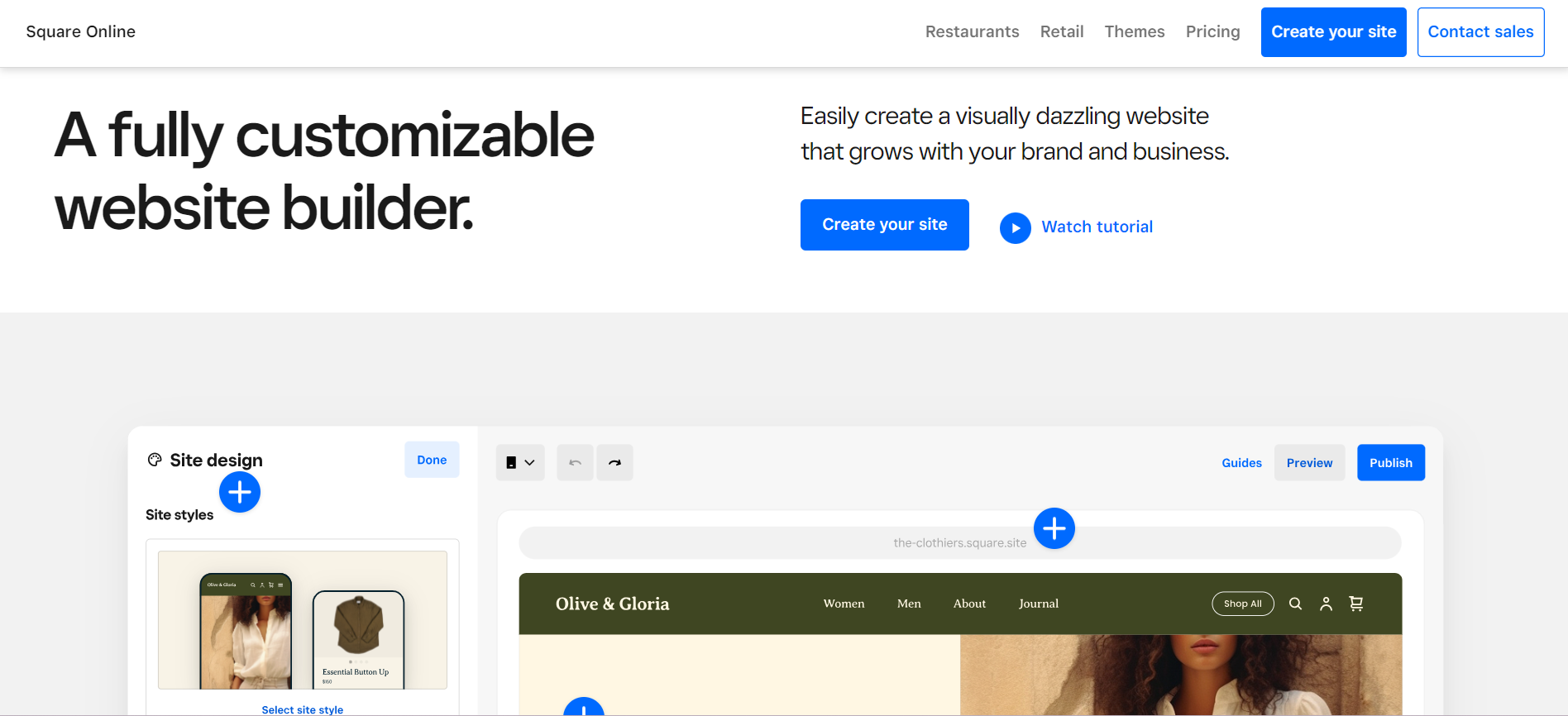
Square Online is a practical choice for businesses already using Square’s payment processing and point-of-sale (POS) systems. It offers seamless integration with Square’s suite of tools, providing a unified solution for managing online and in-store sales. Square Online’s ease of use and integration capabilities make it a convenient option for businesses looking to streamline their operations across different sales channels.
Key Features
Square Online integrates seamlessly with Square’s payment processing and POS systems, allowing for unified management of online and in-store sales. The platform includes essential e-commerce features such as product management, payment processing, and inventory control. Square Online also offers built-in SEO tools, social media integration, and a variety of design templates. Users benefit from easy synchronization with Square’s other tools, which simplifies financial management and reporting.
Pricing Plans
Free Plan: $0/month (with Square’s transaction fees)
Basic Plan: $16/month
Plus Plan: $29/month
Premium Plan: $79/month
Pricing varies based on features and transaction fees, with a free plan available for those who use Square’s payment processing.
Credibility
Square Online is recognized for its integration with Square’s payment processing and POS systems. It is a reliable choice for businesses that already use Square’s tools, enhancing its credibility within that ecosystem.
Who should choose it?
Square Online is best for businesses already using Square’s payment processing and POS systems, looking for a seamless integration for managing online and in-store sales.
Pros & Cons
Pros:
Seamless integration with Square’s payment processing and POS systems.
User-friendly with essential e-commerce features.
Flexible pricing options, including a free plan.
Cons:
Limited advanced e-commerce features compared to other platforms.
Transaction fees apply on lower-tier plans.
7. GoDaddy
Rating: 4.2/5
Best for: Quick and easy website setup with integrated e-commerce features.
Our Take
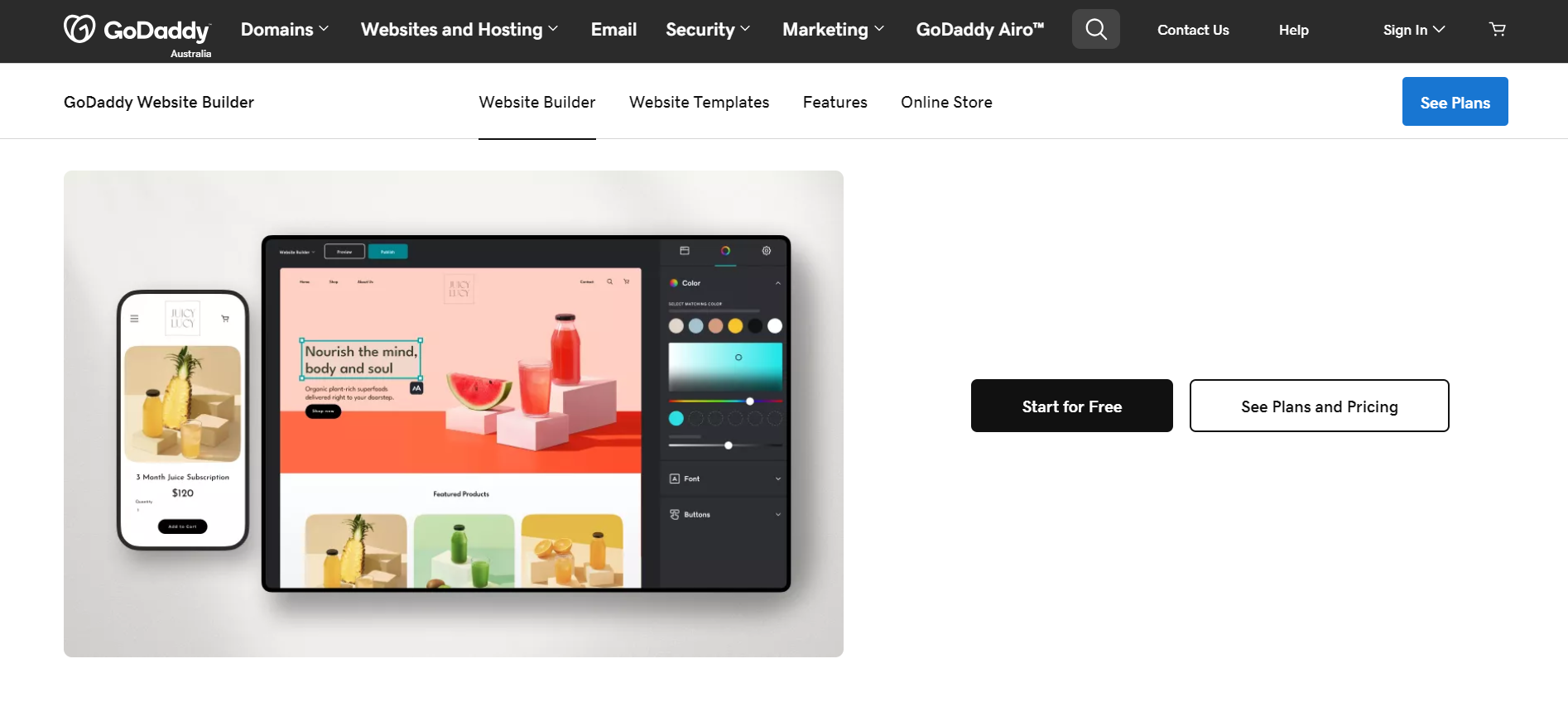
GoDaddy is known for its simplicity and speed in setting up websites, including e-commerce stores. It is a good choice for users who need to get their online store up and running quickly without extensive customization. GoDaddy’s integrated e-commerce features and straightforward interface make it an accessible option for small businesses and individuals seeking a hassle-free solution.
Key Features
GoDaddy provides a user-friendly platform for setting up online stores with minimal effort. Its e-commerce features include product management, payment processing, and basic inventory control. GoDaddy also offers a range of design templates and built-in SEO tools to help enhance online visibility. The platform’s integration with other GoDaddy services, such as domain registration and hosting, simplifies the overall website management process.
Pricing Plans
Basic Plan: $24.99/month
Standard Plan: $29.99/month
Premium Plan: $44.99/month
Pricing plans offer various levels of e-commerce functionality and support for selling services, catering to different needs and budgets.
Credibility
GoDaddy is well-known for its domain registration and hosting services. Its reputation for simplicity and ease of use extends to its e-commerce offerings, making it a reliable choice for quick website setups.
Who should choose it?
GoDaddy is ideal for users seeking a quick and easy way to set up an online store with minimal customization. It is suitable for small businesses with ecommerce websites and individuals who need a straightforward e-commerce solution.
Pros & Cons
Pros:
Fast and easy website setup.
Integrated with other GoDaddy services.
User-friendly interface with essential e-commerce features.
Cons:
Limited advanced e-commerce capabilities.
Less flexibility in design and customization.
8. Weebly
Rating: 4.1/5
Best for: Budget-friendly e-commerce solutions with a simple drag-and-drop builder.

Our Take
Weebly is recognized for its affordability and ease of use, making it a solid choice for users seeking a budget-friendly e-commerce solution. Its drag-and-drop builder simplifies the process of creating an online store, making it accessible for users with limited technical skills. While it may not offer as many advanced features as some competitors, Weebly’s simplicity and cost-effectiveness make it a popular option for small businesses.
Key Features
Weebly offers a drag-and-drop website builder that makes it easy to design and set up an online store. Key features include basic e-commerce tools for product management, payment processing, and inventory tracking. Weebly also provides built-in SEO tools, social media integrations, and a variety of design templates. The platform’s pricing is competitive, making it a cost-effective choice for users looking to start an online store without significant investment.
Pricing Plans
Personal Plan: $6/month
Professional Plan: $12/month
Performance Plan: $26/month
Pricing plans vary based on e-commerce functionality and additional features.
Credibility
Weebly is known for its simplicity and affordability. It has received positive reviews for its ease of use and value for money, establishing it as a credible choice for budget-conscious users.
Who should choose it?
Weebly is ideal for small businesses and individuals seeking an affordable and easy-to-use e-commerce solution. It is suitable for users who want a straightforward platform with minimal setup and customization.
Pros & Cons
Pros:
Budget-friendly pricing plans.
User-friendly drag-and-drop builder.
Basic e-commerce features included.
Cons:
Limited advanced e-commerce capabilities.
Less flexibility in design compared to some competitors.
9. WordPress.com
Rating: 4.3/5
Best for: Integrated e-commerce with WordPress for a flexible and customizable online store.

Our Take
WordPress.com provides a flexible platform for creating an e-commerce store integrated with the WordPress ecosystem. It is particularly useful for users who want to leverage WordPress’s extensive customization options while adding e-commerce functionality. While it requires some technical knowledge to set up and manage, WordPress.com offers significant flexibility and control over store design and functionality.
Key Features
WordPress.com offers integration with WooCommerce, allowing users to add e-commerce functionality to their WordPress sites. The platform provides extensive customization options through themes and plugins, enabling users to create a unique online store. It supports various payment gateways, shipping options, and inventory management tools. Users can also benefit from built-in SEO tools and analytics. WordPress.com’s flexibility allows for a highly tailored e-commerce experience.
Pricing Plans
Personal Plan: $4/month
Premium Plan: $8/month
Business Plan: $25/month
eCommerce Plan: $45/month
Pricing plans vary based on the level of e-commerce functionality and additional features.
Credibility
WordPress.com is a well-established platform with a strong reputation for flexibility and customization. Its integration with WooCommerce adds to its credibility as a reliable e-commerce solution.
Who should choose it?
WordPress.com is best for users who want to integrate e-commerce functionality with the WordPress platform and require a high level of customization and control over their online store.
Pros & Cons
Pros:
High level of customization and flexibility.
Integration with WooCommerce for e-commerce functionality.
Extensive theme and plugin options.
Cons:
Requires some technical knowledge for setup and management.
Higher cost for advanced e-commerce features.
10. Shift4Shop
Rating: 4.4/5
Best for: Comprehensive e-commerce features with a focus on SEO and marketing tools.

Our Take
Shift4Shop (formerly 3dcart) is known for its extensive e-commerce features and strong focus on SEO and marketing tools. It offers a comprehensive platform with a wide range of built-in features that cater to various business needs. Shift4Shop’s emphasis on SEO and marketing makes it a valuable option for businesses aiming to enhance their online visibility and drive sales.
Key Features
Shift4Shop provides a robust set of e-commerce tools, including product management, inventory control, and payment processing. The platform’s SEO tools and marketing features are designed to help users improve their online visibility and drive traffic to their stores. Shift4Shop also offers customizable design options, built-in analytics, and multi-channel selling capabilities. Its comprehensive feature set supports various business models and growth strategies.
Pricing Plans
Free Plan: $0/month (with Shift4 Payments)
Basic Plan: $29/month
Plus Plan: $79/month
Pro Plan: $229/month
Pricing plans offer different levels of features and support, catering to various business needs and sizes.
Credibility
Shift4Shop has a strong reputation for its comprehensive e-commerce features and focus on SEO and marketing. It is recognized for providing a robust platform with extensive built-in tools.
Who should choose it?
Shift4Shop is ideal for businesses seeking a comprehensive e-commerce platform with strong SEO and marketing tools. It is suitable for users who need a feature-rich solution to enhance their business online visibility and drive sales.
Pros & Cons
Pros:
Extensive e-commerce features with a focus on SEO and marketing.
Customizable design options and built-in analytics.
Free plan available with Shift4 Payments.
Cons:
Can be complex to set up and manage for beginners.
Higher-tier plans may be costly for smaller businesses.
How to Choose the Best Online Store Builder
Selecting the best online store builder is crucial for successfully launching and managing your e-commerce business. With so many options available, it’s essential to identify which e-commerce website builder aligns best with your needs. Here’s a guide to help you choose the right platform for your online store:
Assess Your Business Needs
Before choosing an e-commerce website builder, assess your specific business requirements. Determine whether you need a full e-commerce solution with extensive features or a more straightforward platform for a basic online store. Consider whether you’re selling physical products, digital goods, or services, as different platforms cater to different business models. For example, if you have an existing WordPress site, look for a full ecommerce site builder that integrates seamlessly with WordPress. Identify the right website builder for your ecommerce project to enhance user experience and boost your online presence.
Evaluate Customization and Design Options
A key factor in selecting the best ecommerce website builder is the level of customization it offers. The best e-commerce website builders provide various design templates and customization tools to help you create a beautiful online store. Look for platforms that allow you to use a custom domain, customize the checkout page, and integrate with social media sites. Ensure that the builder supports features such as inventory management, checkout customization, and responsive design for mobile devices. Discover the top ecommerce advertising tactics that can enhance your online store’s visibility and increase conversions, including the most successful strategies used by leading ecommerce sites.
Consider Built-in Features and Integrations
Different e-commerce website builders offer varying levels of built-in features and integrations. Evaluate which tools are essential for your online business, such as SEO tools, email marketing features, and customer relationship management (CRM) capabilities. Additionally, check for integrations with third-party apps, payment gateways (like Apple Pay and Google Pay), and shipping solutions. Platforms with robust built-in tools and integration options can streamline your operations and enhance your e-commerce store’s functionality.
Review Pricing Plans and Costs
Pricing is a significant consideration when choosing an online store builder. Many top ecommerce platforms offer free plans or trial periods, allowing you to test their features before committing. Compare the pricing plans of different e-commerce website builders to find one that fits your budget and offers the features you need. Be aware of any transaction fees, payment gateway fees, and additional costs associated with higher-tier plans. Ensure that the pricing aligns with your business’s financial goals and growth plans.
Examine Support and Customer Service
Reliable customer support is crucial for maintaining your online store and addressing any issues that may arise. Look for e-commerce website builders that offer robust support options, including live chat, email, and phone support. Good customer service can help you navigate technical challenges and ensure that your own ecommerce store runs smoothly. Additionally, check for resources such as tutorials, forums, and knowledge bases to assist you in managing your e-commerce site.
Prioritize SEO and Marketing Features
Effective search engine optimization (SEO) and marketing tools are vital for driving traffic to your e-commerce site. Choose a platform that includes built-in SEO features, such as the ability to edit title tags and meta descriptions. Marketing tools like abandoned cart recovery, email marketing, and social media integration can help you engage with customers and boost sales. The best e-commerce website builders provide comprehensive marketing features to support your business’s growth and visibility. Ready to elevate your online store’s growth? Learn how to leverage email marketing for e-commerce through our expert strategies and insights.
By considering these factors—business needs, customization options, built-in features, pricing, support, and SEO capabilities—you can make an informed decision and choose the best online store builder for your e-commerce business. Whether you’re starting a new ecommerce business venture or expanding an existing online store, the right platform will help you create a successful and effective e-commerce website.
Frequently Asked Questions About Choosing an Online Store Builder
Q1: What should I look for in the best e-commerce website builder for a startup?
When selecting an e-commerce website builder for a startup, consider platforms that offer user-friendly interfaces and comprehensive support. Builders like Shopify and Square Online are popular among new businesses due to their ease of use and extensive features. Look for built-in tools that simplify the setup process, such as drag-and-drop editors, customizable templates, and integrations with essential services like payment gateways and shipping solutions. Additionally, check if the builder provides a free plan or trial, allowing you to test the platform before making a financial commitment.
Q2: How can I determine the best e-commerce website builder for my specific business needs?
To find the best e-commerce website builder for your business, start by evaluating your specific needs. If you’re managing a large inventory or require advanced customization, platforms like BigCommerce or Magento may be ideal. For businesses focused on ease of use and quick setup, Shopify or Wix might be better suited. Consider factors such as your budget, required features (e.g., SEO tools, inventory management), and the ability to handle physical or digital products. Also, assess whether the platform supports multiple payment gateways and provides robust customer support. If your goal is also to enhance your online sales through targeted strategies, consider partnering with a top ecommerce marketing agency that specializes in leveraging the capabilities of these platforms.
Q3: What are the typical costs associated with launching an online store?
The cost of launching an online store can vary based on several factors, including the chosen e-commerce website builder, domain name, hosting services, and additional features. Basic plans for popular site builders like Shopify and Squarespace start around $25-$39 per month. If you’re using a free builder like Square Online, you might only need to budget for payment processing fees and additional app integrations. For platforms like WooCommerce, while the software itself is free, you’ll need to budget for hosting, domain registration, and potential plugin costs. Consider these expenses to get a comprehensive view of your total startup costs.
Q4: How important are SEO tools in an e-commerce website builder?
SEO tools are crucial in an e-commerce website builder because they help improve your store’s visibility on search engines. A good e-commerce site builder should provide built-in SEO features, such as customizable title tags, meta descriptions, and URL structures. These tools are essential for driving organic traffic to your online store. Builders like Shopify and BigCommerce offer robust SEO capabilities, which can help optimize your store’s content and product listings, ultimately contributing to better search engine rankings and increased sales.
Q5: What kind of support should I expect from an e-commerce website builder?
Support options can vary among e-commerce website builders, but most offer a range of services to assist you. Look for platforms that provide multiple support channels, including live chat, email, and phone support. Builders like Shopify and BigCommerce are known for their comprehensive customer support, offering assistance with technical issues, troubleshooting, and general inquiries. Additionally, consider whether the platform provides access to a knowledge base, tutorials, and community forums to help you resolve issues and optimize your online store.
Wrapping Up: Choosing Your Ideal E-Commerce Builder
Choosing the right ecommerce platform is crucial for successfully launching and managing your online store. Whether you’re a new business owner or an established entrepreneur, selecting the best e-commerce website builder can streamline the process of starting an online business and help you effectively sell physical or digital products. From powerful platforms like Shopify and BigCommerce to user-friendly options like Square Online and Wix, each e-commerce website builder offers unique features tailored to different needs.
Consider factors such as ease of use, customization options, SEO tools, and payment gateways when evaluating your various ecommerce tools options. By understanding these elements and how they align with your business goals, you’ll be better positioned to build a beautiful and functional online store. Whether you’re aiming for a robust, full e-commerce solution or a simple setup to start selling online, the right e-commerce website builder can make all the difference in managing your store efficiently and growing your business successfully.