
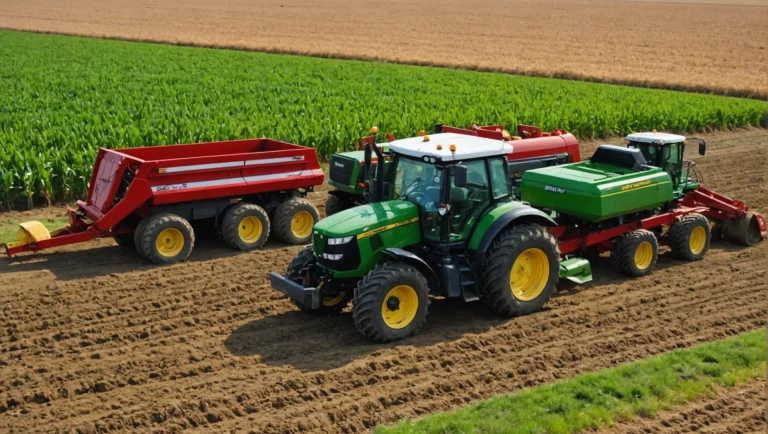

Deciding between lease vs buy farm equipment can dramatically affect your farm’s efficiency and bottom line.
The crux? Identifying your specific needs and understanding the financial nuances.
This guide walks you through assessing your current equipment, the cost benefits of leasing versus buying, and the tax implications.
You’ll gain insights into making a well-informed choice tailored for your farm’s future.
Ready to optimize your investment and enhance your farm’s productivity? Welcome to the guide that might just change your farming game.
Save 80% of delivery management time
We handle everything:
- Dedicated operations manager
- Real-time tracking dashboard
- Automated customer notifications
- Urgent issue resolution
Lease vs Buy Farm Equipment Step 1: Assessing Your Farm Equipment Needs
Determine the state of your current equipment.
Match your equipment with your farming objectives.
Understand the benefits of leasing over buying.
Evaluate Your Current Equipment
Create an Inventory List
Start by noting down every piece of equipment. This isn’t just about tractors and combines. Think of seeders, sprayers, and irrigation systems too. Each item counts. This list will help you understand what you currently own and its specific role on your farm.
Inspect Each Machine
Check the age and condition of every machine. Machines that are old may need more repairs and can break down often. Machines that need a lot of fixing might cost more in the long run. Think of how much you pay for repairs against investing in newer equipment. Maximize the efficiency of your agricultural operations by adhering to these crucial tips on maintaining farm machinery, ensuring every piece of equipment remains in optimal condition.
Identify Pressing Needs
Recognize which equipment is crucial and may need a quick replacement. Sometimes machinery just doesn’t do the job anymore. Be clear about which machines are essential for the upcoming farming season. This will help you prioritize which equipment needs a refresh.
Define Your Farming Requirements
Align Equipment with Goals
Get a clear understanding of your farming goals. What are you growing? What scale are you aiming for? Different crops and farming scales need different machines. Make sure your machines fit your specific farming intentions.
Consider Technology and Functionality
Think about the technology you need. Do you need GPS-guided machines? Newer tools can offer better precision and efficiency. This can save time and reduce crop waste. Older machines may not be as technologically advanced.
Estimate Size and Quantity
Size and quantity of equipment are crucial. Small farms might not need big combines. However large farms may need multiple machines working at once to meet deadlines. Carefully evaluate the labor force and field size to decide what size equipment and how many are necessary. Discover the top 10 crucial pieces of agricultural machinery that are indispensable for maximizing productivity on your farm.
Advantages of Leasing Over Buying
Lower Initial Cost
A third significant cost advantage of leasing is the lower initial investment. Buying can tie up capital. Leasing spreads costs over the term, making cash flow easier. This is especially helpful in unpredictable seasons or when cash is tight.
Stay Updated on Machinery
Leasing often provides access to the latest machines. Newer models come with better technology, improving productivity. This avoids the risk of owning old technology, which may soon be obsolete. Keep up with advancements without the burden of resale.
Flexibility
Leasing allows flexibility. You aren’t tied down to a single machine for its entire lifespan. At the lease’s end, you can upgrade ag equipment to meet new farm needs or switch to different equipment if your crop or production changes.
For further understanding of the benefits of leasing, look at the Agricultural Equipment Leasing Review. They provide case studies and insights into leasing trends. The book Farm Machinery Economics by C. Neilson dives deep into leasing versus buying economics.
Each farm is unique, and what works for one may not suit another. Make sure to deeply understand your own circumstances and gear decisions towards that.
Metrobi is transforming farm deliveries
Specialized solutions for farm businesses:
- Farm-trained drivers
- Proper handling equipment
- Peak day delivery support
- 23% average cost reduction
Step 2: Understanding Cost Benefits of Leasing Farm Equipment
Lower initial investment and more predictable costs.
Stay updated with the latest technology without owning it.
Flexible terms and potential tax benefits.
Financial Flexibility
Leasing farm equipment allows for a lower upfront cost. Instead of spending a large sum to purchase, you make smaller regular payments. This frees up your capital for other essential farm needs. Reducing the immediate financial burden can help manage cash flow better. Imagine diverting the savings toward seed, fertilizer, or other operational expenses. Having trouble locating parts for leased farm machinery? Discover three strategies to navigate parts shortages and ensure your agricultural operations remain uninterrupted.
Initial Cost Comparison
An example comparison shows that leasing a piece of equipment may require an upfront payment of $10,500, while purchasing it outright could cost around $50,000.
Leasing is not just about smaller loan payments, but also about predictable expenses. You know exactly what you’ll pay each month. This fixed-cost approach is immune to inflation or interest rate changes. Lease payments can often be structured to align with your farm’s income cycle. Options may include monthly, quarterly, or yearly payments, which can synchronize better with the seasonal nature of farming. As Chris Schimke from AgDirect said, “Leasing is an excellent way to improve cash flow and free up working capital for other investments.”
After-Tax Lease Cost
For a lease payment of $10,500, with a marginal tax rate of 14%, the after-tax payment would be approximately $9,030 per year.
Access to Latest Technology
Technology in farm equipment evolves fast. Owning means committing to a piece of machinery that might become outdated before it is fully depreciated. With leasing, you can regularly upgrade to the latest models. This ensures you have access to cutting-edge technology without the burden of selling older equipment. Leasing lets you sidestep equipment obsolescence and keeps your operations efficient. This is crucial in an era where precision farming tools and data analytics are pivotal for competitive advantage.
Frequently upgrading equipment also aligns with sustainable farming practices. Newer machines often boast better fuel efficiency and reduced emissions. Thus, leasing can help you improve productivity while maintaining environmental responsibility. As mentioned by Chris Schimke, “Farm equipment leases…enable you to enhance efficiency, reduce operational costs, and stay competitive in the evolving ag landscape.”
Risk Mitigation
Owning equipment involves ongoing maintenance and possible repair costs. Leasing shifts much of this risk to the lessor. Lease agreements often cover maintenance, ensuring that machinery stays in optimal working condition. This reduces downtime and enhances operational efficiency. Owning a piece of equipment means accepting the risk of breakdowns and costly repairs, responsibilities which might distract from farming activities.
Additionally, if the equipment becomes obsolete, you’re not stuck with it as a liability. Leasing lets you transition out of outdated machinery seamlessly. Consider how technological investments can become sunk costs if they quickly lose value. There’s also an advantage to leasing in terms of buyout options at the lease contract front-end, letting you purchase the equipment should it prove indispensable. Assessing buyout terms is crucial, so reviewing lease contracts thoroughly is important.
Tax Efficiency
Leasing can offer tax advantages compared to buying. Lease payments are often considered operational expenses and are deductible, reducing taxable income. This offers relief, especially for small farming operations. Various tax schemes can favor leasing, maximizing capital allowances and deductions.
In contrast, buying requires navigating asset depreciation rules. Depreciation spans many years, often providing less immediate tax relief. Legislative changes, however, can influence these benefits. As per Andy Milsom from BNP Paribas Leasing Solutions, “All asset finance agreements can be offset against tax for any tax-paying user.” MANUAL CHECK – Verify any recent tax law changes that might impact these deductions or allowances.
Flexible Terms
Leasing agreements offer flexibility that outright ownership doesn’t. Contracts can be tailored to how long you’ll need the equipment. If a piece of machinery becomes inefficient or unsuitable, leasing allows for easier upgrading or swapping. As farming needs evolve, flexibility in equipment utilization ensures adaptability.
The duration of a lease and options at the lease end are negotiable features, adding layers of customization. Such flexibility can adjust to changing market conditions or farming strategies. However, consider both advantages and drawbacks. While flexibility is beneficial, leasing requires long-term strategizing to ensure alignment with your farming goals.
Lease Duration
Typical leases for agricultural equipment last between 24 to 36 months, allowing farmers flexibility in their equipment needs.
For more on the strategic aspects of farm leasing, you might find “The Leasing Handbook for Agricultural Organizations” useful, offering insights into negotiation and the structuring of lease terms. This provides deeper content exploration for interested readers, offering further academic underpinnings on the subject.
Step 3: Weighing the Advantages of Buying Farm Equipment
In the long term, buying might save money compared to leasing.
Ownership means you can sell equipment later.
Customizing equipment to your needs is easier when you own it.
Long-Term Cost Efficiency
Avoid Ongoing Leasing Payments
One major advantage of buying farm equipment is that you avoid the regular payments associated with leasing. After the initial purchase, the lease farm equipment often becomes an asset rather than a liability. While you may incur maintenance and repair costs, the absence of leasing payments can positively impact cash flow in the long run. Since farm equipment has a lengthy lifespan, the upfront cost can be recouped over time.
Potential Resale Value After Use
Equipment that is owned can be sold later to recoup some of the initial investment. This resale potential at fair market value isn’t present with leasing, offering a safety net if you decide to upgrade or liquidate. The used market for farm equipment is robust, as illustrated by the stability cited by Richie Harris. This stability reflects a broader trend where many producers hold onto equipment longer, eyeing the right moment to sell or upgrade.
Complete Ownership Benefits
Freedom to Customize and Modify Equipment
Owning your farm machinery provides the freedom to modify and adjust it to fit unique farming needs. Customizing new implements or retrofitting old ones can help improve operation efficiency without going through a leasing company’s restrictions. Farms with special needs may find this a decisive factor, especially if incorporating advanced technologies like autonomous systems.
Potentially Cheaper Over Total Lifecycle
Though the initial costs of not purchasing farm equipment are higher, buying can be more cost-effective over time, especially if you plan to keep the equipment for a long period. The lifecycle costs, including repairs and maintenance, often prove lower than the cumulative leasing payments. Decisions should consider the equipment’s lifespan, anticipated workload, and the farm’s long-term goals.
Is it better to lease or buy a tractor?
When considering whether to lease or buy a tractor, understand that buying may suit farms with stable cash flow and long-term horizons. Leasing could be ideal if you prioritize access to newer models and lower initial outlay. Could financing your tractor through an agricultural equipment loan be the boost your farming operation needs? Delve into the advantages and possibilities to determine if this option aligns with your agricultural business strategy.
Support from Industry Trends and Insights
Reduced farm income has complicated purchase decisions, as noted by Lucas Scheibe. Yet, manufacturers home in on efficient delivery, easing used equipment markets. Studies like the USDA National Agricultural Statistics Service (NASS) offer critical insights into trends and may guide your purchase by assessing factors from farm sizes to crop demands.
The Global Agriculture Equipment Market shows the market’s growth, indicating sustained demand. Keep an eye on evolving government subsidies and technology like drones and robotics, signifying innovations that might tilt the balance toward owning, especially if they align with your operation.
Practically, the decision boils down to your farm’s unique needs, growth strategies, and financial situation. For further reading, “The Lean Farm: How to Minimize Waste, Increase Efficiency, and Maximize Value and Profits with Lean Farming” by Ben Hartman examines farming efficiency—an excellent resource to frame your equipment strategies. Discover the leading farm machinery manufacturers and ensure your agricultural endeavors are equipped with the best tools to maximize efficiency and productivity.
Step 4: Analyze Tax Implications of Leasing vs. Buying
Understand how leasing provides immediate expense deductions, aiding in straightforward tax planning.
Learn about the depreciation benefits and potential government incentives associated with buying.
Tax Benefits of Leasing
Leasing farm equipment can offer distinct tax benefits, especially in how it allows for easier handling down payment of expenses. Let’s take a closer look.
Immediate Expense Deduction
Leasing permits the deduction of lease payments as a direct business expense on tax returns. This can be particularly useful for farms because expenses align with each fiscal year, helping manage cash flow. Generally, these payments can also be written off as an operating expense, which can lead to immediate tax relief. This deduction applies to the percentage of time the equipment is used for business purposes, ensuring accurate financial records each tax season.
Tax Deduction for Leasing
Farmers can deduct 100% of lease payments as a business expense in the year they are paid, unlike purchased equipment where only half the capital cost allowance (CCA) can be deducted in the first year.
Easier Tax Planning
With leasing, monthly payments remain fixed, which makes budgeting throughout the year straightforward. This steady payment schedule simplifies tax projections and expense tracking. Especially for farms experiencing seasonal variations in income, this predictability can be invaluable. Fixed costs, being easier to manage, leave less room for unexpected financial burdens that might surprise owners at the end of the year.
Tax Advantages of Buying
Buying equipment provides longer-term benefits through deductions and can potentially offer other monetary incentives. Here’s how:
Depreciation Over Several Years
Ownership allows for the gradual deduction of the equipment’s cost through depreciation. By writing off the asset’s value over time, farms can enjoy tax advantages across multiple years, often yielding significant savings. The equipment is typically placed in a capital cost allowance (CCA) class, which determines ownership cost and the yearly depreciation rate. While initial purchase costs are higher, the ability to claim these deductions spreads tax relief over time.
Potential Government Incentives for Ownership
Governments sometimes offer incentives to promote agricultural productivity and sustainability. These could take the form of tax credits or rebates for certain equipment categories. Farmers planning to retain equipment for the long term might find these incentives appealing. It’s crucial to regularly check for local and national programs offering such benefits.
Is it Better to Lease or Buy Equipment for Tax Purposes?
This question frequently arises, and the answer depends on your farm’s specific needs and financial situation.
Are Lease Payments for Equipment Tax Deductible?
Yes, lease payments are typically deductible. They reduce taxable income, offering immediate relief. The deduction is straightforward, but ensure the equipment’s use aligns with business purposes.Why Do Companies Opt for Leasing Rather than Purchasing?
Leasing reduces upfront costs and offers tax benefits through deductions. Monthly payments provide consistency, and there’s no long-term commitment to equipment that could become outdated. It’s an attractive option for farms with limited capital or those wishing to stay technologically current.
Further Learning
For an in-depth understanding of these options, a few resources are helpful. Publications such as Farm Management: Principles, Budgets, and Decisions by Ronald Kay and William Edwards delve into economic strategies in farming. Additionally, business-focused literature like Taxes for Small Business by Albert Lloyd can shed light on tax planning and strategy.
By analyzing these factors, farm owners can decide whether to lease or buy based on their situation. There are many variables to consider, but understanding these tax advantages is a solid foundation for making an informed choice.
Advanced Tips for Making the Right Decision
Compare Long-term Farm Equipment Investment Strategies
Assess Total Cost of Ownership vs Leasing
When deciding between leasing and buying, evaluating the total cost is crucial. Buying often involves higher initial costs but can be cheaper over time, especially if you keep the machinery for a long duration. Leasing spreads costs, making it appealing for farms with limited initial capital. Curious about how insurance for agricultural machinery can further safeguard your long-term financial health? Find out its benefits for both leasing and buying scenarios.
For a detailed understanding, Howard and James Lesser’s “The Economics of Farm Machinery” provides a comprehensive guide. They dissect cost analysis, considering factors like downtime, maintenance, and opportunity costs. For instance, leasing equipment might have lower upfront costs but could end up being more expensive in the long run. Depending on your usage, the frequent upgrading of leased equipment might offset additional costs through increased productivity.
It’s essential to consult with a financial advisor who understands agricultural economics for a tailored assessment. They can help create a cost model specific to your farming needs, and resources like university extension services often have specialists who can assist.
Consider Your Farm’s Growth Plans and Scalability Needs
Your farm’s future is a significant factor in this decision. Leasing can offer flexibility. As your farm expands, leasing allows you to switch to bigger or more advanced equipment without needing to sell old assets. This strategic benefit allows for agility in a fluctuating market.
On the other hand, owning means you are building equity. If your farm is on a growth trajectory, buying equipment might be a better strategy long-term. Large farms can reduce costs per acre significantly, thanks to Scale Economies. In 2022, the investment per acre for larger farms was lower due to this effect.
Books like “Agricultural Economic Analysis” by Carl E. Hall dive deeper into these economic efficiencies. They provide insights into how different scales of operation impact financial strategies. Consulting professionals in agricultural financial services can offer simulational models to predict scalability effects.
Common Pitfalls and How to Avoid Them
Misjudging Upfront Costs for Buying
A frequent mistake is underestimating the upfront expenses of buying equipment. It’s not just the sticker price. Add in taxes, insurance, and the cost of finance. This oversight can strain initial budgets sharply. It’s wise to negotiate purchase terms that align cash flow with equipment values and avoid straining your budget at the start.
“Financial Management in Agriculture” by Peter Barry offers a breakdown of hidden costs and strategies to handle them. This is a resource worth exploring to understand hidden costs better.
Overlooking Hidden Fees in Lease Contracts
Leasing comes with its own set of challenges. Lessees often miss fees such as early termination charges, mileage limits, or penalties for wear and tear. Carefully reading the fine print is critical.
To avoid these traps, engage a legal advisor who specializes in agriculture contracts. They can pinpoint potential issues and guide negotiation strategies. Hands-on workshops at agriculture conferences also articulate these areas, serving as a practical tool for farmers aiming to maximize their leasing experience.
For those interested in exploring more, consider the toolkit available via state agricultural portals, which offer summaries of key contract clauses to watch out for. This can aid in avoiding pitfalls that others have encountered.
This extensive look into advanced decision-making tips equips you with the deeper factors involved in farm equipment investment. Understanding these elements ensures you make the decision that’s right for both your current capacity and future growth potential.
Troubleshooting Common Issues
Solve lease agreement problems by clarifying terms.
Maintain owned equipment to tackle resale challenges.
Ensures your farm machines keep their value.
Lease Agreement Complications
Lease agreements can be tricky. Many people face issues with ambiguous terms and hidden fees. Here’s how to handle those.
Eliminate Vague Terms and Fees
Review Your Lease Thoroughly: Take the time to read the lease from top to bottom. Many leases contain unclear language. Make sure you understand every term and condition. This is crucial to avoid surprises later.
Ask for Clarifications: If any part of the lease is not clear, ask the lessor for more information. Do not sign until you fully understand what you’re agreeing to.
Identify Hidden Costs: Look out for any fees listed in small print. This might include charges for repairs, insurance, or early termination. Knowing these costs upfront can prevent unplanned expenses.
Negotiate Terms: Engage with the lessor to discuss terms that you think are unfair or unclear. Sometimes, lessors are willing to modify or remove clauses that are concerning.
Get Legal Advice: It may be worthwhile to consult a legal expert for a professional lease review. “Hiring a legal expert… can save you from potential lawsuits and costly disputes down the line.”
Ensure Clarity on Maintenance Responsibilities
Identify Maintenance Clauses: Look for sections in the lease that outline maintenance responsibilities. Confirm which party is responsible for routine service, as well as major repairs.
Clarify Expectations: Discuss with the lessor to ensure both parties have the same understanding of each maintenance task. Confirm whether maintenance includes regular checks and emergency fixes.
Request Documentation: Ask for a written summary of maintenance obligations. This can help ensure both you and the lessor have the same expectations over the maintenance terms.
Document Everything: Keep records of any maintenance discussions, agreements, and actions. This step provides proof if a disagreement arises.
Resale Challenges with Owned Equipment
Owning farm equipment means you can sell it later. To resell successfully, keep the value of your equipment high. Here’s how.
Regular Maintenance to Keep Value
Set a Maintenance Schedule: Create a routine maintenance plan to keep your equipment in optimal condition. This includes regular services, oil changes, and parts replacement.
Use Quality Parts: Whenever a part needs replacing, use high-quality alternatives. This ensures the machine works well over time, and buyers see it as reliable.
Keep a Maintenance Log: Document each service and repair. A well-maintained log can help show buyers the equipment’s condition and care over its life.
Prompt Repairs: Address any issues as soon as they arise. Delaying repairs can lead to larger, more costly problems that reduce the equipment’s resale value.
Knowing When the Value Drops Significantly
Track Market Trends: Stay informed on the current market value of your equipment. Online platforms and local dealers often provide updates on price trends.
Evaluate Equipment Age: Older machines usually depreciate faster. Consider upgrading or selling equipment before its value significantly drops.
Watch for Innovations: Keep an eye on new technology that can make older equipment less desirable. Acting before newer models diminish your equipment’s appeal can benefit resale value.
Time the Market: Try to sell during periods of high demand. This can often coincide with farming seasons or after good economic forecasts for the agricultural sector.
By following these steps, you can navigate common lease problems and maintain equipment value for future resale. Make these practices part of your routine to avoid issues and make the most of your equipment investments.
Further Resources and Reading
Explore updates on sustainable farming tools and machinery. Enhancing productivity with eco-friendly options.
Find guides on measuring equipment efficiency. Maximize output and profitability through effective assessments.
Related Topics or Advanced Guides
Exploring Sustainable Farming Machinery
The push towards eco-friendly farming machinery is growing. Modern equipment focuses on reducing emissions and energy use. This shift is driven by both regulatory pressures and consumer demand for greener products. Innovations in electric tractors and solar-powered machinery are leading the way.
A noteworthy case is the shift in California’s vineyards. Many have switched to solar-powered sprayers. This change reduced their carbon footprint by 20%, proving both cost-effective and environmentally beneficial. Farmers worldwide watch these improvements closely to gauge broader applicability.
[Action Items]
Research electric and hybrid farm machinery options.
Explore incentives for deploying green equipment.
Connect with local organizations for sustainable farming practices.
[Dive Deeper]
“Regenerative Agriculture” by Gabe Brown – A deep dive into sustainable land practices.
Guide to Evaluating Equipment Efficiency
Measuring equipment efficiency is crucial in farming. An ineffective machine can drastically affect productivity and profits. Efficiency depends on factors like fuel consumption, uptime, and labor needs. Farmers often juggle balancing upfront cost with long-term cost savings.
Consider the experience of a Midwest grain farmer. By switching to a model with better energy efficiency, he reported savings of about 15% on diesel costs over a season. Efficiency evaluations also aid compliance with regulations aiming at reducing emissions.
[Action Items]
Conduct regular efficiency assessments of all machinery.
Compare new models with existing equipment for potential upgrades.
Implement routine maintenance checks to sustain peak performance.
[Dive Deeper]
“Lean Times on American Farms” by Sarah Vogel – Insights on maximizing efficiency.
Why the Right Equipment Choice Matters
Impact on Farming Productivity and Profits
Choosing the right equipment directly impacts productivity. Efficient machinery ensures quicker job completion and lower operational costs. For instance, a transition from manual harvesting to automated machinery in apple orchards boosted yield by 30% while reducing labor costs.
Profitability often hinges on this choice. With proper machinery, time savings translate into higher production volumes. It’s crucial in market-driven environments where timing can affect price and demand dynamics. Opting for the wrong equipment could stunt farm growth due to inefficiencies or excessive repair costs.
[Action Items]
Evaluate machinery against productivity standards before purchase.
Analyze financial figures post-equipment upgrades for impact review.
Stay updated on technological advancements influencing equipment choices.
[Dive Deeper]
“The Omnivore’s Dilemma” by Michael Pollan – Discussing modern food chains and farming’s role.
Influence on Adapting to Market Changes
Market demands in agriculture can shift rapidly due to climate, consumer preferences, and economic factors. The flexibility of leased equipment helps adapt to these shifts without large capital outlays. On the other hand, ownership might mean less flexibility but can offer advantages when market conditions stabilize and predictability returns.
A Canadian berry farmer adapted to market shifts by leasing versatile harvesting equipment rather than investing outright. This strategy catered to fluctuating market demands without burdening the operation with fixed assets.
[Action Items]
Regularly reassess equipment versatility in light of market forecasts.
Establish relations with suppliers for flexible lease terms.
Monitor market trends to anticipate equipment needs for new crop cycles.
[Dive Deeper]
“Market Resilience for Farmers” by Paul Helms – A guide to market adaptation strategies.
What’s Your Next Move?
When to lease vs buy farm equipment comes down to your specific needs, financial flexibility, and long-term plans. Leasing offers lower upfront costs and access to the latest tech while buying provides ownership and potential long-term savings. Discover the key pieces of agricultural machinery that drive modern farming, offering a glimpse into the essential gear for successful cultivation and harvesting.
Consider how these choices align with your farming goals. List your urgent equipment needs and align them with your farm’s future. Conduct a cost analysis of purchase options, factoring in tax implications.
Are you ready to make a decision that supports your farm’s growth? Act now and choose the path that best fits your operation.