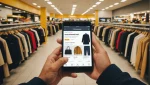



Trust drives decisions through social influence. When faced with choices, people tend to look to others for guidance. A busy restaurant versus an empty one? Most choose the busy option, especially if a friend recommends it. Why? Social proof.
Social proof influences buying decisions without most people even realizing it. It’s the silent force working when a local coffee shop displays five-star reviews on its window, or when a salon shares before-and-after photos of satisfied clients, showcasing various examples of effective marketing.
Online Reviews
93% of consumers say online reviews influence their purchase decisions, making reviews almost as important as brand messaging.
For local businesses, this psychological principle isn’t just interesting—it’s essential. In communities where reputation travels fast, positive social signals provide examples that can transform a struggling business into a thriving one; this is a powerful phenomenon and tool for local businesses.
Consider this: 93% of consumers say online reviews impact their purchasing decisions. This reflects the concept of informational social influence, as when someone sees multiple positive experiences from others, highlighting a psychological phenomenon. Their brain automatically thinks, “If it worked for them, it will work for me” in a certain way.
But social proof goes beyond simple reviews. It’s the Instagram photos customers tag you in, showcasing different types of social proof. It’s the local newspaper feature framed on your wall. It’s the line of people waiting outside your door on a Saturday morning.
What makes social proof so powerful for local businesses specifically? Connection and authority. Unlike major corporations, local businesses thrive on community relationships. When a neighbor or friend recommends your hardware store, that recommendation carries more weight than any national advertising campaign.
Are you actively collecting and showcasing the evidence that others trust your business, and looking to incorporate social proof? Or are you leaving one of your most powerful marketing tools untapped?
Throughout this guide, we’ll explore exactly how local businesses can use different types of social proof, including strategies relevant to e-commerce, to build trust, increase sales, and create a loyal customer base that keeps coming back—and brings friends.
Save 80% of delivery management time
We handle everything:
- Dedicated operations manager
- Real-time tracking dashboard
- Automated customer notifications
- Urgent issue resolution
What is Social Proof?
Social proof shows how people’s behaviors are influenced by others’ actions and opinions.
Builds customer trust through reviews, testimonials, and popularity signals
Directly impacts purchasing decisions—93% of consumers say reviews affect their choices.
Social proof is a psychological principle where people look to others’ actions to determine their behavior, especially in uncertain situations. In business, it refers to the evidence that other people trust your company, product, or service offerings. This evidence comes in various forms, like reviews, ratings, testimonials, case studies, and endorsements that influence people’s behavior.
The concept works because humans naturally seek guidance from others when making decisions. When potential customers see that others have had positive experiences with your business, they feel more confident making a purchase. This is particularly important for local businesses where community reputation is critical.
Social proof functions as a trust signal in the modern marketplace. For local businesses, it serves as digital word-of-mouth that can reach far more people than traditional recommendations and attract a wider audience, leading to higher engagement.
Importance of Social Proof
Ninety-one % of people aged 18–34 trust online reviews as much as personal recommendations, indicating that social proof has transitioned to a digital format among younger buyers.
Example(s) of Social Proof
Social proof manifests in numerous ways in the local business landscape. Customer reviews on platforms like Yelp, Google, and Facebook represent one of the most powerful forms of feedback for users, which is an idea supported by many marketing experts. When a potential customer searches for a local restaurant and sees it has 4.7 stars across 200+ reviews, this significantly influences their decision to visit.
Local influencer endorsements provide another compelling example. When a respected community figure visits a local shop and shares their positive experience on social media to engage their followers. Their followers often take notice. This form of social proof carries weight because it comes from someone the audience already trusts.
User-generated content serves as authentic social proof as well. When customers post photos of themselves enjoying a meal at your restaurant or showing off a purchase from your store, they create genuine testimonials that reflect social norms. These posts, especially when tagged or shared, reach friends and followers who may become interested in visiting your business.
Types of Social Proof for Businesses
Social proof comes in various forms, each with unique strengths depending on your business and target audience. Understanding these different types helps you create a comprehensive strategy that builds trust and drives conversions.
Boost Conversion Rate with Social Proof
76% of marketers say social proof significantly boosts conversion rates
Expert Social Proof
Expert social proof involves endorsements from industry leaders or recognized authorities in your field. For a local bakery, this might mean recognition from a well-known chef or food critic. For a financial services firm, it could be an endorsement from a respected financial advisor.
Expert opinions carry significant weight because they come from individuals with established credibility. According to research, expert endorsements are particularly effective for products or services where specialized knowledge matters. To leverage this type of social proof, seek reviews from industry publications, invite experts to try your offerings, or participate in industry events where experts can experience your business firsthand.
Celebrity Social Proof
Celebrity endorsements represent a powerful form of social proof that quickly captures attention. When a well-known public figure patronizes your local business or endorses your products, their influence can significantly impact consumer perceptions.
This type of social proof works because celebrities have large, engaged audiences who trust their recommendations. For local businesses, “celebrity” doesn’t necessarily mean national figures—it could be local news anchors, sports figures, or community leaders who can inadvertently influence behaviors, akin to copycat suicides.
The key to effective celebrity social proof is authenticity. Consumers can distinguish between genuine appreciation and paid endorsements that lack sincerity. A local fitness studio might benefit more from a genuine visit from a local sports figure than from a forced endorsement by a national celebrity with no connection to the community.
Influencers
Influencer testimonials can increase brand trust by up to 30%, with 68% of consumers trusting influencer reviews more than brand advertisements.
User Social Proof
User social proof—customer testimonials, reviews, and feedback—stands as the most trusted form of social proof. An impressive 92% of consumers hesitate to make purchases when no customer reviews are available, leading many to believe this is the correct conclusion, highlighting how crucial this form of social proof has become.
What makes user social proof so effective is its authenticity. When real customers share their experiences, potential buyers see unfiltered opinions from people just like them. This peer validation addresses concerns and builds confidence in ways that company-created content cannot.
For local businesses, user social proof should be displayed prominently across all platforms—your website, Google Business Profile, social media accounts, and review sites. Encourage customers to leave reviews by making the process simple, perhaps sending follow-up emails after purchases or displaying QR codes that link directly to review platforms.
Importance of Reviews of Products
Products with 5 or more reviews are 270% more likely to be purchased than those without reviews.
Crowd Social Proof
Crowd social proof leverages the power of numbers to establish credibility. Statements like “Join our 5,000+ satisfied local customers” or “Voted #1 plumber in Springfield for three consecutive years” demonstrate popular approval and create a bandwagon effect.
This type of social proof works because humans naturally want to follow the crowd—if many people trust a business, it must be trustworthy, especially when considering how many people trust the business. For local businesses, highlighting local popularity creates a sense of community validation that resonates with nearby customers.
Effective crowd social proof should leverage the herd mentality and be specific and verifiable. Rather than vague claims about being “popular,” use concrete numbers: how many customers served, units sold, or years in business. Display these statistics prominently on your website, storefront, and marketing materials.
Certification Social Proof
Certification social proof includes official badges, awards, and credentials that verify your business meets certain standards. This might include industry certifications, Better Business Bureau ratings, or local chamber of commerce memberships.
These trust badges work by transferring the credibility of established organizations to your business. When potential customers see that your business has been vetted by respected third parties, their trust increases. Research shows that 50% of consumers find website trust badges reassuring regarding security and trustworthiness.
For local businesses, industry-specific certifications can be particularly powerful. A local contractor might display licensing credentials and home improvement association memberships, while a restaurant might showcase food safety certifications or sustainability awards. These credentials should be displayed on your website, in your physical location, and on marketing materials.
Building Customer Trust through Social Proof
Social proof transforms skeptical visitors into trusting customers
Transparency and consistency are the foundation of trust-building
Small businesses see up to 62% more revenue per customer with effective social proof
Trust Through Transparency
The bedrock of customer trust begins with transparency in your social proof strategy. When businesses openly display customer feedback—both positive and constructive—they create an environment of authenticity that today’s consumers demand.
Transparent feedback systems function as a form of public accountability. When potential customers see a business acknowledging and addressing concerns, they witness a commitment to customer satisfaction that goes beyond marketing claims, reflecting the psychology of customer trust. This transparency creates a psychological safety net for new customers, who feel more comfortable engaging with businesses that demonstrate openness to improvement. Implementing this approach means featuring reviews prominently on your website and social media channels, not just the five-star ratings but also the occasional three-star feedback that shows you’re a real business serving real people.
Small businesses often worry that negative reviews will damage their reputation, but the opposite is true. Research shows that removing negative reviews decreases trust for 95% of consumers. People have become skilled at detecting when something seems too perfect to be true. A healthy mix of reviews with thoughtful responses creates a more trustworthy profile than an unrealistic perfect score. Companies that implement public response systems to all types of feedback typically see higher customer retention rates and improved trust metrics compared to those that cherry-pick only positive testimonials.
The Role of Consistency
Consistency in social proof represents the ongoing commitment to quality that builds lasting customer trust. When potential customers see various types of consistently high ratings over time, they recognize a pattern of reliability that fosters confidence in your business. Current data shows that consistently high ratings directly foster loyalty and repeat purchases, creating a virtuous cycle of business growth.
The psychology behind this is straightforward: humans seek patterns to make decisions. When a local business maintains quality service that generates positive social proof month after month, customers develop expectations of consistency that reduce perceived risk. This consistency must extend beyond just collecting reviews to maintaining the service quality that earned those positive comments in the first place. Many businesses focus heavily on gathering initial social proof but fail to sustain the practices that generated it, leading to a decline in ratings over time.
Consistency also applies to how businesses respond to feedback. Establishing a regular schedule for engaging with customer reviews—whether responding to comments on Google Business Profile or acknowledging social media mentions—signals to potential customers that engagement is not merely a marketing tactic but a core business value.
Social Proof as Risk Reduction
For small businesses, social proof functions primarily as a risk-reduction mechanism for potential customers. Every purchase decision carries inherent risk—the risk of wasting money, time, or experiencing disappointment. For local businesses competing against established brands, this perceived risk can be significantly higher without adequate social proof.
The Statistical Impact of Risk Reduction
The numbers tell a compelling story: 94% of consumers have avoided a company because of negative reviews. Conversely, products with five or more reviews are 270% more likely to be purchased than those with no reviews. These statistics demonstrate that social proof is a psychological phenomenon that directly addresses the risk assessment phase of customer decision-making. For small businesses operating in competitive local markets, this risk reduction function is not optional—it’s essential for survival.
Social proof works differently for established businesses versus newcomers. Established brands with national recognition already have implicit trust through their longevity and market presence. Local businesses must actively build this trust through visible evidence of customer satisfaction.
Format Matters: Presenting Social Proof Effectively
The way social proof is presented significantly impacts its effectiveness in building trust. Different formats speak to different psychological triggers and consumer preferences, making the selection and display of social proof a strategic decision rather than a mere collection of positive comments.
Research indicates that star ratings between 4.2 and 4.5 are the most effective for social proof—slightly more trustworthy than perfect 5.0 ratings, which can sometimes trigger skepticism. This finding challenges the common assumption that perfection is the goal, suggesting instead that authentic excellence (with room for occasional improvement) resonates more deeply with consumers.
Visual social proof consistently outperforms text-only testimonials. Customer photos alongside reviews increase trust by 22% according to multiple studies on social psychology and consumer behavior. Local businesses should prioritize collecting and displaying permission-based customer images with testimonials wherever possible. This visual confirmation creates a stronger connection and believability factor, particularly for service-based businesses where results can be visually demonstrated.
Real-time social proof notifications have emerged as a powerful trust-building tool, with research showing, they can boost website conversions by up to 9,8%. These live notifications, showing recent purchases or positive reviews, create a sense of active community around a business, reducing the isolation factor that often accompanies online shopping decisions.
Is Social Proof Important for Small Businesses?
The question “Is social proof important for small businesses?” appears frequently in search queries, and the data provides a definitive answer: it’s not merely important—it’s essential and can manifest in many forms. For small businesses, social proof functions as a competitive equalizer against larger companies with bigger marketing budgets.
Small businesses face unique challenges in establishing credibility. Without the brand recognition of larger competitors, they must rely more heavily on customer advocacy to build trust. The statistics support this necessity: 93% of consumers say online reviews impact their purchase decisions, and 88% trust user reviews as much as personal recommendations. These numbers are even higher among younger demographics, with 91% of 134-year-olds trusting online reviews as much as recommendations from people they know.
The financial impact of effective social proof for small businesses is substantial. Consistent social proof implementation can increase revenue by 62% per customer, according to recent market analysis. This revenue increase stems from both higher conversion rates and increased average order values—people spend more when they feel confident in their purchase decision. For local businesses operating with thin margins, this revenue boost often represents the difference between struggling and thriving.
What makes social proof particularly valuable for small businesses is its low implementation cost compared to traditional advertising. While paid advertising requires continuous investment, social proof compounds organically over time as satisfied customers contribute their experiences. Compound-interest effect creates a sustainable marketing asset that continues working even when marketing budgets are constrained.
Building a Social Proof System for Long-Term Trust
Creating sustainable customer trust requires moving beyond the random collection of testimonials to implementing a systematic social proof strategy. This approach treats social proof not as a marketing tactic but as a core business function tied directly to customer experience.
The foundation begins with service quality that naturally generates positive feedback. Businesses focused primarily on collecting reviews rather than earning them often fall into manipulation tactics that undermine authenticity. Instead, successful small businesses integrate feedback collection into their customer journey at optimal moments—typically after positive outcomes but before the excitement of good service has faded.
Multi-channel social proof collection increases both quantity and authenticity. Different customers prefer different platforms: some will leave Google reviews, others post on social media, while others respond to direct requests for testimonials. Implementing collection points across these various channels creates a more comprehensive trust profile while accommodating different customer communication preferences.
For sustained trust-building, businesses should establish a feedback loop where social proof informs continuous improvement. This creates a positive cycle: better service generates better reviews, which attract more customers, providing more opportunities for exceptional service experiences. This virtuous cycle explains why businesses that systematically leverage social proof typically outperform competitors who view it as merely a marketing function rather than a business development tool.
How Social Proof Increases Local Sales
Social proof directly converts into revenue for local businesses
Properly implemented social proof can increase conversion rates by 20-50%
Word-of-mouth recommendations have 5x the effectiveness of paid advertising
Social proof doesn’t just build trust—it translates directly to sales for local businesses. The connection between positive social signals and revenue is well-documented and particularly potent for businesses serving specific geographic areas. When potential customers see others in their community endorsing a local business, their likelihood to purchase increases significantly.
For small business owners, understanding this connection provides a clear growth path that doesn’t always require increased marketing budgets. Instead, it focuses on capturing and showcasing authentic customer experiences that naturally drive sales.
Sales-Based Social Proof
Sales-based social proof notifications can boost website conversions by 98%.
Word-of-Mouth Amplification
Word-of-mouth remains the most powerful form of marketing, and social proof effectively digitizes and amplifies this age-old sales driver. When satisfied customers share their experiences, they create a ripple effect that extends far beyond a single transaction. Research from Nielsen shows that 92% of consumers trust recommendations from friends and family over all other forms of advertising.
For local businesses, this effect is even more pronounced because of community connections. When someone recommends a local restaurant or service provider, that recommendation carries extra weight compared to online retailers due to shared local context and personal relationships. Digital word-of-mouth through reviews and testimonials extends this effect, allowing a single positive experience to influence dozens or hundreds of potential customers.
This amplification happens organically but can be strategically enhanced. The Local Consumer Review Survey found that positive reviews make 91% of consumers more likely to use a business, while 82% are deterred by negative reviews. This asymmetric impact means positive social proof has a multiplier effect on local visibility and credibility, causing others to follow suit.
Small businesses can harness this multiplier effect through strategic review management. By encouraging satisfied customers to share their experiences publicly, a business can turn each positive interaction into a sales-generating asset. This creates a virtuous cycle where good service leads to positive reviews, which attract new customers, who then leave more positive reviews.
Conversion Rate Improvement
The direct connection between social proof and sales is most evident in conversion rates. When potential customers encounter social proof during their decision-making process, they’re significantly more likely to complete a purchase. For local businesses, this translates to higher foot traffic conversion and increased average transaction values.
For local businesses, conversion improvements manifest in several ways:
First, potential customers who find a business through search are more likely to visit if they see positive reviews. According to Google, businesses with positive reviews see 35% higher click-through rates from search results.
Second, once customers are in-store or on a local business website, social proof elements like testimonial displays or certification badges help reduce purchase hesitation. This directly impacts the percentage of browsers who become buyers.
Third, social proof influences the size and frequency of purchases. Customers who trust a business based on social proof are more likely to make larger initial purchases and return more frequently, increasing customer lifetime value.
Local Business Conversion Case Studies
A coffee shop in Portland, Oregon, experimented with displaying customer reviews near their register and found a 23% increase in customers upgrading to larger sizes or adding food items to their orders. The visibility of positive experiences reduced purchase anxiety and encouraged experimentation, echoing themes from the book’s influence on consumer behavior.
Similarly, a local auto repair shop in Austin, Texas, that prominently displayed its 4.8-star Google rating and Better Business Bureau certification saw diagnostic service bookings increase by 31% compared to the previous year. The trust signals gave new customers confidence to take the first step in what could be a significant service relationship.
Local businesses have a unique advantage when it comes to social proof—they can combine online testimonials with in-person community connections. By strategically showcasing how other local customers have benefited from their products or services, businesses create a powerful sales engine that works even when their marketing budget doesn’t.
The key to maximizing social proof’s impact on sales lies in authenticity and integration. Rather than treating reviews as an afterthought, successful local businesses weave social proof throughout the customer journey—from discovery through repeat purchase. This creates a consistent message of trustworthiness and quality that directly translates to improved sales performance.
Why is Social Proof Important for Customer Testimonials?

Social proof isn’t just a marketing concept—it’s the foundation of trust for local businesses. When customers see endless options with others enjoying your products or services, they’re more likely to take that final step toward purchase. By strategically using reviews, testimonials, and endorsements, you create a powerful trust signal that speaks louder than any advertisement.
The best part? Social proof builds on itself. Each positive experience shared creates ripples that attract more customers, who then share their own experiences. This natural cycle helps local businesses grow without massive marketing budgets.
Start small: encourage happy customers to leave reviews, respond thoughtfully to feedback, and showcase real people who love your business. Display those 5-star ratings proudly. Partner with local experts who can validate your quality. Each piece of social proof adds another brick to your foundation of trust.
Remember that customers today crave authenticity. They want to know that real people—people like them—have had positive experiences with your business. By making social proof central to your marketing strategy, you’re not just attracting customers; you’re building a community of loyal advocates who will help your local business thrive.