

It’s frustrating to see people visit your website and leave without buying anything. I’ve seen it happen so many times. But the most successful companies aren’t just getting lucky. What sets them apart is a strong sales funnel. It helps guide visitors step by step, turning curiosity into real sales. The top 10% of businesses convert at rates five times higher than average, and it usually comes down to how well their funnel is built.
The difference isn’t luck or better products. It’s their sales funnel.
Think of your current marketing and sales efforts. You get traffic, maybe some leads, but something’s not clicking. Your competitors seem to turn casual browsers into repeat buyers while you’re stuck wondering why your conversion rates stay flat.
The pattern is clear: Most companies focus on getting more leads when they should focus on converting the ones they have. It’s like filling a leaky bucket instead of patching the holes in your sales funnel process.
In 2025, the rules of sales funnels have changed. Social media marketing algorithms are stricter. Privacy laws are tighter. Customer expectations are higher. But core principles still work – when applied correctly. In addition to a strong sales funnel, incorporating a structured sales pipeline can further streamline your lead management process. For more on how to effectively manage leads and accelerate closing deals, check out this insightful article on the “Sales Pipeline.”
This guide breaks down a proven 5-step system to build a sales funnel model that turns strangers into loyal customers. You’ll learn specific techniques for:
Converting more leads without increasing ad spend
Building genuine relationships with sales automation
Creating loyalty programs that actually retain customers
Increasing revenue through smart upselling
No theory. No fluff. Just practical steps you can implement today to fix your sales funnel and grow your business.
The best part? These techniques work for both B2B and B2C companies, whether you’re selling products or services. Additionally, to further enhance your sales effectiveness, it’s important to explore proven methods. To dive deeper into actionable strategies, check out these effective sales techniques that can help you close more deals and improve your overall conversion rates.
Boost customer satisfaction with just a few clicks
Most-Loved Features:
- On-demand drivers
- Real-time GPS tracking
- Delivery confirmation photos
- Over 50% of customers report a smoother delivery experience
Step 1: Lead Generation Strategies
Understand your customers to find quality leads.
Choose the best online platforms to reach potential clients.
Create content that connects and engages with your audience.
Identifying Target Audience
When starting with lead generation, knowing your audience is vital. First, define your ideal customer. What are their needs, behaviors, and pain points? Creating a detailed customer profile can guide your marketing efforts.
Next, use data to back up your assumptions. Tools like Google Analytics or social media insights can show how visitors interact with your site or pages. Are they browsing your product pages? How long are they staying? Find common traits among your high-value customers.
By identifying these patterns, you can align your efforts with those who are most likely to be interested in your offerings. This makes your marketing messages more relevant and increases the chance of conversion.
Effective Channels for Lead Generation
Choosing the right platform is crucial. Today, social media platforms are valuable for reaching broad audiences. For example, LinkedIn is great for B2B, while Instagram and Facebook work well in B2C markets. To enhance your sales funnel, focusing on effective lead qualification can greatly improve conversion rates. By implementing strategies that ensure each lead meets your ideal customer profile, you can allocate resources more effectively and optimize your sales efforts. For insights on this vital process, check out our expert guide on how to effectively qualify your leads.
Content marketing is another tool. Producing blogs, infographics, and videos helps create engagement and trust with prospects. Provide value rather than pushing a sale. For instance, share useful tips or insights relevant to your field.
Different channels can yield different results. A mix of platforms ensures a wider reach and increases the chances of capturing leads. Lead generation tools can help automate lead capture across these multiple channels.
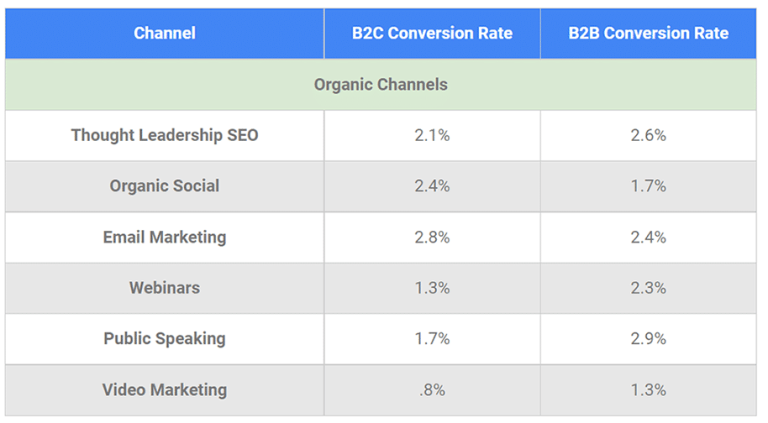
Key Conversion Rate Showdown By Channel
Email Marketing Conversion Rates: Email marketing remains one of the most effective channels for both B2B and B2C, with conversion rates of 2.8% and 2.4%, respectively.
Webinar Conversion Rates: Webinars show a notable conversion rate of 2.3% in the B2B sector, emphasizing their value in engaging potential leads.
Video Marketing Conversion Rates: Video marketing is the least effective sales funnel in the B2B sector with a conversion rate of 1.3%.
Crafting Engaging Content
Producing tailored content solves customer issues and engages them. Start by understanding what problems your audience faces. Craft content that offers actionable solutions.
Variety in content is key. Blogs, videos, and podcasts cater to different preferences and help maintain audience interest. For example, a SaaS company might publish blogs explaining software benefits and create videos demonstrating product use.
Encourage interaction. Ask questions, seek feedback, and respond to comments. This builds relationships and keeps the audience engaged with your brand.
Video Content Boosts Landing Page Conversions: Video content can increase conversion rates by as much as 80% when used strategically on landing pages.
Common Questions
What are the sales funnel stages for leads?
The sales funnel is a step-by-step process that guides potential customers from the first contact to the final purchase. It starts with awareness, moves to consideration, and ends with a decision.
How do you move leads through the funnel?
Moving leads through involves various tactics like targeted messaging, education, and tailored offers. Focus on building trust and providing value at each stage.
What is lead status in a sales funnel?
Lead status refers to the stage where a lead is in the sales process. It typically progresses from “new” to “qualified” as more information and intent are gathered.
Understanding these elements is key to effective lead generation and eventually boosting loyalty and revenue.
Step 2: Lead Nurturing Strategies for Conversions
Connect with leads using email and chat.
Group leads for specific messaging.
Offer helpful content and examples to build trust.
Lead nurturing is about encouraging potential customers to become loyal buyers. It’s the second stage in the sales funnel process. This step focuses on turning interest into commitment. Let’s break it down.
Building Relationships through Communication
Building strong relationships is key in lead nurturing. Communication is at the heart of this effort. How you contact potential leads can determine their journey through the sales funnel. Email and chat are two effective ways to nurture these relationships.
Email marketing allows for personalized follow-ups. By tailoring messages to individual preferences and behaviors, companies can create a lasting impression. The call-to-action in emails should address the specific needs of the leads. One common myth is that more emails mean better engagement; however, quality far outweighs quantity. A well-crafted email can maintain higher interest than frequent, generic messages.
Chatbots provide instant responses, vastly enhancing the customer experience. They ensure that no lead has to wait for interactions. Chatbots can handle basic inquiries, allowing your team to focus on more complex tasks. The common misconception is that chatbots lack the personal touch, but when integrated with AI, they offer meaningful interactions.
The AI Chatbot Advantage
Conversion Rates: Businesses that utilize AI chatbots experience three times better conversion rates into sales compared to those relying solely on traditional website forms.
Sales Increase: Companies that implement chatbots report an average sales increase of 67%.
Customer Satisfaction: An impressive 88% of users express satisfaction with bot-only chats.
Segmenting Leads for Better Targeting
Not every lead fits the same mold. Understanding the demographics and behavior of your leads is crucial for creating targeted marketing strategies. Segmenting leads means dividing them into groups based on specific characteristics.
Demographics like age, location, and income can inform what type of content might engage a lead. Behavior is another crucial factor. By monitoring interactions with your website or email campaigns, you can gauge interest levels. A common misconception is that segmentation is only for large businesses, but small businesses benefit greatly, focusing their resources effectively.
Prioritizing high-potential leads means putting your efforts where they yield the best result. Evaluate leads based on factors such as expressed interest and potential revenue. One myth is that all leads should receive the same attention; focusing on high-potential ones ensures a better return on investment.
Providing Value at Every Touchpoint
In the lead nurturing process, giving valuable content is essential. Each interaction should leave a lasting positive impact, pushing leads further down the funnel. Offering free resources, consultations, or insightful content can do this.
Resources like whitepapers, webinars, or free tools attract leads. They see immediate benefits that build trust. Case studies and testimonials add credibility. They showcase real-world applications of your service or product, creating a relatable connection.
A debate often arises between quantity versus quality regarding the resources shared. It’s clearer now than ever that offering a smaller number of high-quality, relevant pieces of content pays off more than casting a wide net. Future trends point towards even more personalized offerings as technology evolves.
Increased Purchase Likelihood: According to a study by Epsilon, 80% of consumers are more likely to make a purchase when brands offer personalized experiences.
In summary, lead nurturing in a sales funnel involves building relationships, segmenting leads, and offering value at every touchpoint. Each component plays an important role in guiding leads through the funnel towards conversion. By balancing personalization with efficiency, organizations can foster long-term customer loyalty.
Step 3: Conversion Rate Optimization Tips
Clear landing pages and quick load times increase conversions.
A/B testing informs changes that enhance performance.
Simplified checkouts reduce cart abandonment rates.
Enhancing Landing Pages
Improving landing pages is crucial for boosting conversions. First, focus on having clear and concise calls-to-action (CTAs). Your audience should know what action to take immediately. Keep the CTA visible above the fold—the section of the page that is visible without scrolling. This helps in catching attention quickly. Consider bold colors or large fonts for CTAs to make them stand out. Avoid clutter. Extra elements can distract visitors from the CTA, lowering conversion rates.
Second, optimize both the visuals and load times of your landing pages. Visuals should support your message without overpowering it. Use high-quality images, but keep file sizes small to avoid slow load times. Slow-loading pages cause users to leave. Even a delay of one second can reduce conversions. Use tools like Google PageSpeed Insights to test and improve load times. Faster pages provide a better user experience, which is essential for higher conversions.
Significant Drop in Engagement: A study found that users who experience a load time of 3 seconds or less visit significantly more pages—up to 60% more pages—compared to those with longer load times.
Finally, make sure your landing page aligns with your ad content. If a visitor clicks an ad and lands on a page that doesn’t match the ad’s promise, they might leave. Consistency between ads and landing pages enhances trust and boosts conversions.
A/B Testing for Improvements
A/B testing helps identify which version of a webpage performs better. Start by testing headlines, as they are often the first thing visitors see. Craft different versions of a headline to see which grabs more attention. Experiment with different fonts, sizes, or attention-grabbing phrases that align with your target audience’s interests.
Next, test images and forms. For images, swap different visuals to find which resonates best with users. Check the emotional impact they have on your audience. Forms are a make-or-break element. Test different lengths or fields. Shorter forms, asking only for necessary information, typically convert better.
After conducting tests, focus on analyzing the data. Use tools like Google Analytics to track differences in conversion rates. Data from the tests will guide you to make informed decisions. Remember, experimentation is key. “There are no best practices, only best guesses. Test, learn, optimize, and repeat.”
Continuous Testing
Consider setting up a schedule for A/B tests. Regular testing leads to continuous improvement. Test one element at a time to attribute changes directly to results. Be patient, as some tests may take time to gather enough data for a reliable conclusion.
Streamlining the Checkout Process
A straightforward checkout process is essential for reducing cart abandonment. Start by simplifying navigation within the checkout. The steps should be logical and easy to follow. Remove unnecessary distractions or links that might lead visitors away from their purchase.
Minimizing form fields is next. Ask only for essential information. Each additional field can lower conversion rates. Offer a guest checkout option to speed up the process for first-time buyers. Ensure that all required fields are marked to avoid confusion.
Finally, offer multiple secure payment options. Not everyone prefers the same payment method. Including options like PayPal, credit cards, and newer methods like digital wallets cater to everyone. Display security badges to assure customers that their data is safe, building trust and encouraging them to complete the transaction.
Focus on providing a seamless purchasing experience. Speed and simplicity are vital. Each step you simplify increases the likelihood of conversion, ultimately boosting both loyalty and revenue.
Step 4: Customer Retention Best Practices
Loyalty programs increase repeat purchases.
Feedback helps shape better products.
Personalization keeps customers coming back.
Building Long-term Relationships
Creating solid connections with customers boosts loyalty. Start with implementing loyalty programs. These programs can increase repeat purchases. In fact, 85% of consumers say loyalty programs make them more likely to continue shopping with brands. This creates a robust baseline for long-term customer loyalty. Ensure these programs offer real value. Customers often change their spending to make use of these rewards, so tailor benefits that encourage more shopping.
Keep regular contact with your customers through newsletters. This method is cost-effective and powerful. Newsletters help update customers about new products, offers, or company milestones. A personal touch in communication can keep your brand at the top of customers’ minds. When customers feel appreciated, they are less likely to switch brands.
Retention and Loyalty: A report indicates that 44% of consumers are likely to become repeat buyers after a personalized shopping experience, underlining the long-term benefits of personalization in retaining customers.
Gathering and Acting on Feedback
Listen to what your customers are saying. Surveys are an effective way to gather feedback. They help understand what customers like and what needs improvement. Only 4% of dissatisfied customers speak up about their concerns. That means many voices go unheard unless actively sought. Implement surveys at various touchpoints, such as after-purchase or service interaction.
Use the insights to refine your offerings. Rapid action on feedback can turn negatives into positives. If a complaint is resolved in their favor, 70% of customers will return to do business. Responsive changes show customers their opinions matter. This can transform them from one-time buyers into long-term patrons.
Personalizing Customer Experience
Personalization is key in today’s competitive market. Using CRM tools, companies can customize interactions and offers. Personalization boosts engagement and makes customers feel valued. When customers see tailored offers, they are more likely to stay loyal.
Offer recommendations based on previous purchases. This requires analyzing customer data. It’s essential to segment your audience and use insights to craft personalized experiences. Personalization not only fosters loyalty but can also differentiate your company from competitors.
Impact on Sales: Companies leveraging personalization have reported an increase in sales by up to 10%.
The loyalty stage in the marketing funnel focuses on these practices. It’s about keeping customers satisfied and engaged so they stick around for the long haul. This retention translates into sustained revenue and expanded opportunities for cross-selling and upselling.
Understanding loyalty and retention provides a strong foundation for increasing revenue and enhancing business growth. Begin implementing these best practices now to solidify the customer base.
Step 5: Revenue Growth Tactics
Boost sales by upselling and cross-selling.
Innovate with new products or services.
Collaborate with strategic partners to expand reach.
Upselling and Cross-selling Strategies
Upselling and cross-selling can significantly influence revenue. Start by training your team. They need to understand which products complement each other. This knowledge enables them to suggest relevant add-ons to customers. For example, if a customer is buying a laptop, staff should suggest a keyboard or a mouse. This boosts the sales basket without the need for new customers.
Profit Increase: Brands employing cross-selling tactics typically see a 30% increase in profit.
On e-commerce sites, highlighting related products is crucial. Use algorithms to show related items on product pages. Provide suggestions during the checkout process. This increases the chances customers will add more items to their cart before completing their purchase. This can potentially transform a single sale into multiple transactions.
Revenue Generation: Approximately 72% of sales professionals report that upselling and cross-selling drive around 30% of their business's revenue.
Training the Sales Team Effectively
Train your team on product combinations. Interactive workshops can help. Use real examples where staff can practice recommending product pairings. Create role-playing scenarios focusing on different types of customers. Keep a feedback loop open to ensure the training is helping.
For e-commerce sites, work with web developers. Optimize your website’s interface to showcase product suggestions. Test layouts and positions of related product recommendations. Assess how these changes affect customer behavior and adjust accordingly.
Expanding Product or Service Lines
New products can attract attention and drive revenue growth. Begin by conducting market research. Analyze trends and customer preferences. Evaluate gaps in the market that your brand can fill. Collect feedback from current customers about what they might want next.
Testing new products in small batches is essential. This minimizes risk. Measure customer reactions before a full launch. Utilize customer feedback from these preliminary tests to fine-tune your offerings. This method provides insights without significant investment.
Conducting Market Research
Define target segments and gather insights. Use surveys or focus groups to hear directly from your audience. Analyze competitor offerings. Identify where you can provide a better or different solution.
For new product testing, consider pilot programs or limited-time offers. Offer the new product in select markets before a wider release. Collect data on sales performance and customer feedback. Use this data to refine the product before a broader roll-out.
Building Strategic Partnerships
Collaborations can be mutually beneficial. Partnering with complementary brands is a rewarding tactic. For example, if you sell gourmet coffee, consider partnering with a pastry company. This creates an opportunity for co-marketing. Both brands can reach new customers and expand their market presence.
Co-marketing opportunities are endless. Developed carefully, they can amplify brand exposure without significant cost. Create joint marketing campaigns where both partners share resources. Use shared events or social media takeovers. This partnership doubles the potential audience size while minimizing expense.
Initiating Collaborations
Scratch the surface of strategic partnerships by researching potential partners. Look for companies that share your target audience but aren’t direct competitors. Reach out with a proposal that outlines mutual benefits.
Develop joint marketing strategies. Plan co-branded content or joint events. Clear communication between both parties is crucial. Establish goals, timelines, and responsibilities from the start. Execute the strategy with detailed agreements to ensure mutual satisfaction.
Understanding the sales revenue funnel is crucial. It’s the sequence of steps a customer takes from first learning about a product to making a purchase. Tactics like upselling and cross-selling are essential in the funnel’s later stages focusing on maximizing the transaction value after a purchase decision. Implementing these revenue growth strategies effectively strengthens your sales funnel, enhancing both loyalty and revenue.
Advanced Tips for Maximizing Sales Funnel Effectiveness
Maximize sales through advanced automation techniques.
Avoid common pitfalls in sales funnels.
Fine-tune strategies for greater effectiveness.
Additional Automation Techniques
Marketing automation platforms are essential for refining sales funnels. They save time and cut costs by automating repetitive tasks. Leading platforms like HubSpot or Marketo offer tools that enhance funnel efficiency. These tools automate email campaigns, personalize messages, and aid in lead nurturing.
Automated lead scoring is another technique. It prioritizes leads based on customer data and engagement levels. Systems like Salesforce use algorithms to score leads, helping sales teams focus on high-potential prospects. Companies that adopt automated lead scoring see improved conversion rates and reduced time wasted on unqualified leads.
The integration of AI in automation is transforming sales processes. AI-driven insights can suggest content, adjust timing, and predict the next best action for leads. For deeper understanding, books like “Predictive Marketing” by Omer Artun offer comprehensive guides on utilizing AI in marketing.
Common Pitfalls and How to Avoid Them
Over-complicating funnel steps can deter potential customers. Many businesses expand their funnels with unnecessary stages. Simplification is key. Streamlined funnels maintain user interest and guide them smoothly from entry to purchase. This simplicity reduces dropout rates and enhances user experience.
Regularly updating strategies based on performance data is vital. Stagnant strategies lead to inefficiencies and missed opportunities. Analyzing data from CRM systems can guide necessary changes. Books like “Analytics: The Agile Way” by Phil Simon provide methodologies for iterative learning and improving processes.
Engaging with funnel metrics is crucial. Revenue, lead conversion rates, and engagement levels provide actionable insights. Regular reviews help identify trouble spots and inform adjustments. This proactive approach ensures the sales funnel is always optimized for performance.
Efficient Lead Management
Efficient lead management is vital for funnel success. Businesses should focus on lead qualification to avoid wasting resources. By employing criteria such as budget, authority, need, and timeline (BANT), sales teams can filter out leads unlikely to convert.
CRM tools help in tracking lead interactions and behaviors. Advanced systems like Pipedrive or Zoho offer robust tracking, ensuring sales teams have comprehensive data for decision-making. Efficient lead management aligns with the understanding of the sales funnel, creating structured approaches for selling.
Segmenting the audience aids in personalizing communications. It tailors messages and offers to specific groups, increasing conversion chances. Advanced segmentation can be explored in resources like “Buyer Personas” by Adele Revella, which dives into creating detailed customer profiles from data.
Optimization Strategies for Better Outcomes
Understanding and mapping the sales funnel can significantly boost its effectiveness. Visualizing each stage uncovers bottlenecks and improvement areas. Tools like Lucidchart facilitate diagramming funnel flows, helping businesses visually strategize.
Regular updates based on performance data are pivotal. Insights derived from analytics platforms guide necessary alterations. Prompt actions based on data interpretations ensure the funnel adapts to changing market conditions.
Continuous education on optimization techniques is beneficial. Resources like “Funnel Vision” by Russell Conwell delve into advanced strategies for sales funnel improvement. Learning from industry leaders provides diverse perspectives on maintaining a competitive edge.
For a closer examination of sales funnel strategies, exploring comprehensive guides on upcoming CRM functionalities or intricate analytics for tracking is recommended. This broadens understanding and enhances funnel management skills effectively.
Troubleshooting Common Issues
Identify and resolve low conversion rates.
Address cart abandonment effectively.
Improve sales funnel performance with targeted actions.
Solutions to Low Conversion Rates
Understanding low conversion rates often begins with reassessing target customers. If your product doesn’t appeal to those visiting your site, chances of conversion drop dramatically. Start by refining your buyer personas. Use tools like Google Analytics to analyze visitor data and identify disconnects in your sales funnel. It’s more than demographic data; analyze actions and preferences to adjust your content marketing efforts.
Sometimes the low rates tie back to the value propositions in your communication. Are you clearly conveying why your product stands out in the buying process? Ensure that your messaging resonates with the pain points of your potential buyers. Strong, compelling value propositions make a difference. They require deep knowledge of the market and your customers’ needs. Books like “Made to Stick” by Chip and Dan Heath detail effective communication strategies, helping refine your approach. It’s worth exploring further, as refining value propositions is crucial to sales success.
Addressing High Cart Abandonment
If you face high cart abandonment rates, one important step is implementing exit-intent popups. These popups capture attention before visitors exit. Offering a discount or incentive right as they move to leave can shift indecision. Running tests for different popup designs and offers will provide insights into what effectively retains users at the awareness stage of your sales cycle.
Offering limited-time discounts also nudges hesitant buyers to complete purchases. This urgency factor taps into what’s known in marketing as “FOMO” – the fear of missing out. While this can boost sales, it’s essential to balance scarcity with trust in the sales funnel. Implementing well-thought-out strategies can involve learning from practices and insights shared in courses on platforms like Coursera.
Dealing with Inconsistent Lead Quality
Inconsistent lead quality disrupts sales efforts, making many pursuits feel fruitless. Engage in redefining your lead qualification criteria. Go beyond basic demographic filters. Incorporate behavioral data to define high-quality leads. This may mean you start using advanced analytics tools to refine lead characteristics. Crafting detailed customer journeys helps identify valuable touchpoints leading to conversions in the sales funnel stages.
Testing hypotheses like changes in buyer motivations or priorities can throw light on unexpected factors affecting lead quality. Continuous improvement is key here. As Tim Ash states, “Conversion Rate Optimization (CRO) is the art and science of getting people to act once they arrive on your website.” Experimentation guides optimization, leading to better-qualified leads and stronger sales alignment.
Common Miscommunications in Sales Processes
Miscommunications can derail potential sales, creating friction. One way to reduce these issues is by analyzing the customer feedback loop. Make feedback collection systematic rather than reactive. For instance, regularly scheduled follow-ups using AI-driven chatbots ensure consistent touchpoints during the interest stage.
Yet, feedback is only as good as how you act on it. Implement routines where teams review this data together and adjust processes based on findings. Consider insights from experienced marketers like David Ogilvy, who mentioned that continuous testing leads to ongoing improvement. Discovering ways to iterate on feedback efficiently can drive significant improvements in future sales.
Optimizing the Customer Journey
Your sales funnel thrives on orchestrating seamless customer journeys. Dive into each sales funnel stage meticulously. Visualize buyer interactions from the awareness stage to the actual purchase. Identify areas where potential customers drop off and address these bottlenecks head-on.
Utilize mapping technologies or whiteboard sessions to capture insights across teams. Tools like Miro can help visualize details and recommendations for refining your sales funnel process. Extend research beyond immediate solutions, and indulge in studies from books like “The Lean Startup” by Eric Ries to appreciate iterative strategies. Couple data from past performances with new tactics, adjusting the sales cycle to meet target customers’ expectations actively.
Ultimately, diving deep into each of these areas paves the way to an optimized sales funnel. The journey to improving loyalty and revenue involves constant assessment, iteration, and a keen awareness of market changes.
Further Resources and Reading
Advanced CRM uses can transform customer relationships.
Funnel analytics improve tracking and understanding.
Knowing these strengthens business growth and customer loyalty.
Related Topics or Advanced Guides
For those interested in deepening their understanding of CRM systems, advanced functionalities are pivotal. The CRM landscape is evolving rapidly, and by 2025, 70% of these systems are predicted to incorporate AI capabilities. This shift not only automates tasks but also personalizes customer interactions, which is key for businesses looking to stand out in crowded markets. Books such as “CRM at the Speed of Light” by Paul Greenberg provide a comprehensive look at CRM implementation and evolution. Additionally, exploring funnel-tracking analytics is crucial. Advanced analytics provide real-time insights, allowing businesses to immediately respond to market changes.
Experts often discuss the competitive advantage of mastering these systems. Bob Thompson insightfully noted that “successful CRM is about competing in the relationship dimension,” distinguishing not by price but by how well you know and engage customers. However, critics argue that even if automation enhances efficiency, it can sometimes lead to impersonal interactions. For those looking to explore further, resources like detailed analytics workshops or AI in CRM courses can provide deeper insights.
Why This Skill/Task Matters
Understanding CRM and analytics in funnel management is crucial for sustainable growth. CRM directly impacts sales, fostering a loyal customer base for long-term stability. As Patricia Fripp said, “you don’t close a sale, you open a relationship.” This builds a steady revenue stream and ensures paying customers.
Though some businesses overlook long-term customer engagement due to initial costs, the return on investment comes through customer retention and increased customer lifetime value. Using a well-designed sales funnel template helps convert leads into paying customers.
For sales reps, a structured sales funnel improves tracking and conversions, aligning with the company’s sales model. Optimizing the funnel ensures every stage boosts sales.
Check publications and case studies on customer loyalty programs and how businesses use CRM to drive significant revenue.
Contextualize the Importance of the Skill or Task
In today’s rapidly changing business environment, understanding the customer’s journey provides a competitive edge. The sales funnel’s important because it enables businesses to not only know their customer but also anticipate their needs. Effective CRM systems and sales funnels are foundational elements for robust marketing strategies, helping businesses optimize every stage of the sales funnel process.
“The more you engage with customers, the clearer things become,” as John Russell insightfully stated. This kind of engagement helps pinpoint strategic advantages and keep ahead in dynamic markets. Understanding how sales funnels work allows businesses to streamline their approach, ensuring better conversion rates and customer retention. While some might argue that CRM systems can be costly or complex, the benefits significantly outweigh these initial hurdles.
For professionals seeking further insights, attending seminars on marketing strategy or reading in-depth analyses from sources like Harvard Business Review can prove advantageous. Understanding these dynamics is key to gaining and maintaining that competitive edge.
Conclusion
Implementing a sales funnel is a methodical process that brings measurable results. The five steps we covered – lead generation, nurturing, conversion optimization, customer retention, and revenue growth – form a complete system for business success. When you align these elements, you create a seamless path for potential customers while increasing your revenue.
Start small. Pick one area to improve first, like enhancing your landing page or setting up an email marketing nurturing sequence. Track your results with analytics tools, and adjust your approach based on real data. Remember that each customer interaction is an opportunity to strengthen relationships and gather valuable insights.
The most successful sales funnels in 2025 combine both automated systems and personal touches in their sales pipeline. They understand that while technology helps scale operations, genuine human connections drive long-term customer lifetime value and loyalty.
Your next step is to audit your current sales process. Identify gaps in your funnel and apply these strategies systematically. Focus on providing value at every stage of the sales funnel stages, from the first contact to post-purchase support. With consistent effort and regular optimization, you’ll build a sales funnel model that not only converts qualified leads but creates lasting customer relationships.
By regularly improving the sales funnel process, optimizing marketing campaigns, and enhancing sales automation, you will achieve sustainable business growth and increase the revenue generated from both existing customers and prospective customers. Additionally, use competitive research to gain valuable insights and adjust your marketing strategies to stay ahead of the competition. This integrated approach ensures that your sales funnel metrics continuously improve, delivering measurable results over time.