
Every meal prep business has the same recurring problem: an order deadline arrives every week, and the number of orders behind it moves whether you did anything or not. Email is the only channel that lets you do something about it on a schedule you control.
That’s the real case for meal prep email marketing, and it’s a different case than most marketing advice makes. You aren’t building brand awareness. You’re filling a specific delivery window before a specific cutoff, to a list of people who have already eaten your food or come close. Food and restaurant email sits near a 43.69% open rate, well above the 31.08% ecommerce average, because people opted in to hear about food they intend to eat (Sender’s compilation of email marketing statistics, 2026).
Social gets people onto the list, and the meal prep social media playbook covers that side. This post covers what happens after: the sends, the segments, and the automations that keep a subscriber from quietly disappearing.
The Bottom Line
Email returns roughly $36 for every $1 spent on average, and the food and restaurant category runs a 43.69% open rate against 31.08% for ecommerce generally (Sender, 2026).
Segmented sends earned 85.53% higher open rates and 54.43% higher click-through rates than unsegmented ones, and meal prep has the cleanest segments in food: diet, plan size, and delivery day.
Automations are the quiet workhorse. They made up about 2% of sends but 30% of revenue, roughly 16× the revenue per send of scheduled campaigns.
Abandoned-cart emails converted about 3× better than other automated emails, which matters more in meal prep than retail because the cart expires at your order cutoff.
The weekly menu email is the one send you never skip. Everything else is optional.
Boost customer satisfaction with just a few clicks
Most-Loved Features:
- On-demand drivers
- Real-time GPS tracking
- Delivery confirmation photos
- Over 50% of customers report a smoother delivery experience
Build the list from the order you already fulfilled
Your best subscribers are people who have eaten your food. That sounds obvious until you look at where most meal prep operators spend their list-building effort: lead magnets, free meal plan PDFs, and giveaways that fill a list with people who wanted a free thing.
The list that fills delivery routes gets built at four moments you already have:
-
Checkout. Every order captures an email by necessity. The only decision is whether the marketing opt-in is checked, visible, and honest about what you’ll send (“the weekly menu every Sunday”).
-
The delivery itself. A card in the bag with a QR code to join the list costs pennies and reaches someone at the moment they’re most enthusiastic about you.
-
The order form’s waiting list. When a plan sells out or a delivery zone isn’t served yet, capture the email instead of losing the person. This is the highest-intent list you’ll ever build.
-
Social bio and story links. Lower intent, higher volume. Worth having, never worth relying on, because a platform decides who sees your posts and nobody decides who receives your email.
Two things to avoid. Don’t buy a list. Food businesses get spam-flagged fast, and a poisoned sending domain takes months to recover. And don’t gate your menu behind an email wall; a menu people can’t see is a menu people don’t order from.
Review requests belong in this sequence too, since a fulfilled order is also the moment someone will actually write about you. The timing and wording of that ask is covered in the guide to getting customer reviews for your meal prep business.
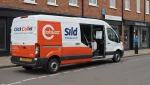
Metrobi is transforming meal prep deliveries
Specialized solutions for meal prep businesses:
- Meal prep-trained drivers
- Proper handling equipment
- Peak day delivery support
- 23% average cost reduction
What goes in the weekly menu email
The weekly menu email has one job: get the reader to the order form before the cutoff. Everything in it either serves that or gets cut.
A structure that holds up week after week:
-
Subject line names the food, not the brand. “Korean short rib, lemon herb chicken, 10 more” outperforms “This Week at [Kitchen Name]” because the food is the reason anyone opens.
-
The deadline is in the first screen. Orders close Thursday at 6 p.m. State it above the fold, not in the footer.
-
Six meals maximum, with photos. A full fifteen-item menu in an email produces decision paralysis. Show the six strongest and link to the rest.
-
One line of macros and price per meal. Meal prep customers are unusually numbers-driven. Give them the numbers.
-
A single button, repeated. Top and bottom, same destination, same wording. Food and restaurant emails average a 1.13% click rate, so make the click as easy as possible to find.
-
Delivery day stated plainly. “Delivered Sunday” removes the most common pre-purchase question.
Send it on the same day and time every week. The consistency does more than the copy does: after a month, a subscriber who wants to order starts looking for your email.
Segment by diet, plan size, and delivery day
Meal prep has better segmentation data than almost any other food business, and most operators use none of it. Segmented campaigns earned 85.53% higher open rates and 54.43% higher click-through rates than unsegmented sends (Sender, 2026), and you’re sitting on three segments that require no survey.
-
Diet and restriction. Keto, high-protein, vegetarian, gluten-free, allergen avoidance. A vegetarian subscriber who gets a short rib subject line every Sunday eventually stops opening. Same menu email, reordered so their meals come first.
-
Plan size. Someone on 5 meals a week and someone on 15 are different customers with different price sensitivity. The 5-meal subscriber is your upgrade target; the 15-meal subscriber is your retention priority.
-
Delivery day and zone. If you deliver Sundays in one zone and Wednesdays in another, the cutoff differs, and a single “orders close Thursday” email is wrong for half your list. Segmenting by delivery day is the one segment that prevents actual operational errors, not just lower engagement.
-
Lapsed versus active. Anyone who hasn’t ordered in three weeks should be getting different email from someone who ordered yesterday. More on that below.
Start with diet. It’s the segment your customers care most about, it takes one field on the order form, and it makes the weekly menu email feel personally relevant with no extra writing.
The five meal prep automations worth building
Automated emails made up around 2% of sends but produced roughly 30% of revenue, about 16× the revenue per send of scheduled campaigns (Sender, 2026). In meal prep the effect is amplified, because your product is a weekly habit and habits break at predictable moments.
Build these five, in this order:
-
Welcome, three emails. What you cook, how delivery works, and a first-box offer with a deadline. Send it immediately after signup, while you’re still interesting.
-
Abandoned order. Someone built a cart and didn’t check out before the cutoff. Abandoned-cart emails converted about 3× better than other automated emails, and in meal prep the urgency is real rather than manufactured, because the cart expires when production planning starts. Send it two hours before cutoff, not two days later.
-
Post-delivery follow-up. Sent the evening of the delivery day. Ask one question about the food, and route happy answers toward a public review.
-
Win-back at three weeks. A subscriber who has missed three cycles has broken the habit, not just skipped a week. Acknowledge it directly, offer a smaller plan to restart, and ask what changed.
-
Order cutoff reminder. The simplest and most effective automation you’ll build: one email, cutoff day, to subscribers who haven’t ordered yet this week. It does nothing clever and it fills slots.
Add a back-in-stock trigger if you sell limited plans. Those automations posted a 59.19% open rate and a 5.34% conversion rate, among the strongest of any automated type.
How email keeps meal prep subscribers from churning
Churn in meal prep is rarely a decision. It’s a missed week that becomes two, and email is how you interrupt that before it hardens.
The pattern is consistent enough to plan around. A subscriber skips a week because they’re traveling, or the week got busy, or they got tired of chicken. Nothing was wrong. But the standing order is gone, the Sunday habit is broken, and by week three they’ve stopped thinking of you as a routine. The operators who hold retention best do three unglamorous things:
-
They make skipping explicit. A “skip next week” link in every menu email sounds like it invites churn. It does the opposite: it keeps the subscriber in the relationship instead of making silence the only option.
-
They rotate the menu on a visible cycle. “Three new meals this week” gives a bored subscriber a reason to look, and menu fatigue is the most common cancellation reason operators never hear about because nobody writes in to say the food got repetitive.
-
They ask before the second miss. A short, plain email after one missed cycle, something like “everything all right? here’s what’s on for Sunday”, recovers subscribers that a discount email at week four won’t.
There’s a limit to what email fixes, though. If the food arrived warm, late, or crushed, no sequence rescues it. The delivery is the product as far as the customer is concerned. Metrobi handles local delivery for meal prep businesses with route optimization, real-time tracking, and proof-of-delivery photos, and the practical value for retention is simply knowing which deliveries went wrong before the customer tells you by disappearing.
Email also isn’t the fastest path to new customers. The fastest path is an existing customer recommending you, which is why the meal prep referral campaign guide covers the reward structure that makes that repeatable, and why the referral ask itself usually gets delivered by email.
Frequently asked questions about meal prep email marketing
How often should a meal prep business send emails?
Once a week minimum: the menu email. Twice is comfortable if the second is the cutoff reminder. Beyond that you’re competing with your own sends, and open rates fall faster than reach grows.
What’s a good open rate for meal prep emails?
Use the food and restaurant benchmark of about 43.69% open and 1.13% click as your reference point (Sender, 2026), and read open rates cautiously, because Apple’s Mail Privacy Protection inflates them. Click rate and orders-per-send are the honest numbers.
Which email platform should a meal prep business use?
Any platform with automation triggers, segmentation, and an ecommerce integration for your order system. The integration matters more than the brand, because abandoned-order and post-delivery automations need order data to fire.
Should I discount in the weekly menu email?
Rarely. A standing weekly discount trains subscribers to wait, and meal prep margins are thin enough that a habitual 20% off is a business model change. Save discounts for the welcome offer and win-back.
The send that matters most
If you build one thing from this post, build the weekly menu email and send it at the same hour every week. It is the closest thing a meal prep business has to a lever it controls: a message, to a list you own, arriving before a deadline that decides how full next week’s route is.
Then add the cutoff reminder, then the abandoned-order automation, then segment by diet. Four things, in that order, and most of the revenue email will ever produce for your kitchen is already in place.