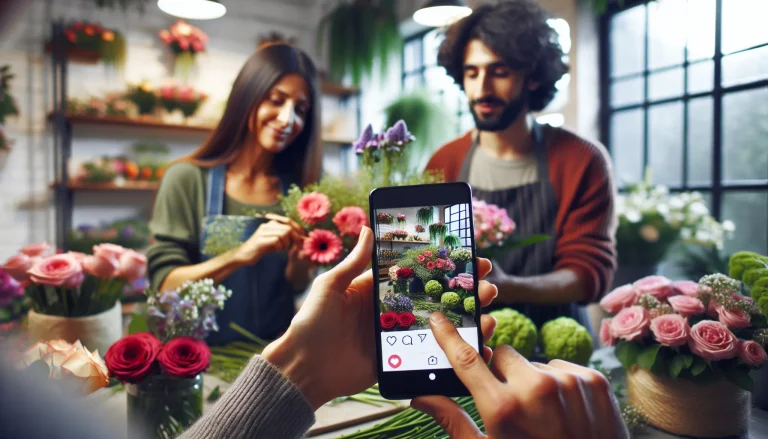

Flowers are the best-looking product on the internet and floristry is one of the most watchable crafts there is. Which is why florist social media accounts tend to be beautiful, well-followed, and connected to almost no measurable revenue.
The disconnect isn’t a content problem. It’s an expectation problem. Social media is extremely good at some things a flower shop needs: wedding enquiries, event bookings, corporate leads, hiring, being the shop people think of. It is quite bad at the thing most owners want from it, which is this afternoon’s sympathy order.
This guide sorts out which is which: what each platform returns for a local flower shop, what to film, how often to post, and how to tell whether any of it is working.
The Bottom Line
- Discovery has shifted. YouTube, TikTok and Instagram together drive over 60% of product discovery against 34.5% for Google, per research cited in Sprout Social’s 2026 statistics roundup.
- But only about 9% of consumers start a local business search on social media, against 52% on Google Search (BrightLocal, 2026).
- Read those two facts together: social builds the brand and wins high-consideration work. Search captures the deadline order.
- Instagram and Pinterest earn weddings and events. TikTok earns reach. Facebook reaches the local over-45 buyer who still orders by phone.
- Three posts a week, consistently, beats fourteen in a burst followed by five quiet weeks.
Metrobi drivers are rated 4.97/5
Trusted by local businesses for:
- Background-checked professionals
- Specialized in business deliveries
- Same drivers for consistency
- 4.97/5 average delivery rating
What florist social media is good at
Match the channel to the buying behaviour and the whole thing gets clearer.
Flower purchases split into two very different modes. There’s the deadline buy: sympathy, a forgotten anniversary, a same-day apology, where the customer decides in minutes and never leaves their search results. And there’s the considered buy: a wedding, a corporate contract, a monthly subscription, a styled event, where the buyer researches for weeks and wants to see a portfolio before they’ll talk to you.
Social is built for the second mode and nearly useless for the first. BrightLocal’s 2026 research found 52% of consumers begin a local business search on Google Search and 9% on social media. The person who needs flowers by 3pm is in that 52%, which is why SEO for florists is the channel that captures them and social isn’t.
But for the considered buy, the numbers run the other way. Sprout Social’s 2026 roundup cites research putting YouTube, TikTok and Instagram at over 60% of product discovery combined, against 34.5% for Google, and reports that around 81% of consumers make spontaneous purchases through social multiple times a year. A couple planning a wedding fifteen months out is exactly the audience that behaves this way.
So judge social on four outcomes, not on orders:
- Wedding and event enquiries. The highest-value work a florist does, and the work most reliant on a visible portfolio
- Corporate and wholesale leads. A hotel manager who’s seen your installations before you ever pitch, which makes the conversation in florist partnerships start much warmer
- Recall. Being the shop people name without searching
- Hiring. The best designers find shops through their feeds
Metrobi is transforming flower deliveries
Specialized solutions for flower businesses:
- Flower-trained drivers
- Proper handling equipment
- Peak day delivery support
- 23% average cost reduction
Which social platforms earn a flower shop’s time
| Platform | Best for | Realistic effort | What to post | Time to results |
|---|---|---|---|---|
| Weddings, brand, local following | 2–3 hrs/week | Reels of arranging, finished work, Stories | 3–6 months | |
| Wedding leads, long-tail traffic | 1 hr/week | Vertical pins of event work, colour palettes | 6–12 months, then compounds | |
| TikTok | Reach, younger buyers, subscriptions | 2–3 hrs/week | Unpolished process video, trends, care tips | 1–3 months |
| Local over-45 buyers, community groups | 1 hr/week | Shop news, holiday reminders, local groups | 1–2 months | |
| Google Business Profile posts | Local search visibility | 15 min/week | Seasonal offers, new arrangements | Weeks |
| YouTube | Depth, evergreen search | High | Full tutorials, wedding walkthroughs | 6–12 months |
Pick two. An independent shop doing two platforms well beats one doing five badly, and the reason is simply that consistency is the active ingredient.
Instagram is the default for most florists and deserves to be. The audience is right, the format suits the product, and Reels still carry reach well beyond your follower count. Roughly 60–70% of your social time belongs here.
Pinterest is the most under-used platform in floristry and the one with the strangest economics. It is less a social network than a visual search engine, where people plan events months ahead, which means a pin you make today can still be driving wedding enquiries in two years. Slow, cumulative, and unusually well matched to the one thing a florist most wants to sell.
TikTok is where unpolished process video does disproportionately well. Sprout’s data has TikTok as the top channel for Gen Z product discovery at 49% usage, with the highest engagement rate of the major platforms. For a shop selling subscriptions or workshops, that is a real audience.
Facebook gets dismissed and shouldn’t be. It reaches the local demographic that places large phone orders, and local community groups are still one of the most effective free distribution channels a neighbourhood business has. Sprout’s figures put Facebook first for product discovery at 39% of users.
Google Business Profile posts aren’t usually filed under social media, which is why they get skipped. They take fifteen minutes a week and they appear directly in local search results, which makes them the best effort-to-return ratio on the entire list.
What to post: the formats that work for flower shops
Your phone is enough. Nobody needs a ring light to film roses.
The process video. Hands, stems, a bare table, a finished arrangement in 20 seconds. This is the single best-performing format in floristry because the craft is inherently satisfying to watch and nobody else can fake it. Shoot it in natural light at your bench, as you work, no narration needed.
The before and after. Bucket of raw stems, then the finished piece. Works in a single frame, and it communicates your value more clearly than any caption about quality.
The customer’s photo. A recipient’s picture of the flowers on their kitchen table outperforms your own styled shot, because the audience knows which one you art-directed. Ask permission, repost generously. This is also the most persuasive form of social proof you have, and it’s the same mechanism described in what customer reviews really do for a flower shop.
The care tip. How to make cut flowers last twice as long is the highest-demand question in your industry, and answering it in 30 seconds reliably gets saved and shared.
The full event walkthrough. A complete wedding or installation, start to finish. Low reach, extremely high intent. This is the content a venue coordinator or an engaged couple watches all the way through before they contact you.
The honest behind-the-scenes. The 4am Valentine’s prep, the cooler at capacity, the delivery van loaded to the roof. Context like this is where industry data earns its place in a caption: there are roughly 14,000 dedicated retail florist shops in the US and over 60% of flower purchases are self-buys rather than gifts, according to US flower shop statistics. The gap between what people assume about flower shops and how they really run makes good content.
What to post less of: static product photos with price captions, quote graphics, reposted stock imagery, and anything that looks like an advertisement. They all underperform your own hands doing your own work.
How often should a florist post on social media?
Three times a week per platform, sustained for six months. That’s the honest answer, and consistency matters considerably more than frequency.
Three good posts a week, every week, builds an audience. Fourteen posts in a burst followed by five silent weeks does not. The algorithm reads the gap, and so do your followers. For a shop running two platforms, three posts each is roughly three to four hours a week including filming, which is a serious commitment and the main reason to pick two platforms rather than five.
A practical system that survives a busy shop:
Batch the filming. One hour on a Monday, filming four or five arrangements as you make them anyway. You’re already doing the work; you’re just pointing a phone at it.
Keep a camera roll habit. Photograph every arrangement that leaves the shop. You’ll never be short of material, and the good shots come from volume.
Schedule ahead. A fortnight queued means Valentine’s week doesn’t knock you offline for a month.
Skip the big weeks deliberately. Nobody expects content during Mother’s Day. A quick Story of the chaos is better than a planned post and takes eleven seconds.
How to turn florist followers into actual orders
Followers are not customers until you give them a route. Four things close that gap.
Make the link do one job. Your bio link should go to the page that takes orders, not to a homepage carousel. If you’re promoting Mother’s Day, the link goes to the Mother’s Day collection. Every extra click between a motivated follower and a checkout loses a chunk of them.
Put the ordering facts in the caption. Delivery area, same-day cutoff, price range. A follower who loves the arrangement and can’t tell whether you deliver to their suburb does nothing. This is the same information gap that costs orders on product pages, covered in the guide to increasing online flower sales.
Move people onto your email list. Social reach is rented and the terms change without notice; an email list is yours. Workshops, care guides and holiday reminders are all good reasons for a follower to hand over an address, and then the automated flows in email marketing for florists do the selling that social can’t.
Answer DMs like a shop, not a brand. A large share of wedding and event enquiries arrive as direct messages. Reply within a few hours, with a price range and a next step. The enquiries are the revenue; the likes are the packaging.
How to measure florist social media honestly
Follower count is the least useful number available to you. Track these instead:
Enquiries per month. DMs and messages that ask about pricing, availability or bookings. The output that pays for the hours.
Saves and shares. More predictive of reach than likes on every major platform, and a direct signal that a post was useful.
Profile-to-link clicks. Measures whether your content converts attention into intent.
Wedding and event bookings attributed to social. Just ask every enquiry where they found you. One question, written down, beats any analytics dashboard.
Three to six months is the honest judgement window. Social compounds slowly, which is precisely why it belongs after search, reviews and site conversion in the build order set out in the florist marketing playbook. Not because it doesn’t work, but because it works on a timescale that will starve a shop if nothing else is running.
Frequently asked questions
Which social media platform is best for florists?
Instagram for most shops, because the audience, format and product align better than anywhere else. Pair it with Pinterest if weddings and events are your growth target, or with TikTok if you’re selling subscriptions and workshops to a younger audience. Facebook earns an hour a week for the local over-45 buyer and for community groups. Pick two and do them properly.
How often should a flower shop post on Instagram?
Three times a week in feed or Reels, plus Stories whenever something is happening. Sustained consistency matters more than volume, so a schedule you can hold through Valentine’s week is better than an ambitious one you abandon. Batch-film on a quiet morning and queue a fortnight ahead.
Does social media generate flower orders for a florist?
It generates high-value enquiries more reliably than same-day orders. Weddings, events, corporate contracts and subscriptions all respond well because those buyers research for weeks and judge you on a visible portfolio. The urgent retail order mostly comes from local search, and only about 9% of consumers start a local business search on social at all (BrightLocal, 2026).
Should florists pay for social media ads?
Only after the organic feed is working and only with a specific job in mind: promoting a workshop, filling wedding consultation slots, pushing a Mother’s Day pre-order window. Boosting posts for general awareness is the most common way small shops waste a budget. For holiday weeks, paid search usually returns more than paid social because the intent is already there.
What should a florist post when nothing interesting is happening?
Film yourself making whatever is on the bench. The process is the content, and it’s never not available. Failing that: a flower-care tip, a repost of a customer photo, a cooler shot of what came in from the wholesaler this week, or a seasonal note about what’s in stock. Industry context works too. Around 80% of cut flowers sold in the US are imported, mostly from Colombia and Ecuador, according to flower shop industry statistics, and customers find that surprising.
Start with two platforms and a Monday hour
Choose Instagram plus one other. Block one hour on Monday, film four arrangements as you make them, and queue three posts for the week.
Do that for six months before you judge it. Social media is the slowest channel a flower shop has and the only one that builds something you keep: a portfolio, an audience, a reason people name your shop without searching for it. Just don’t ask it to deliver this afternoon’s order. That’s a different channel’s job.