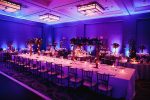
An event is the only promotion that raises your average check instead of cutting it. OpenTable’s booking data showed experiential dining up 46% year over year, with restaurants running 34% more pop-ups, collaborations and chef’s tables than the year before, and 48% of Americans saying they are more likely to book a restaurant when there is something unique to experience (OpenTable, 2025).
That is the opportunity. The catch is that most event ideas get picked for how fun they sound rather than for which empty slot they fill. This page is organised the other way round: start from the gap, whether that is a dead Tuesday, a quiet 2pm delivery window or a holiday you keep under-selling, and pick the format that fills it.
The Bottom Line
- Events beat discounts because they add a reason to come rather than a reason to pay less. 48% of diners are more likely to book when something unique is on.
- Your regulars are the real audience. They are 80% more likely to try a new menu item, which is what an event menu is.
- Off-premise gets events too: pre-order menus, family bundles and collaboration drops fill delivery windows the same way a trivia night fills a room.
- No-shows eat the gain. Reservations with a deposit or card hold recorded a 0.80% no-show rate against 2.47% without one (Resos No-Show Index, 2026).
- Group bookings are worth protecting hardest: parties of ten or more rarely no-show, but each one that falls through takes an average of 13.4 covers with it.
Lower your delivery costs by 23%
How we reduce costs:
- No delivery vehicle expenses
- Optimized local routes
- Pay-per-delivery model
- Average 23% delivery cost reduction
Why events work when discounts stop working
Diners in 2026 are value-hunting. 48% say they use coupons or rewards and 47% pick a lower-priced restaurant to manage their spending (FSR magazine, 2026). You can meet that with a discount, which works once and teaches people to wait for the next one. Or you can meet it with a reason, which is what an event is.
The evidence says the reason lands. 61% of consumers told OpenTable that dining out in 2026 feels more like a special occasion than an everyday thing, and 40% said they would rather eat with a group than alone, with group bookings up 11% year over year.
It also lands with the right people. Toast and Resy found regulars make up just 7% of a restaurant’s guest base but up to half its order volume, and are 80% more likely to try something new from the menu (Customer Experience Dive, 2026). An event is not usually a stranger-acquisition tool. It is a frequency tool aimed at people who already like you, which is why it belongs next to the rest of your work on the restaurant guest experience and earning a second order.
For the wider market context, where experiential demand sits against value-seeking, cost inflation and off-premise volume, our rundown of the restaurant trends shaping the food industry has the numbers.
Match the event format to the gap you are filling
| Event format | Gap it fills | Effort and cost | Who it brings |
|---|---|---|---|
| Trivia or quiz night | Slow midweek evening | Low: host fee, prize in food | Groups of four to six, regulars |
| Guest chef or restaurant collaboration | One high-value night, press | Medium: split revenue, new prep | New customers, food media |
| Supplier tasting (brewery, distillery, roaster) | Quiet early evening | Low: supplier usually co-funds | Enthusiasts, higher drink spend |
| Themed one-night concept | A dead Monday or Tuesday | Medium: menu, decor, staff | Social-media-driven, younger |
| Ticketed set-menu dinner | A night you want prepaid | Medium: fixed covers, fixed cost | Regulars, celebration bookings |
| Off-menu or chef’s-table night | Low-volume, high-margin slot | Low: small cover count | Regulars, highest spenders |
| Holiday pre-order menu | Peak date capacity you can’t seat | Low: production, no extra covers | Families, off-premise |
| Family or game-day bundle | Weekend delivery windows | Low: existing menu, new pack | Delivery customers |
| Private dining and large parties | Weekday lunch, early evening | Medium: space, staffing | Corporate, celebrations |
| Classes and workshops | Daytime dark hours | Medium: host, materials | New customers, gift-buyers |
Pick two formats, not ten. A trivia night that runs every Tuesday for a year beats twelve different one-off ideas, because the audience only builds if the date is predictable.
Events that fill a slow weekday
The weakest slots in most weeks are Monday and Tuesday evenings and the gap between lunch and dinner. Three things work there.
Make it recurring and same-day-of-week. Regulars plan around a fixture. A one-off needs new marketing every time.
Use the pre-dinner window. OpenTable found happy hour bookings in the 4:00 to 4:59pm slot up 13% year over year. Pulling a tasting or a quiz to 5pm picks up people who do not want a late night, and it clears your room before the dinner push.
Let somebody else pay for the content. A brewery, a roaster or a local producer will often supply product, staff and promotion for a tasting, because your room is their sampling channel. Your cost is the kitchen’s snack menu.
Events that fill a dead delivery window
This is the part most event planning ignores, even though most traffic is now off-premise. The same mechanics work without a dining room.
- Holiday pre-order menus. A fixed menu, ordered and paid for days ahead, collected or delivered in a window you choose. It converts a date you cannot physically seat into revenue with no extra covers, and the production is planned rather than reactive.
- Family and game-day bundles. One SKU, one price, one pack. It lifts the average check on exactly the nights people order in, and it is a single line on the kitchen’s prep list.
- Collaboration drops. A limited run with a local bakery, brewer or producer, available for one weekend only, order-ahead. The scarcity does the marketing.
- Catering drops for offices. A standing Thursday lunch order for a nearby office is an event that repeats itself.
The thing that makes these work is the handoff, not the menu. A pre-order that arrives late or cold on a holiday costs you the customer and the date. The channel-level detail of quote accuracy, packaging, staging and who carries it is in our guide to the off-premise dining experience, and it matters more on an event than on a normal Tuesday because everybody ordered for the same hour.
If you are running your own delivery for a pre-order window, the operational answer is batching: a fixed delivery window, routes planned in advance rather than dispatched one order at a time, and arrival notifications so nobody has to sit by the door. That is the whole reason businesses running their own drivers lean on route optimisation and automated customer notifications for holiday volume instead of trying to improvise it.
The holiday dates worth building a menu around
Two dates have hard data behind them and are chronically under-sold by independents.
Mother’s Day. 42% of moms and mom figures said they would rather go out to eat with their family than receive breakfast in bed, which only 4% preferred, and 62% said dining out is an important part of the celebration. OpenTable’s booking data showed a 13% increase in parties of six or more year over year, and a 14% increase in 5:00pm dining (OpenTable, 2026). 38% plan to celebrate with multiple generations, which is a large-table, early-sitting, fixed-menu opportunity.
Valentine’s Day. Total consumer spending hit a record $29.1 billion in 2026, with 39% of consumers planning an evening out and that evening-out spending expected to reach $6.3 billion (NRF and Prosper Insights, via NACS, 2026).
For both: run a fixed menu, sell timed sittings, take a deposit, and add a pre-order version for the people who want the meal at home. The constraint on a peak date is your kitchen and your seats, so the only way to grow it is to sell the same production through a second channel.
Protect the booking or the event loses money
An event’s economics live or die on turnout, and the data here is unusually good. Across 3,768,761 reservations at 2,417 restaurants between August 2025 and July 2026, the average recorded no-show rate was 2.33% (Resos No-Show Index, 2026). Within that:
- Deposits work. Reservations with no-show protection, a deposit or a card hold recorded a 0.80% no-show rate, against 2.47% for those without.
- Reminders work. Reservations with a delivered SMS reminder showed a 16% lower recorded no-show rate.
- Dinner is riskier than lunch. 2.63% versus 1.84%.
- Monday is the worst day at 2.69% and January the worst month at 2.62%, which is precisely when you are most likely to be running an event to rescue the week.
- Large parties are the opposite of what people assume. Parties of ten or more no-show at just 1.15%, but each failed large booking takes an average of 13.4 covers with it.
For a ticketed event, prepay is the right answer and customers accept it. For a normal booking on an event night, a card hold plus an SMS reminder gets you most of the protection with none of the friction.
Price and staff it so it makes money
An event that fills the room and loses money is a common outcome. Four numbers before you commit:
- Fixed cost of the event. Host fee, décor, extra prep, marketing, any guaranteed payment to a collaborator.
- Break-even covers. Fixed cost divided by contribution per cover. If break-even is 70% of your capacity, the idea is too expensive.
- Labour on the night. Events need more staff per cover than a normal service, not fewer, because everything happens at once.
- Prep hours before the night. The real cost of a special menu is usually the two days of mise en place nobody counted.
Then make the pricing simple. A fixed per-head price with the whole experience included outperforms a la carte at an event, because it removes the decision and lifts the average check at the same time.
Judge the event by the second visit
Covers on the night is the wrong scoreboard. The point of an event is frequency, so the number that matters is how many attendees came back within 60 days.
Three things to capture on the night:
- Who came. A name and an email or phone from every booking, especially the prepaid ones.
- What they ordered. Event menus are your cheapest menu research — the dish that sold out is your next permanent special.
- Who came back. Tag the attendees and check them against the next two months of orders.
Run the same format four or five times before you judge it. The first one tells you whether the operation works. The third one tells you whether the audience is real.