
Food presentation for takeout and delivery is a different discipline from plating for a dining room, and treating it as the same thing is why so many good kitchens get bad delivery reviews. On a plate, presentation is the last thing that happens before the guest sees the food. In a container, presentation has to survive a lid, a bag, a flight of stairs and twenty-five minutes of cornering before anyone looks at it.
The stakes are no longer marginal. Nearly 75% of restaurant traffic now happens off-premises, rising to 83% of orders for limited-service operators (Toast, Restaurant Industry Statistics 2026). For most operators, the sealed container is now the primary way customers experience their food, and nobody inspects it after it leaves.
This guide covers the whole subject: which dishes can travel, how to pack so a dish arrives composed, holding temperature, container decisions, branding the unboxing, and how to test any of it honestly. It touches the neighbouring subjects briefly and points you to the depth: the plate-level craft of making a dish look expensive for dine-in service, and the fast casual trends that are reshaping off-premises economics for the business case.
Key Takeaways
Wrong temperature is the single most common delivery app problem, occurring 28.4% of the time, and roughly 19% of delivery orders arrive significantly damaged with food spilled.
Order accuracy swings satisfaction from 93% to 48%, so the handoff you already control is usually a bigger lever than anything you can buy.
Decide which dishes are allowed to travel. Some cannot be made to survive transit and should be sold as dine-in only.
Cold food must stay at or below 41°F and hot food above 135°F, because the 41°F to 135°F band is the food-safety danger zone (FDA Retail Food Protection). Temperature is part of presentation and part of compliance.
Pack an order, leave it the length of a real delivery, then open it. Almost no kitchen does this, and it is the fastest way to find your actual failures.
Lower your delivery costs by 23%
How we reduce costs:
- No delivery vehicle expenses
- Optimized local routes
- Pay-per-delivery model
- Average 23% delivery cost reduction
Why presentation breaks between the kitchen and the door
Three forces act on a container that never act on a plate, and each one destroys a different kind of presentation work.
Movement is the first. Anything not held in place migrates. A composed arrangement becomes a pile against one wall of the container, and anything stacked collapses. The height and layering that make a plate look generous are the first things lost.
Steam is the second, and it is the one kitchens underestimate. A sealed hot container is a humidity chamber. Crisp coatings go soft, bread goes limp, and greens wilt, not because the food was wrong but because it was sealed while still releasing steam.
Time is the third. Temperature falls, sauces soak in, and emulsions separate. A dish designed to be eaten ninety seconds after plating is being eaten twenty-five minutes after plating, and nothing about that timeline was in the recipe.
Those three forces, rather than carelessness, explain most delivery complaints. They are also mostly addressable in your kitchen rather than on the road.
What actually goes wrong with delivery orders
It is worth being precise about the failures, because the fixes differ.
Wrong temperature is the most common problem with orders from food delivery apps, happening 28.4% of the time, and around 19% of delivery orders arrive significantly damaged with food spilled (Restaurant Business). Food quality complaints (cold, spilled or incorrect items) accounted for 27% of all customer complaints. Accuracy matters more than almost anything else: accurate orders produced 93% satisfaction against just 48% when orders were inaccurate (Restaurant Dive).
Blame does not land where operators hope. Around 62% of diners blame both the restaurant and the delivery company for bad service, and nearly 72% of that co-blaming happens when food arrives at the wrong temperature (Restaurant Dive). You do not get to attribute a cold order to the courier in the customer’s mind.
The useful conclusion is that temperature, containment and accuracy are the three things to engineer, in that order. Aesthetic refinement comes after the food arrives hot, intact and correct.
Decide which dishes are allowed to travel
Before any packaging decision, triage the menu. This is the step that saves the most money and the one most operators skip.
Sort every item into three groups. Dishes that travel well with no change, such as braises, bowls, stews, most pasta, anything whose texture is already soft and uniform. Dishes that travel if modified, which covers anything with a crisp element, a dressed salad, a stacked dish, anything saucy. And dishes that do not travel, which usually means delicate fried items, anything plated with height, soufflés, and composed dishes whose whole appeal is the arrangement.
Taking the third group off your delivery menu is a legitimate commercial decision, not a retreat. A dish that generates a refund half the time has negative margin regardless of its food cost. Selling it as dine-in only protects both the dish and the review score.
Cuisine style matters far less here than structure. A fusion dish built from cross-cultural components often travels better than a classical plate, because its elements are frequently designed to be combined by the eater rather than arranged by the cook. What decides the outcome is whether the dish has loose, crisp or stacked parts, not which tradition it comes from.
The second group is where the work is. Most items in it can be made to travel with one or two changes, and the rest of this guide is mostly about those changes.
How to pack so a dish arrives composed
Presentation in a container is created by packing order, not by arrangement. The goal is that the food is still where you put it when the lid comes off.
| Dish type | What fails in transit | Packaging fix |
|---|---|---|
| Fried items, fries | Steam softens the coating | Ventilated or open container, loosely closed bag, never a tight seal |
| Dressed salads, slaws | Wilts and collapses | Dressing in a separate sealed cup, guest dresses on arrival |
| Saucy mains, curries | Sauce soaks everything, leaks | Deep sealed container, sauce under the protein rather than over |
| Burgers, sandwiches | Bread goes soggy, item compresses | Wrap tightly, vent, keep sauces and wet garnish separate |
| Soups | Leaks, arrives lukewarm | Sealed cup with a tested lid, taken to a simmer before packing |
| Composite plates with sides | Components migrate and mix | Compartments or separate containers, never one open tray |
| Desserts, delicate items | Crushed by heavier items above | Separate bag or top placement, rigid container |
Then the bag itself. The accepted practice is straightforward and consistently effective: heavier items on the bottom, hot and cold foods in separate bags, sauce packets grouped in a bag of their own so they are findable, and containers taped or stickered shut. Containers should be kept closed and transported upright.
Two details are worth enforcing as standards rather than preferences. First, nothing crisp shares a sealed space with anything steaming. Second, if a container has ever leaked in testing, it is not the right container, no matter how much stock you have of it.
Temperature is part of presentation
A hot dish arriving cold reads as a quality failure even when the food is immaculate, which is why temperature belongs in a presentation guide rather than only in a safety one.
The safety floor is specific. Cold food needs to stay at or below 41°F and hot food above 135°F, since 41°F to 135°F is the danger zone (FDA Retail Food Protection). Insulation and refrigerant are part of the packaging rather than accessories to it.
For presentation purposes, three habits do most of the work:
-
Start hot food hotter than you would plate it. Soup in particular should be brought to a simmer before packaging. If it is merely hot when it goes in the container, it will be lukewarm on arrival.
-
Never hold a packed order waiting for a driver. The single biggest temperature loss in most operations is the bag sitting on a shelf. Pack when the courier is there, not when the food is ready.
-
Separate hot and cold into different bags. They fight each other, and the loser is usually the cold item’s texture.
Plating for a container versus plating for a plate
Almost none of the plate-level craft transfers directly, and pretending otherwise produces disappointment on both sides.
Height collapses. White space fills in as food migrates. Delicate sauce work (brushstrokes, dots, splatter) smears into the lid within two minutes. Garnish placed for visual balance ends up somewhere else entirely. The techniques that make a plate look expensive are valuable, but they are for food that will be looked at within seconds of being arranged, and that set of moves is covered properly in the plating techniques guide.
What does transfer is a shorter list, and it is worth knowing which:
-
Colour contrast survives. A visibly varied container reads as fresh and considered. This is the main aesthetic lever you keep.
-
Cleanliness survives and matters more. A smear on the inside of a lid is the container equivalent of a dirty rim, and it is the first thing the customer sees.
-
Deliberate separation reads as care. Compartments and separate cups look intentional rather than fussy, and they are the one case where delivery presentation can beat plate presentation.
-
Visibility helps. Clear lids let customers appreciate the meal before opening it, which recovers some of the first-look effect a plate gets for free.
Where the two disciplines converge is expectation. Customers want to receive food presented as closely as possible to the menu photos, so the gap between your photography and your container is the gap you are being judged on.
Branding the moment the bag is opened
The container is the only physical contact most delivery customers have with your business, which makes it the cheapest branding surface you own.
Branded inserts, labels and thoughtful packaging measurably elevate customer perception, and none of it requires changing the food. A printed label naming the dish helps with accuracy as well as presentation. It lets the customer confirm what they have before complaining, and it lets your own line check the bag against the ticket.
A tamper-evident sticker does double duty. It signals that nobody opened the bag, which matters to customers, and it physically keeps containers closed in transit. For fried items specifically, the recommended format is a ventilated or open container inside a loosely closed paper bag with a tamper-evident sticker: containment and steam management at once.
Keep the insert useful rather than promotional. Reheating instructions for an item that benefits from them, or an assembly note for a deconstructed dish, earn more goodwill than a discount card.
Menu photography and the expectation you are setting
Presentation failures are partly a gap between promise and delivery, and the promise is set by your photographs.
There is a measurable asymmetry here: people were willing to pay 61% more for everyday foods presented as real objects than as images (Perceived food value depends on display format). Reality outperforms pictures when the reality is good, and badly underperforms when the picture was styled for a dining room and the delivery version arrives in a container.
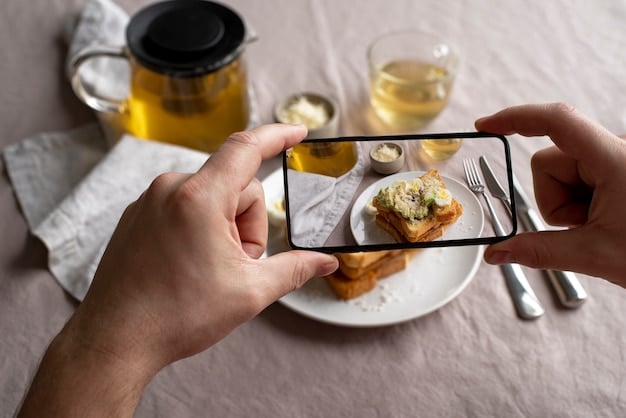
The fix is to photograph the delivery version of each dish, in the container, as the customer will actually receive it. It is less flattering and far more durable, because nobody opens the bag disappointed. Operators who have made this switch generally report fewer complaints without changing a recipe.
Seasonal items are the exception worth planning for, since they are the strongest visual content most kitchens produce all year. Shoot them in both forms during development rather than during launch week, which is part of the changeover sequence in building a seasonal menu your suppliers can keep up with.
Run the 30-minute test
This is the whole guide compressed into one hour of work, and it is the recommendation most likely to change something in your operation this week.
Take your ten best-selling delivery items. Pack each one exactly as a customer would receive it, with the real containers, the real bag, the real stickers. Leave them for the length of your average delivery, which for most operators is somewhere between 25 and 40 minutes. Then open each one and photograph what you find.
Score each on four things: is it still hot, is it still in position, is the texture intact, and does it look like the photo that sold it. Anything failing two or more needs a packaging change, a recipe change, or removal from the delivery menu.
Repeat it whenever you add an item, change a supplier’s container, or extend your delivery radius. A radius extension in particular invalidates earlier results, because every result above is a function of time in transit.
Where the handoff itself decides the outcome
Everything above assumes the food leaves promptly and travels sensibly, which is a function of how your deliveries are organised rather than how they are packed.
Two variables dominate. The first is wait time before pickup, which is pure loss: the food is finished and degrading with nothing being gained. The second is route order, since being third on a four-stop route can add twenty minutes nobody accounted for. Batching orders that are close together protects presentation; batching by whatever came in next does not.
This is the point where presentation stops being a kitchen question and becomes a logistics one. Operators who control their own delivery capacity can hold the time-in-transit variable steady, which is what makes everything else in this guide repeatable. The economics of that choice, including when self-delivery starts paying for itself against marketplace commissions, are worked through in the fast casual trends analysis.
Frequently Asked Questions
How do you make takeout food look as good as dine-in?
Stop trying to reproduce the plate and optimise for arrival instead: separate anything crisp or dressed, use compartments so components stay where you put them, keep the inside of the lid clean, rely on colour contrast rather than height, and use a clear lid where the dish photographs well through one. Then photograph the container version for your menu so expectations match what arrives.
Why does delivery food arrive cold?
Most often because the packed order waited for a courier rather than because the journey was slow. Hot food should be packed at the moment of pickup, started hotter than plating temperature, insulated, and kept in a separate bag from cold items. Wrong temperature is the most common delivery complaint at 28.4% of problem orders, and it is largely a scheduling problem.
What food should not be offered for delivery?
Delicate fried items that cannot be vented, dishes plated with height, anything whose appeal is a precise arrangement, and dishes with components that cannot be separated. If an item fails a 30-minute packed test twice, it belongs on the dine-in menu only.
Does packaging really change how customers perceive the food?
Yes, and measurably. Branded inserts, labels and quality containers raise perceived value without altering the food, clear lids let customers see the meal before opening, and customers explicitly expect delivery food to resemble the menu photography. Packaging is the only physical brand contact a delivery customer has.
How long should food survive in transit?
Design for your actual average delivery time plus a margin: for most operators 25 to 40 minutes, tested rather than assumed. If you extend your delivery radius, retest, because every packaging decision in this guide is a function of time in the bag.