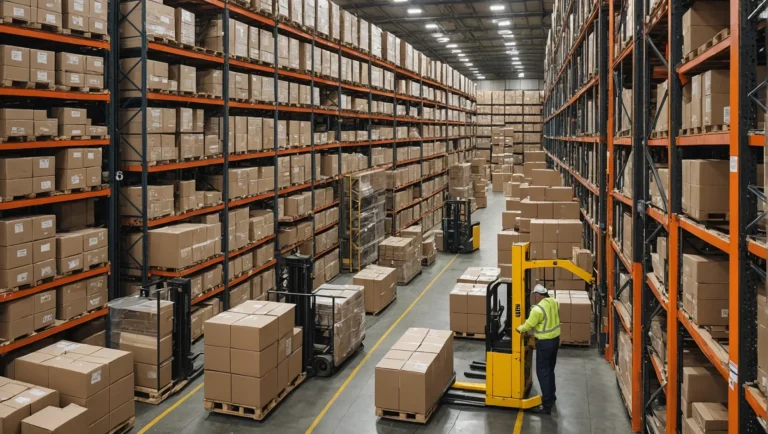

The main advantage of wholesale distribution is that it replaces thousands of small transactions with a few large ones. One order, one invoice, one delivery, and a buyer who reorders on a schedule instead of being re-acquired every month. That trade buys down your per-unit cost, your acquisition cost and your logistics burden all at once, and the price of it is gross margin and a layer of control over how your product is sold.
That is the whole calculation, and it runs in both directions. For a producer, distribution is a route to shelves you could never reach alone. For a buyer, it is the reason a 12-case order can arrive on Thursday when the manufacturer only ships pallets once a month. This covers the advantages on both sides, the costs that come with them, and the point at which the channel stops paying.
Key Takeaways
- Wholesale distribution is one of the largest sectors of the US economy. The National Association of Wholesaler-Distributors puts it at $8.6 trillion in annual activity supporting more than six million jobs (NAW), spread across 381,824 employer establishments as of 2023 (US Census Bureau).
- Merchant wholesalers sold $801.3 billion in July 2026, up 13% year over year, while inventories rose only 5.7% and the inventories-to-sales ratio fell to 1.20 from 1.28 (Census Bureau Monthly Wholesale Trade Report via Distribution Strategy Group). Distributors are moving product faster per dollar of stock than they were a year ago.
- Wholesale trades gross margin for contribution margin. Direct-to-consumer typically carries the higher gross margin but absorbs a per-customer acquisition cost that wholesale largely does not, which is why the channel with the worse headline margin often returns more per unit sold (ATTN Agency).
- The honest cost is concentration. A channel built on a handful of large accounts means a single lost account is a revenue event, not a bad week.
Boost customer satisfaction with just a few clicks
Most-Loved Features:
- On-demand drivers
- Real-time GPS tracking
- Delivery confirmation photos
- Over 50% of customers report a smoother delivery experience
What wholesale distribution is, and where its advantages come from
Wholesale distribution is the layer between production and retail. A distributor buys in bulk from producers, takes ownership of the inventory, holds it in a warehouse, and resells it in smaller quantities to businesses. Every advantage of the channel traces back to that one structural fact: someone in the middle is absorbing volume, storage and delivery risk that would otherwise sit with either the producer or the buyer. If the terminology is new, it is worth being clear on what wholesale actually means before weighing the channel, because wholesale, distribution and fulfilment get used as if they were the same thing.
That absorption is what produces the benefits below. It is also why the channel costs money: the distributor is paid for carrying that risk, and the payment comes out of the producer’s margin.
If you are on the buying side and the next question is who to actually buy from, that is a separate job with its own method. Our guide to finding a wholesale distributor near you covers the sourcing routes and the questions that qualify a distributor before the first order, and the best US wholesale directories covers where to search when the obvious routes come up short.
Metrobi is transforming wholesalers deliveries
Specialized solutions for wholesalers businesses:
- Wholesalers-trained drivers
- Proper handling equipment
- Peak day delivery support
- 23% average cost reduction
Lower cost per unit on both sides of the channel
Volume is the oldest advantage and still the largest. A producer selling in pallet quantities has a lower cost to serve per unit than one picking and packing single orders: fewer labels, fewer packages, fewer payment fees, fewer customer service contacts, less packaging material per item sold.
The buyer sees the same effect from the other direction. Buying a case instead of a unit lowers the landed cost per item, and buying several categories from one distributor lowers it again by spreading one delivery charge across a bigger order. That second effect is the one small buyers most often leave on the table. Consolidating an order list with one distributor that covers most of it usually beats splitting across three distributors at better unit prices, once you count delivery minimums and the labor of receiving three deliveries instead of one.
Market reach without opening locations
Distribution is the cheapest geography a small producer can buy. A distributor already has accounts, sales representatives and delivery routes in a territory, and selling through it puts your product into stores you would otherwise need years and a travel budget to reach individually.
The scale here is easy to underestimate. With 381,824 wholesale employer establishments in the US and more than half of them employing fewer than five people (Census Bureau), the channel is not a handful of giants. It is thousands of regional operators, each with a book of accounts in a specific metro, and each of those books is a distribution footprint you can rent rather than build. Used deliberately, that is the mechanism behind most volume growth in small consumer goods businesses, and there is more on how wholesale distribution can scale your business once you have decided the channel is worth entering.
Warehousing and delivery you do not have to build
The least discussed advantage is the capital you do not spend. When a distributor takes title to your product, it also takes on the warehouse space, the racking, the inventory financing, the pick-and-pack labor and the delivery fleet that moving that product requires.
For a small producer, that is the difference between growing on cash flow and growing on debt. A producer that wants national reach without distribution needs warehousing in multiple regions or a 3PL contract, plus the working capital to keep inventory sitting in both. Distribution converts that fixed cost into a margin concession that only applies to units you actually sell.
The current data shows distributors getting better at this. Inventories grew 5.7% year over year in July 2026 while sales grew 13%, pulling the inventories-to-sales ratio down to 1.20 from 1.28 (Census Bureau via Distribution Strategy Group). Each dollar of distributor inventory is turning over faster, which is efficiency you are buying into.
Steadier revenue and a lower cost to acquire it
Wholesale revenue is more predictable than direct revenue because it comes from accounts rather than individuals. An account that reorders every fortnight is a forecastable line in your plan; a consumer who bought once is not.
The margin comparison is where most producers get the arithmetic backwards:
| Wholesale | Direct to consumer | |
|---|---|---|
| Gross margin | Lower, because the channel takes its cut | Higher, because there is no middle layer |
| Cost to acquire the buyer | Low to nil per order; the distributor’s sales team sells for you | A real and rising per-customer cost |
| Order size | Large and repeating | Small and often one-off |
| Fulfilment burden | One bulk shipment | Per-order pick, pack and ship |
| Revenue predictability | High, tied to account reorder cycles | Low, tied to ad performance |
| Customer relationship | Owned by the retailer or distributor | Owned by you |
Industry analyses of channel economics consistently find that direct-to-consumer’s higher gross margin gets consumed by acquisition and shipping costs, leaving wholesale ahead on contribution margin per unit on a first sale, and direct selling only pulling ahead once a customer buys repeatedly (ATTN Agency). The practical conclusion is not that one channel wins. It is that wholesale is usually the volume engine and direct selling is the relationship and testing channel, and brands that treat direct selling as their primary revenue line tend to discover the acquisition cost late. Most producers end up running both, and the operational questions that come with that, pricing without undercutting your own stockists above all, are covered in our guide to doing wholesale alongside retail sales.
Risk spread across the supply chain
Distribution also moves risk off your balance sheet. Once a distributor buys your product, the exposure to that product not selling is partly theirs. If a line underperforms, you are not the only party holding it.
The same applies to market entry. Testing a new metro through a distributor costs a margin concession and some sample inventory. Testing it directly costs a warehouse decision, an ad budget and a delivery solution before you know whether anyone wants the product there.
For buyers, the risk reduction is about continuity rather than inventory. A distributor that stocks multiple producers in a category can substitute when one producer has a problem, which is a buffer you do not have when you buy direct from a single farm or factory.
What wholesale distribution costs you
The advantages are real and so are the concessions. Four of them matter:
- Margin. The distributor and the retailer both take a cut, and on consumer goods the combined take is substantial. You are paying for reach, logistics and risk absorption, and the bill arrives as a lower price per unit.
- Control over presentation and price. How your product is shelved, merchandised, discounted and bundled becomes someone else’s decision. Producers who care deeply about brand presentation often find this the hardest part of the trade.
- The customer relationship. You get order data, not customer data. You will not know who bought, why they stopped, or what they would have bought instead.
- Concentration risk. This is the one that actually ends businesses. A few large accounts mean one lost account is a revenue event rather than a bad week, and it hands those accounts the upper hand every time terms come up for renewal.
When wholesale distribution stops being worth it
The channel stops paying in four recognizable situations:
- When the margin after the channel’s cut no longer covers your cost to produce plus a profit. Run this per unit at the wholesale price, not at the retail price, and include the cost of fulfilling bulk orders.
- When one account exceeds a comfortable share of revenue. The threshold is a judgment call, but once a single account can dictate your terms, you are a contract manufacturer rather than a brand.
- When your product’s value depends on how it is sold. Anything requiring explanation, fitting, demonstration or a particular experience usually loses more to the channel than it gains in reach.
- When you already have direct demand in a territory you serve yourself. If customers in your metro are already ordering from you and you can deliver to them, handing those sales to a distributor gives away margin to reach people you already reach.
How buying through distribution changes your delivery operation
If you deliver your own orders, moving to distribution changes your inbound rhythm, and the schedule matters as much as the price.
Consolidating onto one distributor means fewer, larger deliveries, which is less receiving labor and fewer interruptions but a bigger storage requirement and more capital sitting in stock. Buying from several specialists means smaller, more frequent deliveries, less stock on hand and more receiving events to staff. For perishable product the calculation usually favors frequency, because spoilage costs more than the extra per-unit price.
The one scheduling detail worth negotiating hard is the delivery window. A distributor dropping at 7am on a morning your own drivers leave at 7:30 costs you either a driver standing still or an unchecked delivery. Asking for a window that lands before or after your own dispatch is often free, and it is worth more than a small discount.
Frequently asked questions
What are the main advantages of wholesale distribution?
Lower cost per unit through volume, market reach without opening locations or warehouses, warehousing and delivery capacity you do not have to build, more predictable revenue from accounts that reorder, a much lower cost to acquire each order, and risk shared with the distributor once it takes title to the inventory.
What are the disadvantages of wholesale distribution?
Lower gross margin, loss of control over pricing and presentation, no direct relationship with the end customer, and concentration risk from depending on a small number of large accounts.
Is wholesale more profitable than selling direct?
Per unit on a first sale, usually yes, because direct selling’s higher gross margin is offset by customer acquisition and per-order shipping costs. Direct selling tends to win only on customers who reorder, which is why most established brands run both and treat wholesale as the volume channel.
How does wholesale distribution reduce logistics costs?
By consolidating shipments. One bulk shipment to a distributor replaces hundreds of individual orders, each of which would carry its own packaging, labeling, payment processing and last-mile delivery cost. The distributor then spreads its own delivery cost across many customers on a single route.
Does wholesale distribution work for perishable products?
Yes, and it is the normal model for them, but delivery frequency matters more than unit price. Specialty distributors and regional food hubs that deliver several times a week suit perishables better than broadline distributors with weekly drops and high minimums.
What to do next
Decide which side of the channel you are solving for. If you are a producer, price one unit at the wholesale price with the channel’s cut removed and see whether the number still works; if it does, distribution is the cheapest reach available to you, and if it does not, no amount of volume fixes it.
If you are buying, the advantage is mostly in consolidation. Work out which distributor covers the largest share of your order list, then negotiate delivery days and drop size before you negotiate price. The per-unit saving from a cheaper supplier is usually smaller than the cost of an extra delivery day you have to staff.