There is no shortage of charcuterie board ideas online. What there is a shortage of is board ideas that work twice: ones you can build in forty minutes, quote a price on, travel across town, and then build again next weekend in a different colour scheme without reinventing anything.
That is a different problem from styling one gorgeous board for a photograph. It means thinking in formats (the shape of the thing you sell), themes (the seasonal or occasion-led story on top of the format), and line-ups (the specific items that fill it). Get those three layers separated and you have a menu you can rotate for a year. Keep them tangled and every order is a fresh invention.
The Bottom Line: Build your board ideas in three layers. Pick four or five formats you can produce reliably: classic board, grazing box, grazing table, jarcuterie, themed shape. Put a seasonal or occasion theme on top of the format rather than designing a new board for every request. Then fill it from a line-up of three cheese textures, three meat shapes, and a sweet-salty-acid-crunch set of accompaniments. Budget around 2 oz of cheese and 2 oz of meat per person for an appetiser board, double that when the board is the meal.
Lower your delivery costs by 23%
How we reduce costs:
- No delivery vehicle expenses
- Optimized local routes
- Pay-per-delivery model
- Average 23% delivery cost reduction
Start with the format, not the theme
A format is the structural idea: how big it is, what it sits on, how it travels, what it costs you to build. A theme is the dressing. Most people start at the theme, which is why they end up with a holiday board idea they cannot cost or repeat.
Formats also drive your purchasing. Each one implies a different set of surfaces, vessels and packaging, and the whole dependency chain is laid out in our charcuterie supplies buy list. Skim it before you commit to offering five formats you do not have the boards for. One warning up front, because it affects every format below: the decorative surface you serve on is not the surface you prep on, and the differences in a charcuterie board versus a cutting board are structural rather than cosmetic.
The five formats worth offering
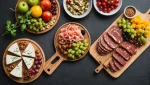
The classic board. A hardwood or slate surface, 10 to 20 inches, serving two to eight. Your default. Most profitable per minute of build time once you have the pattern down.
The grazing box. Individual or shared, in a rigid box with a clear lid. Built for transport, which makes it the format to lead with if most of your orders are delivered. It also removes the single biggest cost headache of board work, which is sending out an expensive wooden surface you never get back.
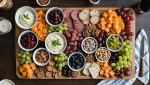
The grazing table. An event format: several surfaces butted together, built on site, serving twenty to two hundred. Highest ticket, highest labour, and a completely different supply list of runners, risers, linens, and three or four times the small vessels.
Jarcuterie. Individual servings in small jars or cups, skewered vertically. Built for standing events, weddings and anywhere guests cannot gather around a table. It portions perfectly, which makes it the easiest format to price accurately.
The themed shape. A board arranged into a wreath, a heart, a tree, a number, a letter. Seasonal, photogenic, and the format most likely to get shared, which is why it tends to be the loss leader that brings in the classic-board orders.
| Format | Typical serve | Travels well | Build time | Best for |
|---|---|---|---|---|
| Classic board | 2–8 people | Moderate — needs a flat carrier and a cover | Short | Walk-in and local pickup orders |
| Grazing box | 1–4 people | Very well — rigid base and lid | Short | Delivery-led businesses, corporate standing orders |
| Grazing table | 20–200 people | Built on site | Long, plus setup | Weddings, corporate events, launches |
| Jarcuterie | 1 per jar | Very well — vertical and stable | Medium, repetitive | Standing receptions, portion-controlled catering |
| Themed shape | 6–20 people | Poorly — arrangement shifts in transit | Long | Holidays, social content, pickup only |
Note the travel column, because it is the one that quietly decides which formats you should push. A themed wreath board is the best thing you will ever photograph and the worst thing you will ever put in a van.
Metrobi is transforming charcuterie board deliveries
Specialized solutions for charcuterie board businesses:
- Charcuterie board-trained drivers
- Proper handling equipment
- Peak day delivery support
- 23% average cost reduction
The line-up: how to fill any format
Underneath every good board is the same skeleton. Three cheese textures, three meat shapes, and four accompaniment roles.
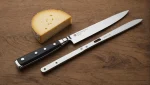
Three cheese textures. One soft (brie, goat, burrata), one semi-firm (gouda, havarti, manchego), one hard or aged (aged cheddar, parmesan, aged gouda). Texture variety reads as abundance far more than quantity does, and it also determines what blades you put on the board. Which blade suits which texture is covered in our cheese knife guide, and getting it wrong is the most common way a beautiful board falls apart during service.
Three meat shapes. One folded or ruffled (prosciutto, speck), one round and sliced (salami, soppressata), one chunked or cubed (summer sausage, chorizo). Shape, not variety, is what fills space.
Four accompaniment roles. Something sweet (fresh or dried fruit, honey, jam), something salty or briny (olives, cornichons, capers), something acidic (pickled vegetables, mustard), something crunchy (nuts, crackers, breadsticks). Fill all four roles and the board tastes balanced regardless of what is actually on it.
Portioning is the part that most often goes wrong on a paid order. The working rule across the trade is about 2 oz of cheese and 2 oz of meat per person when the board is an appetiser, and 4 to 5 oz of each when it is the meal. Underbuilding is the more expensive mistake, because an under-filled board is the one thing a customer photographs and complains about.
Seasonal charcuterie board ideas through the year
Seasonality is the cheapest source of new board ideas you have. The format stays identical, the theme changes, and customers read it as a new product.
Spring. Light and green. Fresh goat cheese, pea shoots, radishes, snap peas, strawberries, honey, mild salami. Pastel packaging, edible flowers if you can source them reliably.
Summer. Stone fruit and melon with prosciutto, burrata, basil, marinated vegetables, chilled olives. The thing to watch in summer is heat. Soft cheese on a July patio is a service problem, which is where a marble surface earns its cost.
Autumn. Figs, apples, pears, aged cheddar, walnuts, fig jam, wholegrain mustard, cured sausage. The richest-looking season and usually the busiest for corporate orders.
Winter. Pomegranate, citrus, cranberry, blue cheese, rosemary, dark chocolate, candied nuts. Also the season for themed shapes (wreaths, trees, stars) and for the highest volume of the year.
Rotating on a quarterly cycle gives you four product launches a year off the back of the same boards and the same blades. Build each season’s line-up once, photograph it, and keep the photographs for the following year.
Charcuterie board themes by occasion
Occasions are the other axis, and they tend to be what customers actually type when they order.
- Wedding and shower. Pale palette, elegant shapes, jarcuterie for standing receptions, grazing table for the reception room.
- Corporate and office. Individual boxes, no mess, nothing that needs cutting, clear allergen labels. The least glamorous and most repeatable work there is.
- Game day. Bold and salty: sharp cheddar, pepper jack, pepperoni, summer sausage, pretzel bites, mustard, a bowl of beer cheese in the middle.
- Date night and small gifts. Two-person boards and boxes, a premium cheese, chocolate, a small jam. High margin per minute.
- Kids and family. Mild cheeses, mild meats, fruit, crackers, no sharp blades on the board.
- Holiday shapes. Hearts in February, wreaths and trees in December, pastel nests at Easter, spooky boards in October.
- Dietary-specific. Vegetarian, vegan, gluten-free and dairy-free versions of your standard formats.
That last one deserves more than a bullet. A vegan or dairy-free board is built from nut-based cheeses, marinated and roasted vegetables, olives, hummus, dukkah, dried fruit and good bread, and it photographs extremely well. More importantly it is usually ordered alongside a standard board for the same event, so offering it protects the whole order rather than winning a small separate one.
Charcuterie board layout: the arrangement patterns
Four patterns cover almost everything, and they all start the same way: place the big and fixed objects first, fill with the flexible ones.
Anchor and radiate. Put the bowls down first, honey and olives and jam, then build outward from them. The default for a classic board.
Rivers and clusters. Cheeses in clusters at intervals, meats flowing between them in ribbons, crackers filling the channels. Reads as abundant and hides uneven quantities.
Rows. Straight parallel bands across the board. The fastest to build, the easiest to replicate exactly, and the right choice for boxes and anything you need twelve of.
Shape-first. Outline the shape in a border material (rosemary for a wreath, cheese for a tree), then fill inward. Slowest, and the only pattern where the shape must be committed to before anything else goes down.
Whichever pattern you use, the mechanics are consistent: cut cheeses in a mix of wedges, cubes and crumbles so one cheese reads as three items; fold and ruffle meat rather than laying it flat; and leave nothing wet directly on wood. Detailed plating technique and finishing is its own subject, and our guide to charcuterie board presentation covers the execution end of it. What matters here is which ideas are buildable.
A practical note on building boards you intend to move: the arrangement has to be mechanically stable as well as pretty. Round items roll, stacked crackers slide, and a tall centrepiece tips. Boxes and jarcuterie survive transport because they are structurally contained; an open board needs its loose items placed last, placed low, and wedged by the items around them. If a board is going in a vehicle, build it in the carrier it will travel in. And since cut cheese and sliced meat are time-and-temperature controlled foods, the whole arrangement has to stay at 41°F or below right up to the moment it is served, per the FDA Food Code. In practice that means every board idea you offer has to survive being chilled.
How many board ideas should be on your menu?
Fewer than you want, more than one. This is a menu decision rather than a creative one, and it sits alongside the other structural choices involved in running a charcuterie business, because formats, pricing and capacity all move together.
Four or five formats, each with a seasonal theme and two or three occasion variants, gives you something like fifteen to twenty saleable products off a small set of repeatable builds. That is enough to look like a full menu and few enough that you can hold the right boards, blades and packaging for all of it.
The failure mode is the custom-everything menu. Every bespoke size needs a box you do not stock, every novel ingredient has a minimum order quantity, and every one-off design takes three times as long to build as a format you have made fifty times. Keep bespoke work as a quoted premium rather than as the default, and keep your standard formats standard.
Pricing follows directly from this: a format you build in twenty minutes from stock ingredients on a surface you own is a different cost structure from one that needs a special board and a special box, and your menu should be weighted toward the former.
Where board ideas come from once you have run out
Three reliable sources, in order of usefulness.
Your own order history. The formats and themes customers reorder are better ideas than anything you will invent. Look at what gets ordered twice.
The cheese counter. Ask what has just come in. A single unfamiliar cheese with a good story is enough to refresh a line-up, and the person selling it will usually tell you what to pair it with.
The calendar. Not just the big holidays. Local events, school terms, sports seasons, graduation, open-enrolment season at offices. Occasion-led ideas sell better than aesthetic-led ones because the customer already knows why they need one.
What does not work is copying the most elaborate board you can find. The boards that make a business are the ones you can build twelve of on a Saturday, get out the door cold and intact, and still make money on. Pick the format first, dress it for the season, and fill it from a line-up you already know works.