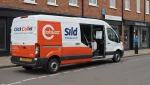

Most point-of-sale software is built for a restaurant or a retail shop. A bakery is neither, quite. You sell by the item and by the pound. Half your revenue can come from orders taken three weeks in advance with a deposit, a spelling of a name, and an allergen note attached. Your busiest hour starts before sunrise, and a meaningful share of your output leaves the building in a vehicle rather than a customer’s hand.
That mismatch is why so many bakery owners end up with a system that technically works and daily annoys them. A bakery POS system is worth choosing on a handful of specific capabilities rather than on a feature count or a demo.
This guide covers what those capabilities are, what the main contenders actually cost per month, and how to tell which category of system fits the bakery you’re running now.
The Bottom Line
- Four things separate bakery point of sale software from generic POS: custom order management with deposits and pickup dates, ingredient-level inventory with expiry tracking, weight-based pricing from a connected scale, and clean handling of wholesale accounts.
- Monthly software fees for the common options range from free to roughly $339, but the plan fee is rarely the real number. Processing rates, hardware and contract length usually move the total more than the subscription does.
- Contract length is the most underrated variable. Some systems are month-to-month; others are commonly sold on 36-month terms with early termination fees.
- If you deliver, the POS has to distinguish delivery orders from pickup orders and pass address and timing data onward. Retrofitting that later is painful.
Boost customer satisfaction with just a few clicks
Most-Loved Features:
- On-demand drivers
- Real-time GPS tracking
- Delivery confirmation photos
- Over 50% of customers report a smoother delivery experience
What makes a bakery POS different from a restaurant POS
Restaurant systems are organized around tables, courses and a kitchen ticket. Retail systems are organized around SKUs on a shelf. A bakery straddles both and adds a third mode: production against future orders.
The concrete differences show up in four places.
Custom orders with a future date. A wedding cake sold in March for a June date is a deposit, a production task, a design spec and a pickup or delivery slot. A system that can only record a sale at the moment of payment forces that whole workflow onto paper.
Inventory measured in ingredients, not items. You don’t stock croissants, you stock butter and flour and turn them into croissants. Useful bakery POS features track consumption down to the ingredient and flag items approaching a use-by date, which is where most bakery waste hides.
Weight and count in the same transaction. Loaves by the item, cookies by the dozen, bulk items by the pound off a connected scale, all in one basket without the cashier doing arithmetic.
Wholesale alongside retail. Standing orders for cafés and grocers, house accounts, per-customer pricing, and invoices at the end of the month are a different motion than ringing up a walk-in, and many systems handle only one of them well.
There’s also a fifth, easy to overlook: what happens to an order that has to travel. A POS that marks an order for delivery, captures the address, and holds the timing is what lets the rest of your process work. The packing side of that is its own discipline, and we cover it in detail in the guide to packaging baked goods for delivery, but the data has to originate at the point of sale or the packing bench is guessing.
The bakery POS features worth paying for
Not every system needs every item below. Use this as a checklist to score candidates against how you actually operate.
- Custom cake and special-order module. Deposits, balance due, pickup or delivery date, design notes, and a production view your bakers can work from.
- Ingredient-level inventory with expiry alerts. FIFO handling and warnings on items nearing a use-by date. This is the feature that pays for itself in reduced waste.
- Recipe and plate costing. Real margin per product, updated when ingredient costs move, so you can price with something better than instinct.
- Scale integration. Weight-based pricing at the counter without manual entry.
- Online ordering that writes into the POS. Orders from your own site landing in the same queue as counter sales, rather than in a separate inbox someone has to retype.
- Delivery order handling. Address capture, delivery versus pickup flags, and an export or integration that passes those stops to whoever is driving.
- Wholesale and house accounts. Standing orders, account-level pricing, invoicing and statements.
- Employee time clock. Practical for a 4 a.m. shift start, overtime tracking and break compliance.
- Production and par reporting. What sold by daypart, so tomorrow’s bake sheet is based on data instead of yesterday’s feeling.
- Loyalty and gift cards. Routine for repeat-purchase businesses, and usually a paid add-on.
- Offline mode. If the internet drops, you should still be able to take payment. Confirm this in writing before you buy, because support for it varies more than you’d expect.
A useful way to cut the list: identify the two features that, if missing, would cost you time every single day. Weight those heavily and treat the rest as tiebreakers.
What a bakery POS system actually costs per month
Published pricing moves often, and most vendors quote software separately from hardware and payment processing. The figures below were listed at the time of writing and should be confirmed with the vendor before you commit.
| System | Listed monthly software fee | Notable terms |
|---|---|---|
| Toast | $0 Starter Kit; from $69 for the Point of Sale plan | Free tier carries higher processing at 2.99% + 15¢; paid plan listed at 2.49% + 15¢ (Toast) |
| Square | $0 free plan; Square for Retail Plus $49 per location | Free plan processes in person at 2.6% + 10¢ (Square) |
| KORONA POS | Core $59, Retail $79, Plus $99 | Fit Small Business’s top bakery pick; rated 4.7/5 across G2, Capterra and GetApp (Fit Small Business) |
| Clover | Tiers commonly listed from $14.95 to $69.95 per location | Frequently sold through resellers on 36-month terms with early termination fees (Tech.co) |
| Lightspeed Retail | Basic $89 annual billing / $109 monthly; Core $149/$179; Plus $289/$339 | Monthly billing costs more than annual; KDS billed separately per screen (Capterra) |
Three things this table does not show, and all three matter more than the column it does show.
Payment processing is the largest line. At meaningful volume, a fraction of a percent on the rate outweighs the entire subscription. Run your real monthly card volume through each rate before comparing plan fees.
Hardware is separate. Terminals, a cash drawer, a receipt printer, a scale and a card reader are a real upfront number, and a free software tier does not make hardware free.
Contract length is the trap. Month-to-month means a bad decision costs you a month. A 36-month term with an early termination fee means a bad decision costs you years.
Which bakery POS category fits your operation
Rather than ranking products, it helps to identify which of four situations you’re in. The right answer differs sharply.
A home bakery or a stall
You need payment acceptance, a simple catalog, and a way to take custom orders. Subscription cost should be near zero and there should be no contract. A free tier from a mainstream provider covers this, and the higher processing rate on free plans is irrelevant at low volume. Do not buy a system sized for a storefront because you plan to open one eventually.
A retail storefront with a counter
Speed at the counter, a scale, daypart reporting and loyalty become the priorities. This is where paid retail-oriented tiers and bakery-specific systems earn their fee, mostly through inventory and reporting that tells you what to bake tomorrow.
A bakery café with seating
Now you need table or order management, a kitchen display, and modifier handling on drinks. Restaurant-first systems fit better here than retail-first ones, and this is the case where the hospitality pricing tiers are worth their cost.
A wholesale or delivery-heavy bakery
Standing orders, house accounts, invoicing, per-customer pricing and delivery routing drive the decision. The counter matters less. Look hardest at account management and at whether the system exports orders in a form something else can route, because this is where the generic systems tend to be weakest.
Most bakeries are more than one of these at once. Pick the one that generates the most revenue and let it lead.
How your POS should handle delivery and wholesale orders
If delivery is more than an occasional favor, this section decides your choice.
At minimum, the system should mark an order as delivery rather than pickup, capture and store a full address, hold a requested delivery window, and keep any special instructions attached to the order through to fulfillment. That sounds basic. Plenty of systems either bury it or handle it only through a third-party marketplace integration, which is not the same thing when the orders are your own.
Past the minimum, useful capabilities include exporting the day’s delivery orders in a usable format, integrating with routing or dispatch software, and sending automatic notifications to the customer. Multi-stop route optimization is what turns a list of addresses into a sensible driving order, and it works from exactly the address and timing data the POS collects.
For wholesale, the questions are different, and they get sharper the further you go. A bakery working through a move from retail into wholesale usually hits its POS limits well before it hits its production limits. Can you set per-account pricing? Do standing orders generate automatically on a schedule? Can you invoice monthly rather than collecting payment per order? Does the system produce a statement your café customers will accept? A bakery growing its wholesale side often outgrows its POS on exactly these points rather than on anything at the counter.
How to evaluate a bakery POS before you commit
A structured trial is worth more than any review, including this one.
- Write down your five most common transactions. A walk-in dozen, a custom cake deposit, a wholesale standing order, a delivery order, and an end-of-day close.
- Run all five in a demo, yourself. Not watched, performed. Count the taps. The difference between four taps and nine taps on your most common transaction is hours per week.
- Ask for total first-year cost in writing. Software, hardware, onboarding, payment processing on your actual volume, and any add-on fees for loyalty, online ordering or invoicing.
- Ask directly about contract length and termination. Get the answer in writing, including auto-renewal terms.
- Test the support channel at a realistic hour. If your day starts at 4 a.m., find out what happens if the terminal fails at 4 a.m.
- Confirm your data can leave. Customer list, sales history and product catalog, exportable in a standard format. A system you can’t leave is a system you’ll be stuck with.
Point six is the one people skip and later regret. Switching costs are what turn a merely adequate system into a permanent one.
Frequently asked questions
What is the best POS system for a small bakery?
There isn’t a single answer, because the right choice depends on whether your volume comes from a counter, a café, or wholesale accounts. Fit Small Business names KORONA POS its top bakery pick, citing inventory management and a customizable interface (Fit Small Business). For a very small or new bakery, a free tier from Square or Toast is usually the sensible starting point.
How much does a bakery POS system cost per month?
Listed software fees run from $0 on free tiers up to roughly $339 per month for higher retail tiers. The subscription is only part of it: payment processing rates, hardware and onboarding typically make up more of the first-year cost than the monthly fee does.
Do I need a POS system for a home bakery?
Not necessarily a full one, but you do need reliable payment acceptance and a record of orders. A free POS tier gives you both without a subscription, and it keeps your sales history in one place if you later scale into a storefront.
Can a bakery POS system handle custom cake orders?
The better ones can, and it’s the feature most worth verifying in a demo. Look for a special-order workflow that records a deposit, a balance due, a pickup or delivery date, and design and allergen notes, then surfaces that order to your production team ahead of the date.
Should a bakery POS integrate with delivery software?
If you deliver your own orders, yes. The POS is where the address, the requested time and the special instructions are captured, and routing or dispatch software needs that data to build a sensible stop order. Systems that only connect to third-party delivery marketplaces don’t solve this for orders that come through your own channels.
The bottom line on choosing a bakery POS system
The bakeries that end up happy with their point of sale software tend to have chosen on two or three capabilities they use every day rather than on a comparison of feature lists. For most, those are custom order management, ingredient-level inventory, and clean handling of whatever mix of counter, wholesale and delivery revenue they actually have.
Do the arithmetic on processing rates against your real volume, read the contract term before the feature sheet, and run your five most common transactions yourself in a trial. That process will point at the right system faster than any ranking, and it protects you from the one mistake that gets expensive: a three-year commitment to something that fits the bakery you have today but not the one you’re building.