

The customer appreciation gestures that survive contact with a working kitchen are the ones attached to something that was already going to happen. An order is already being packed. A delivery is already arriving at someone’s door. A receipt is already being sent. Anything you add at one of those moments costs you almost nothing extra to execute. Anything that needs its own event, its own staffing and its own calendar slot tends to happen once and never again.
That’s the whole logic of this guide. Below are appreciation ideas sorted by where they attach in the order cycle, with what each one roughly costs and who it’s worth spending on. Most of them are under a few dollars per order, and the best ones aren’t discounts.
If you’re looking for the wider version of this question, how your business shows up locally and not only to the people who already buy from you, that’s a different job, and it belongs in giving back to the community. Appreciation is aimed inward at existing customers. Community work is aimed outward. They reinforce each other, but they’re not substitutes.
Metrobi drivers are rated 4.97/5
Trusted by local businesses for:
- Background-checked professionals
- Specialized in business deliveries
- Same drivers for consistency
- 4.97/5 average delivery rating
The Bottom Line
- Retention is cheaper than acquisition, and the gap is not close. Winning a new customer costs several times what keeping one does.
- The delivery is your most underused appreciation channel. It’s a physical moment, in the customer’s hands, that your competitors treat as logistics.
- Discounts are the weakest gesture available. They train customers to wait for the next one and shrink your margin permanently.
- Recognition beats value. A named note about a customer’s usual order outperforms a bigger anonymous coupon.
- Spend unevenly. A flat perk for everyone costs the most and moves the least; your top 10% of accounts deserve visibly more.
Why customer appreciation beats chasing new diners
The economics are lopsided. Acquiring a new customer runs roughly five to twenty-five times the cost of retaining an existing one, a range that traces back to Harvard Business Review’s work on retention, and the classic finding alongside it is that a five-point improvement in retention can lift profit substantially.
Recent industry data says the same thing in restaurant terms. Tillster’s retention research found that 45% of diners said their favorite restaurant chain changed in the past year, up sharply from 33% the year before (Tillster). Meanwhile repeat guests spend meaningfully more per visit than first-timers, and in quick service the repeat cohort accounts for the large majority of sales.
Read those two together and the conclusion is uncomfortable: preference is less sticky than it used to be, and the customers you already have are simultaneously your cheapest growth and your most exposed asset. Appreciation is the cheapest defense available, and unlike a loyalty platform it doesn’t need procurement approval.
Customer appreciation ideas that cost under $5 an order
These are the workhorses. Each one attaches to an order you’re already fulfilling.
- A handwritten note with the customer’s name and their usual order. Fifteen seconds and the cost of a card. It is still, by a wide margin, the gesture people photograph and post.
- A single free item they haven’t tried. One pastry, one sample cup, one stem. Frame it as “we thought you’d like this,” not as a promotion.
- Upgraded packaging on a repeat order. A ribbon, a wax seal, a sturdier box for the item that always arrives bruised.
- A rounding-down on the invoice with a line that says why: “took the delivery fee off this one, thanks for six months of Tuesdays.”
- First access, not a discount. Let regulars order the seasonal item a day before it’s public. Costs nothing, feels like status.
- A named referral thank-you. When a customer sends you someone, thank them specifically for that, not with a generic credit.
The common thread is specificity. A gesture that could have been sent to anyone reads as marketing; a gesture that could only have been sent to this customer reads as appreciation. If you want a broader menu of options beyond the food-business context, there’s a wider list of customer appreciation ideas that really work for local retail and service businesses too.
Appreciation gestures to put in the delivery itself
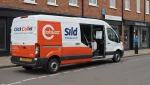
If you deliver your own orders, the drop-off is the one touchpoint your customer physically experiences every single time, and most operators waste it. Things that work here:
- A card that names the person who made the order and the person who drove it. Two names turn a transaction into two humans.
- Proof-of-delivery photos used well. Real-time tracking and delivery photos exist to reduce “where is it” calls, but a neatly staged drop-off photo also reads as care. Metrobi’s receiver platform, for example, supports real-time tracking and proof-of-delivery photos, and the difference between a photo of a box on wet concrete and a box set on the step under cover is entirely down to instruction.
- Arrival notifications that sound like you. Automated notifications on dispatch and arrival can be customized, so write them in your own voice instead of leaving the default.
- Same-driver continuity for standing orders. A customer who sees the same face weekly starts treating your delivery as a relationship. Building a preferred driver list is the mechanism; the recognition is the payoff.
- Taking the returns and empties back. Collecting last week’s trays or buckets on the same run is a favor your customer notices every time.
- A seasonal add-on for accounts on a standing route. A box of something extra in December, delivered on the normal run, costs you one line on an existing stop.
One caution: none of this survives an unreliable delivery. A thank-you card inside a late order reads as insult, not appreciation. Fix arrival times first, then decorate them.
When to thank a customer: timing across the order cycle
The same gesture lands differently depending on when it shows up.
| Moment | What to send | Rough cost | Why it works here |
|---|---|---|---|
| Order confirmation | A personal line, not a template | $0 | Sets the tone before anything can go wrong |
| In the box | Note, sample, upgraded packaging | $0.50–$4 | The only moment that’s physical |
| On arrival | Named notification, delivery photo | $0 | Closes the loop the customer was worried about |
| Day after | One short message, no ask | $0 | Nobody else does this, so it stands out |
| After a problem | A fix, then a small unprompted extra | $2–$10 | Recovered complaints produce the most loyal customers |
| Milestone (10th order, one year) | Something they’d have bought anyway, free | $5–$25 | Recognition of history, which discounts can’t fake |
| Slow season | First access or an invite | $0–$5 | Fills a quiet week without cutting price |
The two most neglected rows are “day after” and “after a problem.” The first is neglected because it feels redundant. The second is neglected because it’s uncomfortable, which is exactly why it converts. A gesture only lands there if the underlying issue got fixed first, so keep a standard sequence in place to resolve customer complaints before you decide what to send.
Customer appreciation ideas for regulars and wholesale accounts
Not every customer should get the same thing. A weekly wholesale account and a once-a-quarter retail order are different businesses to you, and pretending otherwise is expensive.
For your top accounts:
- A standing contact who knows their order. The single most valued perk in B2B food, and it costs you a named person rather than a budget.
- Flexible cutoffs. Letting a good account add to an order an hour after the deadline is worth more than any gift.
- A tasting of what’s coming. Send the new item before it launches and ask what they think. It’s appreciation and product research in one move.
- Annual, itemized thanks. “You ordered 312 times this year” is a pleasing sentence to receive, and it reminds them how embedded you are.
For everyone else, keep it light and repeatable: a note in the box, an occasional sample, and notifications that sound human.
If part of what makes the gesture work is what’s in the box, that traces back to sourcing. The freshness or provenance you’re handing over comes from whoever supplies you, which is one more thing to weigh when you review the best food suppliers for restaurants. A sample of something excellent is appreciation. A sample of something mediocre is a warning.
How to run a customer appreciation day that isn’t just a discount day
Customer appreciation day is the one event-shaped idea that earns its slot, and the common version of it, 20% off for one day, is just a sale with nicer wording. What makes it work instead:
- Give access, not price. Let customers pick the special, tour the kitchen, meet the baker, take the recipe.
- Cap it and name it. The first fifty orders, your standing accounts, the people who ordered in your slowest month. Scarcity is what makes it feel like recognition.
- Pick a slow day. Rewarding people for coming in when you’re already slammed rewards nobody.
- Put the owner in the room. For a small food business, the owner shaking hands is the product.
- Send the invite personally. One name, one sentence, one reason they specifically are invited.
National Customer Appreciation Day falls on April 18, which is a fine hook if you need one. A quiet Tuesday in your slowest month is usually a better business decision.
Loyalty perks versus one-off thank-yous
Both have a place, and the distinction is simple: a loyalty program buys frequency, a thank-you buys goodwill.
- Use a program when purchases are small and frequent and you want a fourth visit this month. Roughly half of restaurant customers are already enrolled in at least one program, so the mechanic is familiar to them, but familiar also means unremarkable.
- Use a one-off gesture when the relationship is high-value, low-frequency, or wobbling. A wholesale account that just had a bad week does not need points.
- Don’t run both badly. A neglected points program with stale rewards actively signals that you stopped paying attention.
Keep whichever you choose legible. If a customer can’t explain the perk in one sentence, it isn’t a perk.
What appreciation costs and how to budget it
Work per order, not per campaign. A workable frame:
- $0.50 to $1 per order covers cards, inserts and better tape on the box. This is a printing decision, not a marketing budget.
- 1% to 2% of order value covers samples and the occasional waived fee.
- A fixed monthly pool, say the value of two average orders, for milestone gifts and recovery gestures, spent at a manager’s discretion without approval.
- Staff minutes, which are the real cost. Two minutes per order of personalization across 40 orders a day is a real labor line; price it honestly and decide which orders get it.
Then spend it unevenly. Flat perks for every customer cost the most and change behavior the least.
Mistakes that make customer appreciation feel fake
- Automating the personal part. A merge field that says “Thanks, [FIRST_NAME]!” is worse than no message.
- Asking for something in the same breath. A thank-you with a review request attached is a review request.
- Appreciating only new customers. Sign-up offers that your five-year regulars can’t access are the fastest way to insult them.
- Discounting reflexively. Price cuts are the one gesture that permanently lowers what the customer expects to pay.
- Thanking people for an order that arrived late and cold. Reliability is the prerequisite, not the garnish.
- Stopping. A three-month burst of appreciation followed by silence reads as a campaign that ended, which is exactly what it was.
Frequently asked questions
What is customer appreciation, in practical terms?
It’s a deliberate, repeated act of recognizing an existing customer’s value, usually a small gesture attached to an order, sent because of something specific about that customer rather than as a blanket promotion.
What are the best customer appreciation ideas for a small food business?
Named handwritten notes in the box, a free sample of something they haven’t tried, first access to seasonal items, waiving a fee with an explanation, and a personal message the day after a delivery. All are under a few dollars and none require a platform.
How often should you thank customers?
Something small every order, something specific at milestones, and something unprompted after any problem. More than that and it becomes wallpaper.
Do gifts work better than discounts?
Generally yes. A gift is remembered as a gift; a discount is remembered as the new price. Use discounts to move stock, not to express gratitude.
How do you measure whether appreciation is working?
Track repeat rate, time between orders, and average order value for the customers who received a gesture against those who didn’t. Direct replies to your messages are a useful soft signal, because people answer a note and ignore a coupon.
Where to start
Put a card and a name in the next fifty boxes that go out. Write down which customers got one. In a month, look at who ordered again and how quickly. That single experiment costs less than a case of produce and will tell you more about your own customers than any survey. Whatever works, make it the default on every order rather than a thing you do when there’s time.
Sources