Google Shopping is the product grid that sits above search results and fills the Shopping tab: photos, prices, store names, and now delivery estimates. For a business that packs and delivers its own orders, it is one of the few places online where being nearby is an advantage rather than a rounding error.
The question worth answering before you invest a week in it is not how Google Shopping works. It is whether it will sell anything for you, and what has to be true for that to happen. This article is about that decision: what the channel actually is, what you get free versus paid, and which signals separate the listings that sell from the ones that only get looked at.
The Bottom Line
- Google Shopping is a product discovery surface, not a marketplace. Google never takes the order; every click lands on your own site, so you keep the customer relationship and the margin.
- Free listings cost nothing and use the same product feed as paid ads. One study of 58 domains by ROI Revolution found free listings converted at 2.07% against 1.70% for paid clicks, an 18% higher conversion rate with no click cost attached.
- Google’s Shopping Graph passed 60 billion product listings in 2026 and refreshes at more than two billion updates an hour, which means your feed is competing on freshness as much as on content.
- Delivery is a ranking and conversion signal now, not a checkout detail. Shipping speed, cost and local availability all show on the listing before anyone clicks.
- Extra costs such as shipping are the most-cited reason for cart abandonment, named by 48% of abandoners (Baymard Institute). Putting the delivery terms in the listing removes the surprise that causes it.
Lower your delivery costs by 23%
How we reduce costs:
- No delivery vehicle expenses
- Optimized local routes
- Pay-per-delivery model
- Average 23% delivery cost reduction
What Google Shopping is, and what it is not
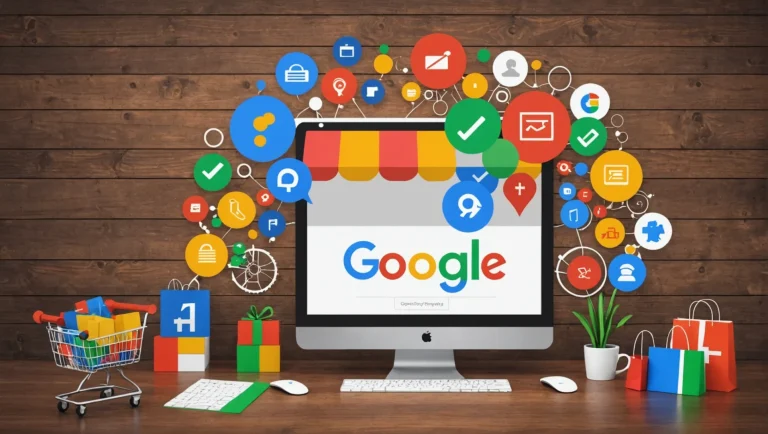
Google Shopping is a comparison surface. Retailers submit product data to Google Merchant Center, Google indexes it, and shoppers see product cards drawn from that data across Search, Images, the Shopping tab, Lens, and increasingly inside AI-generated answers.
It is not a marketplace. Google does not hold your inventory, does not process the payment in most setups, and does not own the customer. That distinction matters more than it sounds. On Amazon you rent access to a buyer. On Google Shopping you buy a click to your own checkout, which is a materially better deal for a business with repeat customers and its own delivery service.
Two other things are worth knowing. Your product data, not a keyword list, decides which searches you appear for, which is why feed quality does the work that keyword research does elsewhere. And the channel is not purely paid: free listings have existed since 2020 and run on the same feed.
Google’s Shopping Graph, the index behind all of this, surpassed 60 billion product listings in 2026 with more than two billion updates flowing through it every hour (Google, 2026). The practical translation for a small seller: a stale feed is an invisible feed.
Free listings or paid Shopping ads: which to start with
Both, in that order. Free listings first because they cost nothing and use work you have to do anyway, then paid ads once you know which products people click.
| Surface | Cost | Where it shows | What it takes |
|---|---|---|---|
| Free product listings | None | Shopping tab, Search, Images, Lens, Gemini surfaces | A clean, approved feed |
| Shopping ads | Per click | Sponsored grid above and inside results | Feed plus a linked Google Ads budget |
| Local inventory ads | Per click | Nearby searches, Maps, “available today” filters | Feed plus verified location and local stock data |
| Free local listings | None | Local surfaces and Business Profile | Verified location, local inventory feed |
The conversion evidence for free listings is better than most people assume. Analysis of 58 domains by ROI Revolution found free listings converting at 2.07% against 1.70% for paid clicks, roughly 18% higher, with no cost per click at all. That does not make paid ads pointless; paid placement gets far more volume and sits higher on the page. It does mean that running paid without free is leaving the cheapest conversions on the table.
One change to plan around: since April 2026 Google has been mixing sponsored products directly into the free listing grid rather than keeping ads only at the top of the page (PPC Land, 2026). The unpaid grid is no longer a paid-free zone, so free listings get you in the room but not necessarily the best seat.
When you are ready to spend, the setup side (feed, campaign type, budget, delivery radius) is covered end to end in our guide to Google Shopping ads for local delivery.
The delivery signals that decide whether your listing sells
Delivery information is displayed on the listing itself, which makes it a marketing asset rather than a logistics footnote. Three signals do most of the work.
- Shipping speed. Google shows delivery estimates on product cards and runs same-day and next-day annotations for merchants whose shipping policies support them. A card promising delivery today beats an identical card promising delivery Thursday, even at a slightly higher price.
- Shipping cost. Free or low-cost delivery is surfaced directly. This is where a local operation with its own vehicles has a structural edge: your cost to deliver eight miles is not a carrier’s cost to ship anywhere, so you can offer terms a national seller has to subsidise.
- Local availability. “Available nearby” and pickup options change the intent of the click entirely. The shopper is no longer comparing you to a warehouse; they are deciding whether to buy from the shop in their own town.
The conversion case for getting these right is well documented. Baymard Institute’s meta-analysis across 49 studies puts average cart abandonment at 70.19%, and extra costs such as shipping and tax are the leading stated reason, cited by 48% of abandoners (Baymard Institute). Most of that damage is caused by surprise rather than by expense. A delivery cost that appears on the product card, before the click, cannot surprise anyone at checkout.
How to make your product feed earn its place
The feed is the product. Everything Google knows about what you sell comes from it, and small improvements to it move more revenue than bid changes usually do.
- Write titles the way people search, not the way your catalogue is organised. “Seasonal Mixed Bouquet, Same-Day Local Delivery” works harder than “SKU 4412 Arrangement”.
- Fill every optional attribute you can. Brand, GTIN, colour, size, material, product category. Attribute completeness is what lets Google match you to a specific query instead of a vague one.
- Use images that survive being small. Product cards are thumbnails. A shot that reads clearly at 200 pixels beats a beautiful one that turns to mush.
- Keep price and availability synced to the hour, not the week. Mismatches between feed and site are the most common cause of disapproval, and a disapproved product earns nothing.
- Update the feed daily at minimum. If you run promotions or your stock turns fast, more often than that.
Feed optimisation is unglamorous and it compounds. A catalogue where every item carries a GTIN and a real category simply appears in more auctions than one where half the fields are blank.
Pricing: the part most sellers get wrong
Google shows your price next to everyone else’s, which makes Shopping the most price-transparent channel a small business can sell on. That sounds like bad news for anyone who is not the cheapest, and it mostly is not.
Merchant Center’s price competitiveness report shows how your prices compare to the benchmark for the same products across all sellers (Search Engine Land). The benchmark is not a target to beat; it is a diagnostic. A product priced 30% above benchmark and getting no clicks is priced out of the auction. A product priced above benchmark that still converts is proof you are selling something other than price: freshness, speed, or the fact that you are local.
The move that usually pays is not cutting prices across the board. It is finding the three or four items where a small price change crosses a threshold, and leaving the rest alone.
What results to expect, and how long they take
Expect the first meaningful data in three to four weeks, and expect it to be concentrated in a handful of products.
Shopping revenue is almost never spread evenly across a catalogue. Two or three items typically produce most of the return while the rest absorb budget quietly. That is normal and it is the main lever you have: identify the winners fast, and stop paying for everything else.
A reasonable first-quarter sequence looks like this:
- Weeks 1–2. Feed approved, free listings live, small paid campaign running. Judge nothing yet.
- Weeks 3–6. Enough clicks to see which products get attention. Cut the non-performers, raise budget on the two or three that convert.
- Weeks 7–12. Test the delivery signals, such as a same-day annotation or a free-delivery threshold, and measure against the earlier baseline rather than against ambition.
None of that works if nobody is watching the account. Feeds break, prices drift, items go out of stock while the ads keep running. Our guide to Google Shopping monitoring sets out which reports to check and how often, which is the difference between a channel that compounds and one that quietly leaks money.
Frequently asked questions
Is Google Shopping free?
Free product listings cost nothing and appear across the Shopping tab, Search, Images and Google’s AI surfaces. Shopping ads are paid per click. Both draw on the same Merchant Center feed, so the work to get started is shared.
Do I need an online store to sell on Google Shopping?
You need a website where the product can be bought and where the price and availability match your feed. A hosted store on Shopify, WooCommerce, Squarespace or similar is enough. You cannot list products that are only purchasable by phone or in person.
Is Google Shopping better than Amazon for a local business?
They solve different problems. Amazon brings volume but rents you the customer and takes a commission on each sale. Google Shopping sends the click to your own site, so you keep the margin, the customer data, and control of the delivery experience. For a business that delivers locally and wants repeat orders, Google Shopping usually fits better.
How much should a small business spend on Google Shopping?
Start at $10 to $20 a day and judge the channel on cost per order rather than clicks. A narrow delivery radius caps how much traffic is even worth having, which keeps the sensible budget lower than Google’s suggestions assume.
Does offering delivery actually help my Google Shopping listings?
Yes, in two ways. Delivery speed and cost are shown on the product card and influence which listing a shopper clicks. And local availability makes you eligible for nearby-shopper placements that national retailers cannot compete for on delivery time.
Deciding whether it is worth it
Google Shopping suits a business with a real catalogue, prices that stand up to being displayed next to competitors, and a delivery promise it can keep. If you have those, the channel is one of the cheaper ways to reach people already trying to buy what you sell.
If your catalogue is three items, your prices are well above benchmark for a reason you cannot explain on a product card, or your delivery capacity is already at its limit on a busy Friday, fix those first. The channel amplifies what you have. It does not substitute for it.