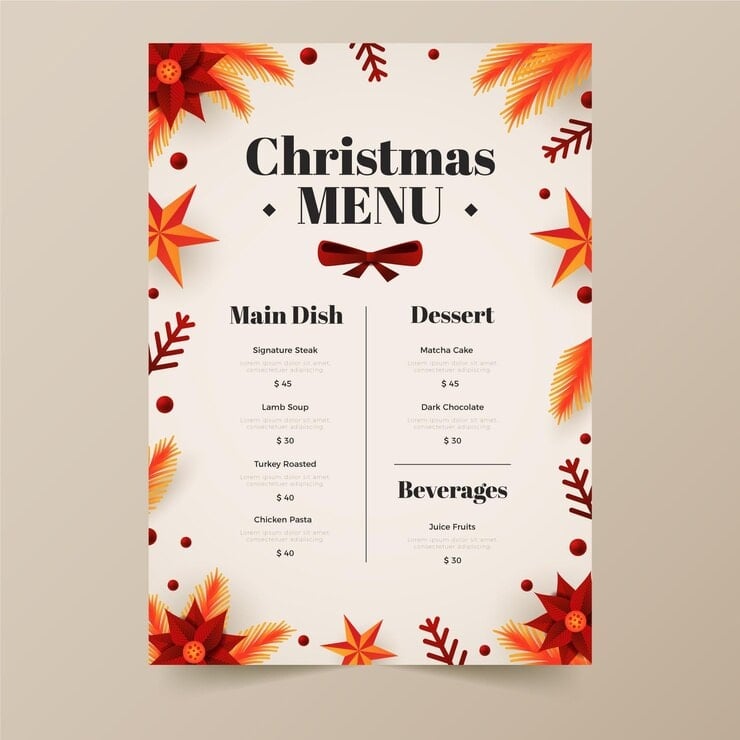

The holiday menu ideas that earn their place on a caterer’s list share three traits. They hold temperature for two hours, they scale from 20 guests to 200 without a second prep day, and they still look like somebody put thought into them. A honey-glazed ham clears all three. A plated seared scallop, in December, for 140 people, clears none.
This guide covers what to put on your holiday menu this season: the appetizers, mains, sides and desserts that earn their pan space, how to cover dietary needs without building a second kitchen, which service format fits which booking, and what to charge. Getting those orders out the door once the menu is set is its own job, and we cover that separately in our guide to preparing your catering business for the holiday season.
Save 80% of delivery management time
We handle everything:
- Dedicated operations manager
- Real-time tracking dashboard
- Automated customer notifications
- Urgent issue resolution
The Bottom Line
- Build the menu around three or four strong anchors per booking: one main protein, two sides, and a salad or warm starter. Long menus don’t read as generous, they read as unfocused.
- Corporate demand is strong, and most of it goes outside the office. A December 2024 Challenger, Gray & Christmas survey found 64% of companies planned in-person holiday celebrations, and about 59% used an external provider rather than hosting on their own premises.
- Assume a quarter to a third of any guest list needs something other than the standard plate. Roughly 5% of Americans are vegetarian or vegan and about 1% have diagnosed celiac disease, but far more are avoiding gluten, dairy or heavy portions by choice.
- Pick dishes by how they behave off the heat, not by how they photograph. Braises, roasts, gratins and grain salads survive transport. Anything fried, anything with a delicate sauce, and anything that needs to be cut to order doesn’t.
- Price the season, not the dish. Ingredient costs are the pressure point: 82% of caterers expect them to rise through 2026, according to FLIP’s 2026 catering report.
What belongs on a holiday catering menu in 2026
Start with what already sells. Your best-performing dish in March is still your best-performing dish in December, and layering a seasonal touch on top of it is cheaper and safer than inventing a new line item your kitchen has never run at volume.
From there, a holiday catering menu needs to answer four questions for the client:
- What’s the centerpiece? One protein everybody recognizes. Turkey, ham, prime rib, or a roast that reads festive from across the room.
- What’s the vegetarian answer? Not a side dish relabeled as an entrée. An actual dish somebody would choose on purpose.
- What can guests graze on while they wait? The first 30 minutes of a holiday party is standing around. Fill it.
- What’s the sweet ending? Small, handheld, and varied beats one large cake almost every time.
Everything else on the menu is optional. Clients think they want choice, but a tight menu with four strong options gets booked faster than a sprawling one with fourteen, because the person ordering is usually an office manager who wants the decision to be easy. Menu design and kitchen reality are tightly linked. A menu your line can’t execute in the third week of December will cost you in refunds and reviews, which is the case for planning the holiday season before the orders land.
Holiday appetizers and grazing stations
Grazing is where holiday catering has moved. A station lets guests mingle, absorbs an uneven arrival window, and costs you less labor than passed hors d’oeuvres because nobody has to circulate.
Strong holiday station builds:
- A charcuterie and cheese table. Cured meats, three cheeses at different intensities, spiced nuts, dried fruit, honey, cornichons, and enough crackers and sliced baguette to outlast the meats. It scales linearly, it needs no heat, and it photographs well enough that clients post it.
- A winter crudité board with roasted beets, blanched green beans, endive spears and radishes alongside whipped feta and a herb yogurt dip. Cheaper than charcuterie, and it gives the room a lighter option early.
- Warm dips in small vessels. Spinach and artichoke, baked brie with cranberry, or a caramelized onion dip, each in individual ramekins rather than one large bowl. Portion control and food safety both improve.
- A soup shooter station. Butternut squash, roasted tomato, or potato leek in 4-ounce cups. Very low food cost, very high perceived value, and it holds in a soup well for hours.
Passed items still earn their place at more formal bookings. Keep them to three: one seafood (mini crab cakes, shrimp cocktail shooters), one meat (beef tenderloin crostini, bacon-wrapped dates), one vegetarian (mushroom tartlets, whipped ricotta crostini with fig).
Holiday main courses that hold up on a buffet line
The centerpiece has one job: look like an occasion and survive 90 minutes in a chafing dish. That rules out more dishes than most caterers admit in October.
Roast turkey is the Thanksgiving default and it’s hard to beat on cost per portion. Carve it off-site, hold the slices in their own jus, and it won’t dry out. Dry turkey on a holiday buffet is almost always a holding problem, not a cooking problem.
Honey-glazed or spiral ham is the highest-margin holiday protein most kitchens run. It’s forgiving, it’s good at room temperature, and it feeds a crowd cheaply.
Prime rib or herb-crusted beef tenderloin is the upgrade sell. It needs a carving attendant to work properly, which adds labor, but it’s the dish that moves a booking from $40 a head to $70.
Braised short ribs or pork shoulder are the underrated pick. They improve sitting in their braising liquid, they reheat without penalty, and they’re a fraction of tenderloin cost.
Chicken with a seasonal glaze (cranberry, apple cider, lemon butter) is the safe second protein. Bone-in thighs hold far better than breast.
Baked salmon with herb butter covers the pescatarian guest and the client who wants something lighter on the table.
For a vegetarian centerpiece that isn’t an afterthought: stuffed acorn squash with wild rice and cranberry, a mushroom wellington, or a baked ziti with winter greens. All three hold well, and all three read as a dish somebody would order on purpose.
Holiday side dishes worth the pan space
Two sides per booking, three at most. More than that and the hotel pans stop fitting in the van.
- Potatoes au gratin or garlic mashed potatoes. Gratin holds better; mashed is more popular. Pick one and do it properly.
- Stuffing or dressing, made with a sturdy bread that won’t turn to paste after an hour in the pan.
- Roasted winter vegetables (brussels sprouts, carrots, parsnips), tossed after roasting rather than before, so they don’t steam in their own moisture.
- Candied yams or honey-glazed carrots for the sweet note the holiday table expects.
- Mac and cheese. Unglamorous, universally eaten, and the single best insurance policy against a picky guest list.
- A grain or kale salad with dried cranberry, toasted nuts and a sharp vinaigrette. This is the dish that keeps a heavy menu from feeling like a brick, and it’s the one guests mention afterward.
Dress salads on site, not in the kitchen. A dressed kale salad survives the drive; a dressed spring mix does not.
Festive desserts that travel
Small and varied beats large and singular. A dessert platter with four items gives every guest something they want and gives you no cutting, no plating and no serving utensils to manage.
Reliable holiday picks: assorted holiday cookies, peppermint brownie bites, mini cheesecakes, chocolate mousse cups, apple crumble in individual cups, and cannoli or éclairs for a bakery-forward table.
Skip anything with a tempered chocolate finish or a whipped cream topping unless you’re plating on site. Both fail in a warm van.
Building a holiday menu around dietary restrictions
Plan for this at the menu stage, not when the client emails you three days out. At a 100-person holiday party, expect several guests with diagnosed allergies and a much larger group avoiding gluten, dairy or heavy portions by preference. Roughly a third of Americans limit gluten even though only about 1% have celiac disease, and GLP-1 medication use has added a wave of guests who want smaller, protein-forward portions.
The practical approach is coverage, not customization:
- Make one main and two sides naturally gluten-free rather than building a separate gluten-free menu. Roast protein, roasted vegetables and a grain salad get you most of the way.
- Make the vegetarian entrée vegan where you can. Stuffed squash and roasted vegetable dishes usually only need the butter swapped out.
- Label everything at the station. Small tent cards naming the dish and its major allergens solve most of the anxiety in the room and cost you nothing.
- Keep allergen ingredients physically separate on the line, with dedicated serving utensils. Cross-contact at a buffet happens at the serving spoon far more often than in the kitchen.
- Ask for counts, not just flags. “Three gluten-free, one nut allergy” lets you plate individual covered portions for those guests, which is safer and reads as more attentive than a buffet workaround.
Drop-off, buffet, stations or plated: choosing a service format
The format changes the menu more than the season does. Here’s how the four common holiday formats compare.
| Format | Typical per-person range | Staffing needed | Best menu type | Watch out for |
|---|---|---|---|---|
| Drop-off | $15–$30 | Driver only | Hearty, hold-stable dishes in disposable pans | Client controls holding; temperature is out of your hands |
| Buffet | $25–$45 | 1–2 attendants | One or two proteins, two sides, salad, dessert platter | Line speed — one carving station bottlenecks 150 people |
| Stations | $35–$60 | 2–4 attendants | Grazing, carving, pasta or taco action stations | Equipment load and van space |
| Plated | $45–$100+ | Servers plus kitchen | Composed courses, delicate proteins | Labor cost in the one month staff is hardest to find |
Drop-off is where most corporate holiday lunches land, and it’s the format with the most hidden risk: once the pans leave your hands, holding temperature is somebody else’s decision. Send clear reheat and hold instructions with every drop-off, and tape them to the lid.
How to price a holiday catering menu
Holiday pricing runs wider than any other season because the formats span a working lunch to a seated dinner. Broadly, drop-off buffets sit around $20–$30 per person, buffet service $25–$45, and full-service plated dinners $45–$100 and up before staffing, rentals and bar.
Three things should move your December number:
- Ingredient cost. Proteins and dairy peak in November and December. FLIP found 82% of caterers expect ingredient costs to rise through 2026 and 55% expect labor costs to follow, so last year’s menu prices are almost certainly under water.
- Labor scarcity. December staff cost more because everyone wants them. Build that into the per-head price rather than absorbing it.
- Date premium. The second and third weeks of December are your scarcest inventory. Charging a premium for peak dates while discounting early-December and January bookings smooths the curve and protects quality.
Quote food, labor, rentals and delivery as separate lines. Clients push back far less on a $38 food price with a $6 delivery line than on a flat $44, and it makes the eventual gratuity conversation cleaner.
Getting the holiday menu out the door
A menu is only as good as the last mile. Two things break holiday catering more than any recipe does: temperature and timing.
The USDA’s Food Safety and Inspection Service puts the danger zone at 40°F to 140°F, and warns that bacteria can double in as little as 20 minutes inside it. Perishable food shouldn’t sit out of refrigeration more than two hours. On a December route with three drops and holiday traffic, that clock is tighter than it looks, which is why transport-stable dishes matter as much as good ones.
Timing is the other half. Peak December dates fill 6 to 8 weeks out, batch prep has to be scheduled before the week it’s needed, and order cutoffs have to be published and enforced. All of that is the operational side of the season, and it’s covered in depth in our guide to preparing your catering business for the holiday season.
Holiday catering menu questions caterers ask
How many dishes should a holiday catering menu have?
Three or four anchors per booking: one main protein, two sides, and a salad or warm starter, plus a dessert platter. Add a second protein only above about 75 guests.
What’s the most profitable holiday catering dish?
Glazed ham and braised dishes like short rib or pork shoulder. Both have low ingredient cost relative to perceived value, both hold well, and neither needs à la minute attention.
How far in advance should clients book holiday catering?
Three to four weeks for a drop-off lunch under 50 people. Eight to twelve weeks for 100-plus with on-site service or a seated dinner. Peak December dates go earlier than clients expect.
What holiday dishes should caterers avoid?
Anything fried, anything with a delicate emulsified sauce, anything plated with a garnish that wilts, and anything that must be cut to order without a carver. They all fail in transit or on a buffet line.
How do you handle dietary restrictions on a holiday buffet?
Build coverage into the standard menu rather than making separate plates: one naturally gluten-free main, a vegan-capable vegetarian entrée, clear allergen labels, and dedicated utensils. Plate individual covered portions only for declared severe allergies.
Where to start this season
Pull last year’s holiday orders and look at two columns: what sold and what came back. The dishes that sold and came back empty are your 2026 menu. Layer a seasonal glaze or garnish onto them, add one grazing station and one dessert platter, cover the dietary bases, and publish it early enough that clients can book against it.
Then price it against this year’s food costs, not last year’s, and make sure your kitchen and your delivery run can execute it on December 18th.