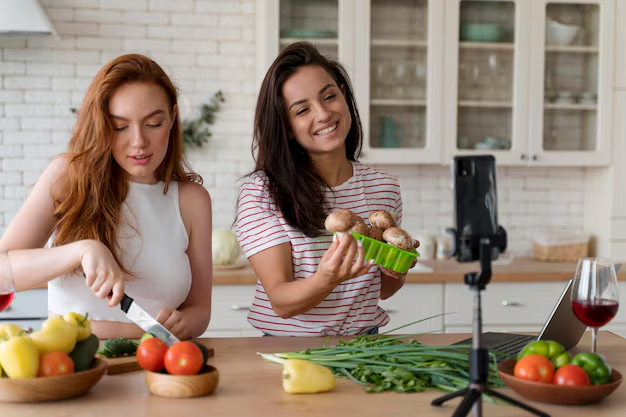
A creator with 40,000 followers films your cannoli on a Tuesday. By Thursday you’re getting four times your normal order volume, half of it for delivery, and you’re out of ricotta by 1 p.m.
That’s the part of influencer marketing nobody plans for. Most advice about working with food influencers for delivery orders stops at the handshake: find a creator, send free food, hope for a post. The harder half happens after the post goes live, in your kitchen and on the road, when demand arrives faster than your prep list and your driver schedule can move.
This guide covers both halves. What creators actually do to delivery demand, which ones to work with when your orders leave the building instead of landing on a table, how to get ready for the spike, and how to tell afterward whether the whole thing made you any money.
The Bottom Line
- 74% of Gen Z and 69% of Millennials have ordered a restaurant item after seeing it go viral on social media, according to DoorDash’s 2025 Delivery Trends Report. A food creator’s post is now an order trigger, not just brand awareness.
- The spike is operational before it’s financial. After a Keith Lee review, Baton Rouge breakfast spot Fork N Spoon went from making 10 pounds of braised beef a week to 10 pounds a day and hired three full-time staff.
- Micro creators in the 10,000 to 100,000 follower range average around 3.86% engagement versus roughly 1.21% for accounts above a million, and they cost less per engagement.
- Give every creator a unique promo code. Without one, you cannot separate influencer orders from normal weekday traffic, and you’ll renew a partnership on a feeling.
- The order is where the campaign starts, not where it ends. What the customer smells when the bag opens, and whether they hear from you again, decide if you got one order or twenty.
Save 80% of delivery management time
We handle everything:
- Dedicated operations manager
- Real-time tracking dashboard
- Automated customer notifications
- Urgent issue resolution
What food influencers actually do to delivery demand
They shorten the distance between wanting food and ordering it to about fifteen seconds. Someone watches a reel of your birria tacos, and the delivery app is already on the same phone. There’s no drive, no reservation, no deciding whether it’s worth getting dressed. DoorDash’s 2025 Delivery Trends Report found that 74% of Gen Z and 69% of Millennials have ordered a restaurant item after seeing it go viral on social media (DoorDash, 2025).
That’s a different mechanism from the sponsorships most small food businesses are used to. A billboard builds recognition you hope to cash in later. A creator’s post converts on the spot, which is why the effect shows up in your order queue the same day rather than in a quarterly lift you can argue about.
It also means the demand arrives with no warning and in the wrong shape. Normal delivery volume is smooth: a lunch bump, a dinner bump, a weekend you can staff for. Influencer demand is spiky and single-item. Everyone orders the thing in the video, which drains one ingredient while the rest of your walk-in sits untouched.
Two things decide whether that spike becomes revenue or a bad week of reviews. The first is capacity, which we’ll get to. The second is what happens after the order leaves: whether you captured the customer’s phone number so you can reach them again. A one-time viral order that turns into a monthly one is worth many multiples of the original ticket, and text is still the most reliable way to make that happen. SMS marketing done properly is how a lot of operators turn a spike into a list.
Which food influencers are worth working with for delivery
Pick creators whose audience is inside your delivery radius, then pick for engagement, and only then look at follower count. A food account with 900,000 national followers is close to worthless to a bakery that delivers within twelve miles. A local creator with 18,000 followers, most of them in your metro, is a sales channel.
Engagement data supports the same conclusion from a different direction. Micro creators in the 10,000 to 100,000 follower range average roughly 3.86% engagement, compared with about 1.21% for mega accounts above a million followers, and their cost per engagement runs lower, at around $0.20 against $0.33 for macro creators (Bigeye Agency influencer engagement benchmarks, 2026). Food and cooking content sits in the 3% to 5% engagement band overall, which is high relative to most niches.
| Creator tier | Followers | Typical engagement | What it does for delivery orders |
|---|---|---|---|
| Nano | Under 10,000 | 4% to 7% | Very local, often free or trade. Best for steady drip and real reviews. |
| Micro | 10,000 to 100,000 | ~3.9% | The workhorse. Local reach, affordable, measurable order bumps. |
| Macro | 100,000 to 1M | 1.5% to 3% | Reach beyond your delivery zone. Useful for launches, wasteful for weekly orders. |
| Mega / celebrity | 1M+ | ~1.2% | National attention you can’t fill. Orders arrive from cities you don’t serve. |
Engagement figures: Bigeye Agency, 2026; food niche averages 3% to 5%.
There’s a trap specific to delivery here. A big creator sends you traffic from everywhere, and most of it converts into people discovering they’re outside your zone. That produces support messages rather than orders. Three local micro creators posting across the same fortnight will outperform one big name almost every time, partly because repetition in a single market is what actually moves people from watching to ordering.
Be straight about what you’re buying, too. Paid posts, gifted meals and affiliate codes are all normal, and the Federal Trade Commission requires creators to disclose material connections, free food included (FTC endorsement guides). Walk away from anyone who treats that disclosure as optional.
What a viral order spike looks like inside a small kitchen
It looks like selling out for a month straight and hiring people you weren’t planning to hire. The clearest public example is the so-called Keith Lee effect. After the TikTok reviewer visited Baton Rouge, Fork N Spoon owner Kristen Abshire said sales tripled overnight, the restaurant sold out daily for about a month, braised beef production went from 10 pounds a week to 10 pounds a day, and she brought on three full-time employees (225 Baton Rouge, August 2024).
Not every result is that dramatic, and the same article is useful for the other reason: KOK Wings & Things saw about a 5% revenue bump for three weeks. Same reviewer, same city, two very different outcomes. In Dallas–Fort Worth, Hutchins BBQ reported sales up 40% year over year after a Lee review, while local reporting noted that half of the restaurants he visited had lines out the door within hours (FOX 4 Dallas–Fort Worth).
The lesson isn’t “go viral.” It’s that the size of the spike is outside your control and the response to it isn’t. What separated the businesses that kept the gain from the ones that got a bad week was ordinary operational stuff: enough of the hero ingredient, enough hands, and enough delivery capacity that the food arrived warm.
And there’s a quieter factor in whether those first-time delivery customers come back. The bag is the entire experience when nobody sits in your room, and the smell when it opens does the work your dining room normally does. Scent is a measurable sales lever in food retail, and it’s the one sensory cue that survives the trip to someone’s kitchen table.
How to prepare your delivery operation before the post goes live
Work backward from the post date. You usually know when a creator is publishing, and that turns an unpredictable spike into a scheduled event. Four things are worth locking down before it happens.
- Cap the hero item, don’t cap the campaign. Decide how many of the featured dish you can produce in a day and stock for two to three times a normal Saturday. Running out at 1 p.m. is survivable; running out while the comments are still coming in and having no substitute on the menu is not.
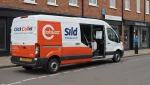
- Arrange delivery capacity ahead of the date, not on the day. This is the part small operations get wrong. Your own driver and your own van are a fixed ceiling, and a spike is exactly when you need to go above it. Planned, posted-ahead delivery runs are also cheaper and calmer than scrambling for on-demand couriers mid-rush. That is the sort of thing a platform like Metrobi is built around, with multi-stop route planning for orders you schedule in advance.
- Batch the geography. Influencer orders cluster, because the creator’s audience clusters. Ten orders within a mile of each other should not be ten separate trips. Grouping them into a route protects your food quality and your margin at the same time.
- Write the “we’re slammed” message before you need it. A short note on your ordering page and a text to waiting customers about a longer delivery window costs nothing and prevents most of the one-star reviews that follow a good week.
Here’s the pattern: influencer marketing for a delivery business is a capacity question wearing a marketing costume. The campaign is the easy part.
How to track influencer-driven delivery orders
Give every creator a unique code and attach it to the order, not to a landing page visit. A code like MAYA20 redeemed at checkout tells you exactly how many delivery orders that creator produced, what the average ticket was, and whether any of those customers came back. Clicks and views tell you none of that.
Four numbers are enough to judge a partnership:
- Coded orders. The raw count of delivery orders using the creator’s code, over the two to three weeks after the post rather than the first 48 hours.
- Average order value against your baseline. Influencer orders often run larger because people order the featured item plus their usual. If they run smaller, your code is discounting people who would have ordered anyway.
- Cost per acquired order. Fee plus food cost plus the discount, divided by coded orders. Compare it to what a paid ad costs you for the same result.
- Second-order rate. How many of those customers ordered again within 60 days. This is the number that decides whether influencer work is a marketing channel or an expensive one-night stand.
Track social proof on its own terms too. Roughly half of diners say social media influences where they choose to eat, and a large share check a restaurant’s own profile before deciding, according to MenuTiger’s roundup of restaurant social media statistics. A creator’s post also sends people to a page you control, so make sure your own profile and menu are current before the collaboration goes live.
Should you pay food influencers, or trade for food?
Trade first, pay once you have evidence. For nano and micro creators, a comped order in exchange for an honest post is a normal and legitimate arrangement, and it costs you food cost rather than cash. Start there with three or four local creators, measure with codes, and pay only the ones who produced coded orders.
Paid deals make sense in two situations: you’re launching something with a hard date, or a specific creator has already proven they convert for you. Paying a creator you’ve never tested, at a rate set by their follower count rather than their local relevance, is the most common way small food businesses waste an influencer budget.
One warning about exclusivity. Some creators will ask for category exclusivity in your area. That’s usually fine and cheap to grant. What’s not fine is agreeing to a posting schedule your kitchen can’t absorb. Three posts in one week from three creators is a demand event, and it should be spaced deliberately.
Frequently asked questions
How many followers should a food influencer have to be worth it for a delivery business?
Between roughly 10,000 and 100,000, and located in your delivery zone. That band averages about 3.86% engagement against roughly 1.21% for accounts over a million, and it costs meaningfully less per engagement (Bigeye Agency, 2026). Follower count above your service area is a vanity number: those people can’t order from you.
How long does an influencer-driven order spike last?
Plan for two to three weeks of elevated volume, with the sharpest day usually within 48 hours of the post. Reported outcomes range widely: a 5% revenue bump for three weeks at one Baton Rouge restaurant, sold-out days for about a month at another after the same reviewer’s visit (225 Baton Rouge, August 2024).
Do food influencers have to disclose free meals?
Yes. The FTC’s endorsement guides require creators to clearly disclose a material connection to a business, and a free meal counts as one (FTC). Ask for the disclosure in writing before the collaboration, and don’t work with anyone who treats it as optional.
What’s the best platform for food influencer content that drives delivery orders?
Short-form video, because it converts closest to the moment of appetite. TikTok and Instagram Reels dominate food discovery among under-40 audiences, and the same clip usually works on both. Pick the platform where your local creators already have their audience rather than the one you personally prefer.
Where this leaves you
Food influencers are the fastest demand channel available to a small food business right now, and the least forgiving. A creator can hand you a month of sold-out days, but the handoff only works if your kitchen has the ingredient, your routes have the capacity, and your checkout has a code that tells you afterward what happened.
Start small and local. Three micro creators in your delivery zone, unique codes on each, extra stock of the featured item, and delivery capacity arranged before the post publishes. Measure coded orders and second orders, drop the creators who produced neither, and repeat with the ones who did. That’s the whole loop, and it’s boring on purpose. The excitement is what goes wrong when you skip a step.