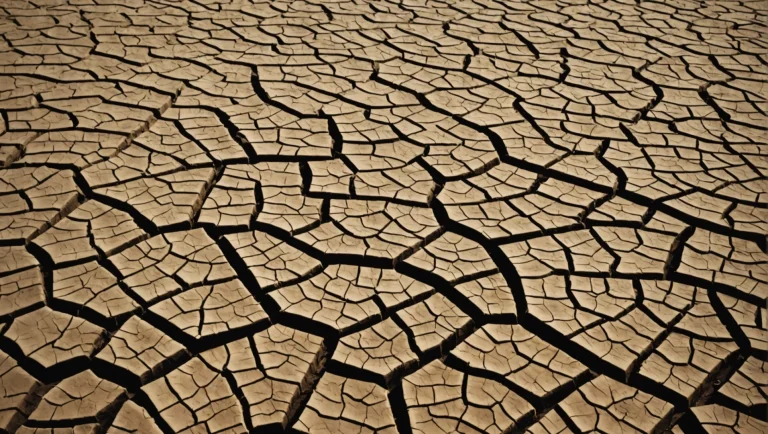

The difference between farms that come through a drought and farms that don’t is rarely rainfall. It’s whether the decisions were made in advance.
Knowing how to prepare for a drought on a farm comes down to one deliverable: a written plan that says what you will do, at what point, in what order. Growers who have one act on a trigger. Growers who don’t react in August, when every option is worse and more expensive: selling cattle into a flooded market, abandoning a crop with inputs already in the ground, calling a buyer to say the order isn’t coming.
This is the document, section by section, plus the monitoring thresholds that tell you when to start.
The Bottom Line
Write the plan before the season. Its job is to convert a slow crisis into a sequence of pre-made decisions.
Use the U.S. Drought Monitor as your trigger scale. D2 is severe, D3 extreme, D4 exceptional, and federal livestock assistance keys off exactly those levels (USDA FSA).
Decide the cut-order in advance: which crops get abandoned, which livestock leave first, which blocks keep water.
Build water-holding capacity in the soil during good years. It’s the only drought input you can’t buy in a dry one.
If you have standing orders, tell buyers early. A supplier who forecasts a shortfall in June keeps the account; one who cancels in August often doesn’t.
Save 80% of delivery management time
We handle everything:
- Dedicated operations manager
- Real-time tracking dashboard
- Automated customer notifications
- Urgent issue resolution
What a farm drought plan contains
A drought plan is a short document, not a binder. Farm trade press and agribusiness risk advisers converge on roughly the same contents, and the common thread is that every item is a decision made while you’re calm.
An inventory. Water sources and their realistic yield, stored feed, soil moisture by block, and the acres and head you’re actually responsible for.
Key dates. Planting windows, the normal grazing period, critical crop water-demand stages, and harvest.
Monitoring triggers. The specific, observable conditions that move you from one stage to the next.
A ranked response at each stage. Named actions in a fixed order, with the person responsible.
A cut-order. Which crops, which fields, and which animals give way first.
The financial picture. Insurance coverage, program eligibility, credit available, and the cost of each response.
Commercial commitments. Who you’ve promised what, and when you’ll tell them.
That last line is the one missing from most templates, and for a farm selling into restaurants, grocers, or a subscription box it’s the one with the longest consequences.
Write it once and revise it annually. The point of having it on paper is that your August self doesn’t get to renegotiate what your February self decided.
Metrobi is transforming farm deliveries
Specialized solutions for farm businesses:
- Farm-trained drivers
- Proper handling equipment
- Peak day delivery support
- 23% average cost reduction
The monitoring triggers that tell you when to act
Vague triggers produce vague action. “If it gets dry” is not a trigger. Your plan needs thresholds you can check on a specific day and get a yes or no.
The U.S. Drought Monitor is the natural scale, partly because it’s weekly and public, and partly because federal assistance is already denominated in it. Its categories run D0 (abnormally dry), D1 (moderate), D2 (severe), D3 (extreme), and D4 (exceptional).
Those categories are not advisory. The Livestock Forage Disaster Program pays on them directly, and the structure is worth knowing before you need it:
| Drought Monitor level | Condition in county during normal grazing period | LFP assistance |
|---|---|---|
| D2 (severe) | Any area of the county, 8 consecutive weeks | 1 monthly payment |
| D3 (extreme) | Any area of the county, at any time | 3 monthly payments |
| D4 (exceptional) | 4 weeks, not necessarily consecutive | 5 monthly payments |
| D0–D1 | Not applicable | Not eligible |
Source: USDA Farm Service Agency, Livestock Forage Disaster Program fact sheet.
Crop-side disaster assistance uses similar thresholds. Under the Supplemental Disaster Relief Program, backed by $16.09 billion for 2023 and 2024 losses, drought eligibility was restricted to counties with eight or more consecutive weeks of D2 or any occurrence of D3 or worse, with Stage 1 payments set at 35% of calculated eligible losses (USDA FSA, retrieved 2026-10-03).
Build your own stages on top of that, and add on-farm indicators the Monitor can’t see:
Watch (D0–D1, or soil moisture below normal at planting). Confirm stored feed. Check well yields and recovery rates. Review which varieties went in the ground.
Act (D1–D2, or soil moisture deficit at a critical growth stage). Begin the cut-order. Stop discretionary water. Price replacement feed now, before everyone else does. Flag the likely shortfall to buyers.
Severe (sustained D2, or D3). Execute destocking and crop abandonment per the plan. File program paperwork. Reset buyer commitments formally.
Measure soil moisture rather than inferring it. Sensors at two depths in a representative block cost little and will tell you weeks earlier than the crop’s appearance will.
Building drought resilience before the dry year
Most of what protects you in a drought has to be in place before it starts.
Soil is the reservoir you own. Organic matter holds water and improves infiltration, so rain that falls on healthy soil stays available instead of running off. The research on cover crops supports this specifically: a 2021 review in Agricultural Water Management found cover crops cut evapotranspiration 6.2% and raised water-use efficiency 5.0%, while increasing surface soil water storage at the succeeding crop’s planting (ScienceDirect). Reduced tillage keeps residue on the surface, which conserves moisture and cuts erosion when rain finally comes hard.
The caveat matters in a drought context: cover crops use water too, and terminated too late they compete with the cash crop for exactly the moisture you were banking. The practice set, its tradeoffs, and how to tell whether it’s working belong to agricultural land stewardship.
Irrigation efficiency buys you margin. Flood and furrow systems typically run 70–80% efficient against 85–95% for drip (Water, MDPI, 2025). Converting is capital-intensive and slow, but scheduling isn’t. Moving from calendar irrigation to soil-moisture-based scheduling is cheap and it’s the single change that most reliably stretches a limited allocation.
Variety and crop mix are your free hedge. Choose varieties with consistent multi-year performance across conditions rather than peak yield in a good year, and favor drought-tolerant and shorter-season options where your water record justifies it. Spreading across crops with different water demands and harvest windows means a dry July doesn’t take everything at once. This is one of several places where drought planning and raising output pull in the same direction, which we work through in increasing agricultural productivity.
Water infrastructure. Know each source’s actual yield, not its rated yield. Fix leaks in lines and troughs, because a slow leak you tolerate in a wet year costs you in a dry one. Where it’s legal and practical, add storage, and look hard at whether any non-potable or recycled source could carry part of your non-crop load. Industrial water-treatment resources explaining what wastewater is and how it gets reused are a reasonable starting point for understanding which streams can be recovered at all.
Deciding the cut-order in advance
When water runs short, something gets less of it. The plan’s job is to decide what, before the decision is made for you.
Crops. Rank every block by value per acre-inch of water, not by value per acre. Protect the high-value, water-responsive blocks and accept the loss on the ones that return least per unit of water. Crops in their critical water-demand window, which is flowering and grain fill for most, get priority over crops that are further from it. Decide now which block you would abandon, and know what it costs you to walk away with inputs already spent.
Livestock. Build the destocking list before you need it, in order: cull the open and the old, then the poorest performers, then the youngest stock that can be sold without wrecking the breeding herd. Sequence matters enormously, because prices fall as everyone in the region destocks at once. Moving early means selling into a better market than your neighbors.
Water allocation. Write down the order in which uses get cut: ornamental and non-productive first, then lower-value acres, then marginal blocks, with livestock drinking water and your highest-value crop last.
The hardest part is honoring it. Written plans work because they commit you to a sequence while the alternative still looks survivable, and the growers who do best are the ones who destock in June rather than hoping through July.
How to protect buyer relationships through a dry year
For a farm with orders on the books, a drought is a supply problem before it’s an agronomic one, and this is where the commercial damage usually happens.
Forecast early and specifically. As soon as the Act stage triggers, work out which products and which weeks are at risk and tell your buyers. “We expect tomatoes down about 30% from mid-July, greens unaffected” is information a chef can plan around. A cancellation the day before delivery is not. Buyers reorganize around early warnings; they replace suppliers over surprises.
Protect your anchor accounts explicitly. Decide in advance which relationships you’re prioritizing if you can only partly fill. Usually the right answer is the year-round buyers over the seasonal and opportunistic ones, even when the latter pay more in the moment.
Keep quality consistent even at lower volume. Drought-stressed produce goes out of spec on size, color and sugar. Grading honestly and shipping less rather than shipping marginal product is what preserves the account. One box of unusable produce costs more trust than a short delivery.
Pool where you can. A shortfall is easier to cover across several growers than alone, and coordinating supply with neighboring farms lets a group hold an account that no single member could fill. Shared marketing and aggregation arrangements are a well-established route for this.
Keep documentation as you go. Photograph conditions, log Drought Monitor status for your county weekly, and keep yield and sales records current. Program applications and insurance claims both run on evidence, and reconstructing it in November is painful.
Frequently asked questions
How do you prepare a farm for drought?
Write a drought plan before the season containing an inventory of water and feed, key crop and grazing dates, specific monitoring triggers, a ranked response at each stage, a cut-order for crops and livestock, your insurance and program position, and who you’ll notify among your buyers. Then build resilience in advance through soil organic matter, efficient irrigation scheduling, and drought-tolerant variety selection, because none of those can be added once a drought starts.
What drought level qualifies a farm for federal assistance?
Assistance keys off the U.S. Drought Monitor. For the Livestock Forage Disaster Program, D2 (severe) for eight consecutive weeks in any part of the county during the normal grazing period earns one monthly payment, D3 (extreme) at any time earns three, and D4 (exceptional) for four weeks earns five. D0 and D1 do not qualify. Crop programs have used comparable thresholds: the Supplemental Disaster Relief Program required eight-plus consecutive weeks of D2 or any D3 for drought losses.
What are the best drought-resistant crops to plant?
That depends on your climate and water record more than on any universal list, so the better framing is variety selection: ask seed suppliers for multi-year, multi-location trial data and favor varieties that hold yield across conditions over those that peak in a good year. Sorghum, millet, and many legumes are generally lower-water options than maize. Mixing crops with different water demands and harvest windows matters as much as any single choice.
When should you start destocking in a drought?
Earlier than feels necessary. Prices drop as everyone in a region sells at once, so moving at the Act trigger rather than at the point of visible forage failure means selling into a better market. Set the trigger in the written plan (a Drought Monitor level, a forage measurement, or a stored-feed threshold) and follow the cull order you decided in advance.
How much water does better soil actually save?
Enough to matter, with the exact figure depending on soil texture. Organic matter improves both infiltration and retention, and the cover crop literature shows measurable effects: a 6.2% reduction in evapotranspiration and a 5.0% gain in water-use efficiency in the 2021 Agricultural Water Management review. Soil improvement is slow, so it’s a strategy for the droughts after this one rather than a response to the current season.