
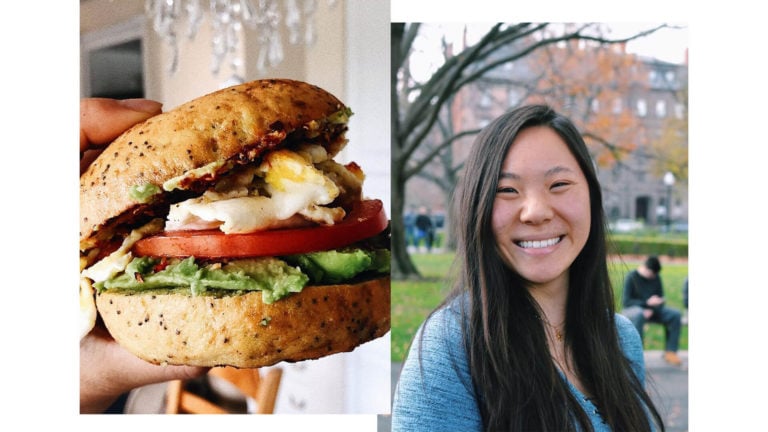

NourishByNancy is a recipe account, and that single fact determines almost everything about how it works: what gets posted, which brands fit, and why the product has to survive contact with a real kitchen.
Nancy Chen built the account around a passion for real food and a fairly specific promise: every recipe she publishes is gluten free and dairy free. She writes at nourishbynancy.com alongside Instagram, works as a marketing manager for a health and wellness startup, and teaches yoga and boxing. The brand collaborations she takes range from clean beauty to meal subscription services, but the food work is consistent: products featured in recipes that contain no grains, gluten or dairy.
That constraint is unusual and it is worth understanding, because it is the whole value of the account. It also makes her a useful contrast to the other creators in our series of food maker and influencer profiles.
Metrobi drivers are rated 4.97/5
Trusted by local businesses for:
- Background-checked professionals
- Specialized in business deliveries
- Same drivers for consistency
- 4.97/5 average delivery rating
Recipe accounts and review accounts are different products
Brands routinely approach these as if they were the same channel. They are not, and the mismatch is the most common reason a collaboration underperforms.
A review account sells a verdict. The follower arrives wanting to know whether a place or a product is worth their money, and the content’s value collapses if the answer is always yes. Tea Kingley’s account works this way, with reviews across Instagram, TikTok and YouTube where the judgment is the product. Leslie Kiszka runs a hybrid, publishing her own home cooking alongside candid restaurant reviews, which is a harder balance than it sounds.
A recipe account sells a result. The follower arrives wanting something to make for dinner, and the measure of success is whether they actually make it. That changes what a brand partnership has to survive:
- The product has to work in a home kitchen, at home quantities, with home equipment
- It has to be available where the audience shops, or the recipe is a tease
- It has to fit the recipe’s constraints: in Nancy’s case, no gluten, no dairy, often no grains
- And it has to still taste good after being cooked, not just photographed
A product that photographs beautifully and cooks badly will fail on a recipe account in a way it never would on a review account.
Why dietary constraints make an audience valuable
A gluten-free, dairy-free feed reaches fewer people than a general food feed. It reaches them much harder.
Someone cooking around coeliac disease, a dairy intolerance or an elimination protocol is not casually browsing. They are solving a recurring problem, they read labels, and when they find a creator whose recipes reliably work within their constraints, they stay for years. That is a fundamentally different relationship from a follower who likes pictures of pasta.
For a food brand, the implication is direct: if your product genuinely fits the constraint, this audience converts at rates a general audience will not, because you are answering a question they are actively asking. If your product only sort of fits — “made in a facility that also processes wheat” — this audience will find out, and the correction will be public and permanent.
Where a recipe creator’s authority ends
Nancy is a marketing manager and a fitness instructor who cooks within dietary constraints. That is real expertise about making food that works. It is not a clinical credential, and the distinction matters more than most brands realise.
There is a line between “here is how I cook without dairy” and “here is what this will do to your blood sugar.” The first is lived experience and is perfectly sound. The second is a clinical claim, and it needs someone like Diana Savani, a registered dietitian practising since 2012, who can make nutrition statements with a credential behind them.
Good recipe creators police this line themselves. Brands sometimes push on it, asking for language about health outcomes that the creator is not positioned to make. That request is bad for the creator and legally exposed for the brand. If the claim needs a credential, hire the credential.
What recipe-led content does for a local food maker
For a maker with a physical product, a recipe placement is one of the most durable pieces of content you can get, because it keeps working. A review is a moment. A recipe gets saved, searched and cooked for years.
It also does something a review cannot: it teaches people what to do with your product. This matters enormously for anything unfamiliar. A specialty ingredient, an unusual flour, a substitution product — these fail at retail not because people dislike them but because people do not know what to make with them.
L’Nando Bakery is a good example of a product that benefits from this. A frozen pizza made with simple ingredients and no preservatives is an easy sell once someone has eaten it and a hard sell in a freezer case, and recipe content that shows what to serve alongside it does more work than a product shot.
The practical warning is the one we see most often on the delivery side: recipe content generates orders in a long tail rather than a spike, but a well-timed post can still produce more demand in a week than a small maker can physically fulfil. Work out how you will get product to people before the post goes up, not after.
What to take from how NourishByNancy is built
The account is narrow on purpose. A hard dietary constraint, consistently applied, across a blog and a social feed, for years.
That narrowness is what makes it valuable. A general food account competes with every other general food account for attention. A reliable gluten-free and dairy-free recipe source competes with almost nobody, and owns its audience completely.
For creators, that is an argument for picking a constraint and holding it. For brands, it is an argument for matching the constraint honestly — and for treating the creator’s rules as the reason the audience exists, rather than an obstacle to work around. If you want the commercial mechanics of that relationship from the creator’s side, Christine LaPuma’s profile covers what changes when food content becomes paid work.