
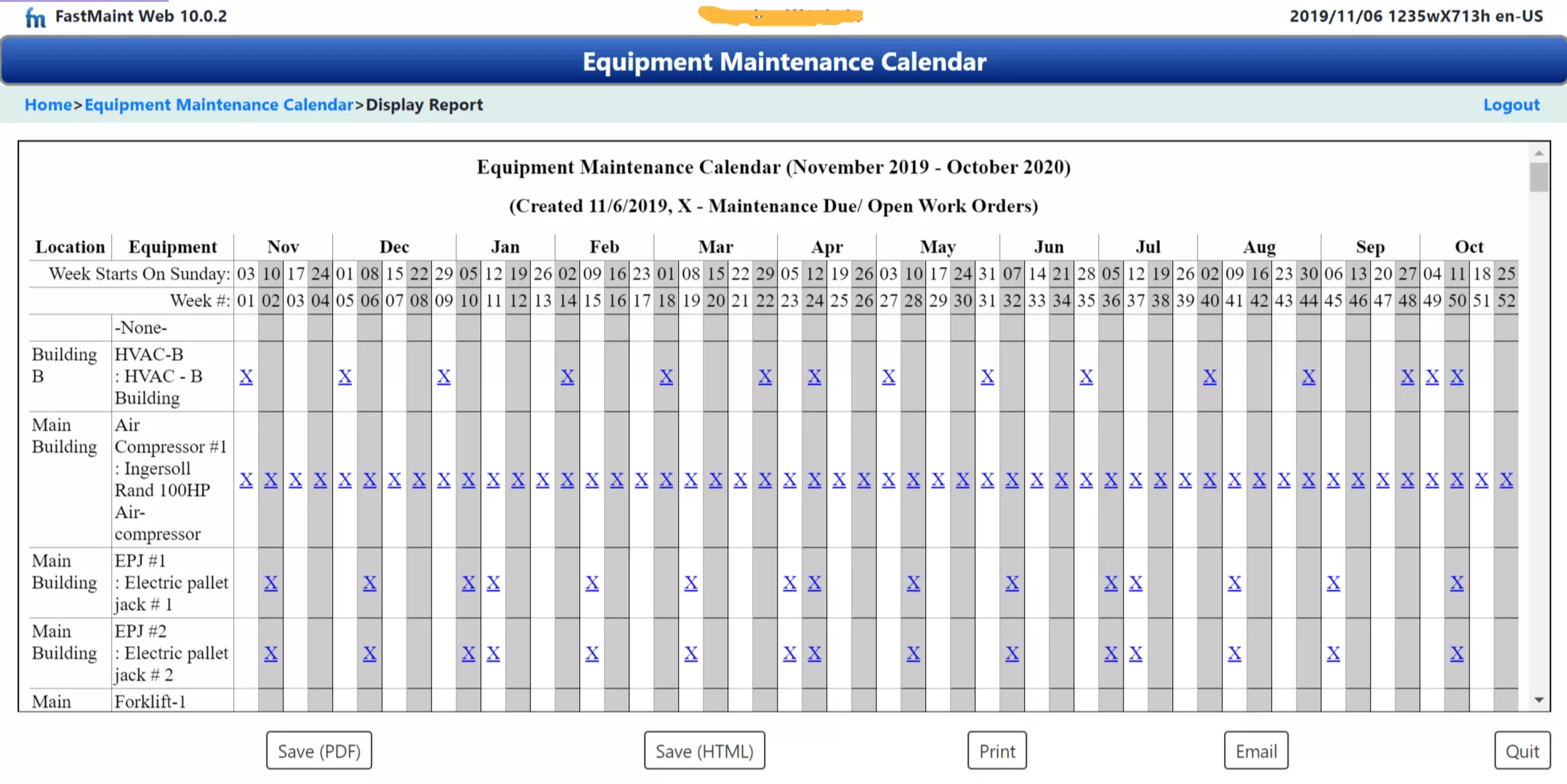

Preventive maintenance for delivery vehicles means you service the van on a schedule you set, instead of paying whatever the repair costs on the morning it quits. The money that saves is not theoretical. The US Department of Energy’s O&M Best Practices Guide puts the savings from a working preventive maintenance program at 12% to 18% over running things reactively, and notes that operations starting from pure break-fix usually beat that number (PNNL, FEMP O&M Best Practices).
For a bakery, florist, caterer, or wholesaler running two or three vans, the repair bill is only part of what a breakdown costs. A van that dies at 7 a.m. takes the morning’s orders with it, and those customers remember. So the goal here is narrow and practical: a schedule you can actually hold to, a daily check that takes four minutes, and a record that tells you what was done and when.
This post covers the vehicles. The gear around them (refrigeration units, liftgates, hand trucks, scanners) breaks on its own timetable and needs a separate routine, which we cover in our equipment maintenance tips for last-mile operations.
Save 80% of delivery management time
We handle everything:
- Dedicated operations manager
- Real-time tracking dashboard
- Automated customer notifications
- Urgent issue resolution
The Bottom Line
- A preventive maintenance program returns an estimated 12% to 18% over reactive repair, per the DOE’s O&M Best Practices Guide, and more than that if you are starting from nothing.
- Delivery duty is severe duty. Repair and maintenance cost the average trucking operation 21.5 cents per mile in 2025, up 8.6% in one year, according to the American Transportation Research Institute.
- Brakes and tires cause the most failures. In the 2025 CVSA International Roadcheck, brake-related violations accounted for about 41% of vehicles placed out of service, and tires another 21.4%.
- Set intervals on whichever comes first, miles or months. A van covering 40,000 stop-and-go miles a year hits its next service on mileage; a van doing short local runs hits it on the calendar.
- Federal inspection rules kick in at a 10,001-pound gross vehicle weight rating. Below that, you are setting your own standard, which is exactly why a written schedule matters.
What preventive maintenance means for a delivery vehicle
Preventive maintenance is service performed on a trigger you choose, before anything has failed. There are four triggers in common use, and most small delivery operations need only the first two.
Time-based. Every month, every quarter, every 12 months. Good for anything that degrades whether or not the van moves: battery terminals, wiper blades, coolant, refrigerant, the annual inspection.
Usage-based. Every 5,000 miles, every 10,000, every 50,000. Good for anything wear drives: oil, brake pads, tires, transmission fluid.
Condition-based. Service triggered by a measurement rather than a date, such as brake pad thickness below a set number, or an oil analysis result.
Predictive. Service triggered by data from the vehicle itself, usually through telematics. The DOE guide credits predictive programs with a further 8% to 12% saving over preventive alone, but that assumes someone is watching the data and acting on it.
The distinction that actually matters day to day is simpler: work you scheduled versus work that was chosen for you. Everything below is about moving more of your repair spend into the first column.
Why delivery routes wear vehicles faster than highway miles
A delivery van and a highway truck can show the same odometer reading and be in completely different condition. Route work is harder on a vehicle for three specific reasons.
Braking cycles. A route with 40 to 100 stops brakes constantly, at low speed, often loaded. Pads and rotors wear out well before a mileage-based rule would predict. The 2025 CVSA International Roadcheck found brake system violations made up 24.4% of all out-of-service vehicle findings, plus a further set of vehicles parked under the 20%-defective-brakes rule. Together that is roughly 41% of everything that took a vehicle off the road (CVSA 2025 Roadcheck results).
Short trips. An engine that never reaches full operating temperature leaves moisture and unburned fuel in the oil. Two hours of short hops is harder on oil than two hours of steady highway driving, which is why nearly every manufacturer’s “severe service” schedule describes exactly what a delivery route does.
Load and idle time. Loaded suspension, extended idling at the curb, doors opening a hundred times a shift. Idle hours age an engine without adding a single mile to the odometer, so a mileage-only schedule quietly under-services a van that spends its day in traffic.
The cost trend backs this up. ATRI’s annual cost survey found repair and maintenance running 21.5 cents per mile in 2025, an 8.6% jump in a single year, driven partly by older vehicles and higher annual mileage (ATRI Operational Costs of Trucking). Parts and labor are getting more expensive faster than most delivery businesses are raising their delivery fees.
A preventive maintenance schedule for delivery vans
Start with the owner’s manual severe-service schedule, then use the table below as a working baseline. Run every interval on whichever trigger arrives first, miles or time.
| Interval | What gets done |
|---|---|
| Every shift | Driver walkaround: tires and pressure, lights, mirrors, wipers, horn, leaks under the van, load security, brake feel on the first stop |
| Weekly | Tire pressure with a gauge, fluid levels, cargo area condition, tread depth spot check |
| Monthly | Battery and terminals, belts and hoses, brake fluid level, cabin and engine air filter check, refrigeration unit performance if fitted |
| Every 5,000 miles or 3 months | Oil and filter, tire rotation, full fluid top-off, brake pad thickness measured |
| Every 10,000 miles or 6 months | Air filter, cabin filter, suspension and steering inspection, exhaust check, wheel alignment check |
| Every 25,000 miles or 12 months | Transmission fluid check, coolant condition, hoses and clamps, battery load test, full brake inspection |
| Every 50,000 miles | Major service: transmission service, differential, spark plugs where applicable, drivetrain inspection |
| Annually | Federal periodic inspection where the vehicle is covered, plus any state safety or emissions inspection |
Two adjustments are worth making. If a van runs more than about 120 miles a day in dense stop-and-go traffic, compress the mileage intervals rather than stretching them. And if you run refrigerated vehicles, the refrigeration unit has its own hour-based schedule that has nothing to do with the van’s odometer.
The daily walkaround: what drivers should check before the first stop
The single highest-return habit in preventive maintenance is a four-minute check before the van leaves. It catches the failures that strand a route: a soft tire, a dead marker light, a fluid puddle, a brake that feels different than it did yesterday.
Give drivers a fixed order so it becomes muscle memory rather than a judgment call:
- Walk the vehicle counterclockwise. Tires for pressure, tread and sidewall damage. Body damage and open panels.
- Lights and signals, including brake lights. Have a second person confirm, or back up to a reflective surface.
- Under the van: any fresh fluid on the ground, and what color it is.
- In the cab: mirrors, wipers, washer fluid, horn, warning lamps, seat belt.
- Cargo area: load secured, shelving intact, cooler or refrigeration unit holding temperature.
- First stop of the route: note how the brakes and steering feel before traffic gets heavy.
Anything found gets written down and reported the same day, not mentioned in passing. Two things happen when defects go into a log: small items get fixed while they are still small, and you build a history that tells you which vehicle is costing you money.
If any of your vehicles cross the federal weight threshold, this daily report is not optional. Under 49 CFR 396.11, drivers of covered vehicles must complete a written inspection report at the end of each day’s work, and the carrier keeps that report, the repair certification, and the driver’s review for three months (eCFR 49 CFR 396.11).
Which inspections the law requires, and when they apply to you
Federal maintenance and inspection rules attach to commercial motor vehicles, which 49 CFR 390.5 defines to include vehicles with a gross vehicle weight rating or gross combination weight rating of 10,001 pounds or more. That threshold decides most of what follows.
Above 10,001 pounds. The vehicle needs a periodic inspection at least once every 12 months covering the component categories in Appendix A to Part 396, and the daily driver vehicle inspection report applies (eCFR 49 CFR 396.17). Records of inspection, repair and maintenance have to be kept and produced on request.
Below 10,001 pounds. Most cargo vans, sprinters and box trucks used for local delivery fall under this line, and the federal periodic inspection does not apply. Your state may still require a safety or emissions inspection, and your insurer may ask for maintenance records after a claim. Nothing stops you from running the federal checklist voluntarily, and it is a reasonable standard to hold yourself to.
Food transport, any weight. The FDA’s Sanitary Transportation of Human and Animal Food rule requires that vehicles and transportation equipment be designed and maintained so they do not make the food unsafe, be adequately cleanable for their intended use, and be capable of holding the temperatures the food needs (FDA FSMA final rule). For a caterer or a wholesale food business, cargo area cleaning and temperature verification belong on the maintenance schedule, not in a separate mental category.
How to track preventive maintenance without losing the thread
A schedule nobody records is a schedule nobody follows. The tracking method matters less than the fact that one exists, and most delivery operations move through three stages.
Stage one: one sheet per vehicle. A binder or a shared spreadsheet with a row per service: date, odometer, what was done, who did it, what it cost. For one or two vans this is enough, and it beats a sophisticated system nobody updates.
Stage two: a spreadsheet with reminders. Add a column that calculates the next due mileage and date for each interval, and a calendar reminder for the annual items. This is where most operations stall, because the spreadsheet only works if somebody enters odometer readings weekly.
Stage three: maintenance management software. Once you are past three or four vehicles, or once drivers are submitting defect reports you need to route to a shop, purpose-built software starts paying for itself. What you are buying is work-order scheduling and automatic triggers: the system knows the van is at 9,400 miles, knows the 10,000-mile service is due, and generates the job rather than waiting for someone to notice. Most of the small-operation tools work the same way, building the schedule from meter readings and calendar rules. Coast’s preventive maintenance scheduling is a representative example of the feature set to compare against.
The signals that it is time to move up a stage are consistent. You have missed a service interval in the last quarter. You cannot answer “when were the brakes last done on van two” in under a minute. Two people are keeping separate records. Or a driver reported a defect and nobody can say what happened to it.
The point of all this record-keeping is fewer hours with a vehicle out of action, and the levers that actually reduce downtime are unglamorous: catch defects early, keep the common parts in stock, and book service before the part fails rather than after.
One more piece belongs in the plan: what happens to the deliveries while a van is in the shop. Scheduled service is only cheap if it does not cost you the day’s orders, so decide in advance whether a route gets consolidated, moved, or covered by outside delivery capacity. Operations that solve this once stop postponing maintenance to protect the schedule, which is the exact habit preventive maintenance is supposed to break.
Frequently Asked Questions
How often should a delivery van be serviced?
Plan on an oil and filter service every 5,000 miles or three months, whichever comes first, with a larger inspection every 10,000 miles and a major service around 50,000. Delivery work counts as severe service under most manufacturers’ schedules, so use the severe-service column in the owner’s manual rather than the normal one, and compress the intervals further for high-stop urban routes.
What is the difference between preventive and predictive maintenance?
Preventive maintenance runs on a fixed trigger, a date or a mileage figure, whether or not the part shows wear. Predictive maintenance uses condition data, usually from telematics or sensors, to service a component when it starts trending toward failure. The DOE’s O&M guide credits predictive programs with a further 8% to 12% saving over preventive alone, but it only works if someone acts on the alerts.
Does my delivery van need a DOT annual inspection?
Only if it meets the commercial motor vehicle definition in 49 CFR 390.5, which starts at a 10,001-pound gross vehicle weight rating. Most local delivery vans sit below that line and are not covered, though state safety inspection rules may still apply. Check the GVWR on the door jamb sticker rather than guessing from the vehicle’s size.
What should a driver check before every route?
Tires and pressure, all lights including brake lights, mirrors and wipers, fluid leaks under the vehicle, warning lamps, load security, and the cargo temperature if you are hauling anything chilled. Then note how the brakes feel at the first stop. Anything unusual gets written in the log the same day.
Where to start this week
Pick one van and write down three things: its odometer reading, the last service you can document, and the intervals from the table above with the next due figures filled in. That one page tells you immediately whether you are ahead or behind, and it is the whole program in miniature.
Then get the daily walkaround into the routine. It costs four minutes, it catches the brake and tire problems that account for the majority of vehicles pulled out of service, and unlike everything else on this list, you can start it tomorrow morning.