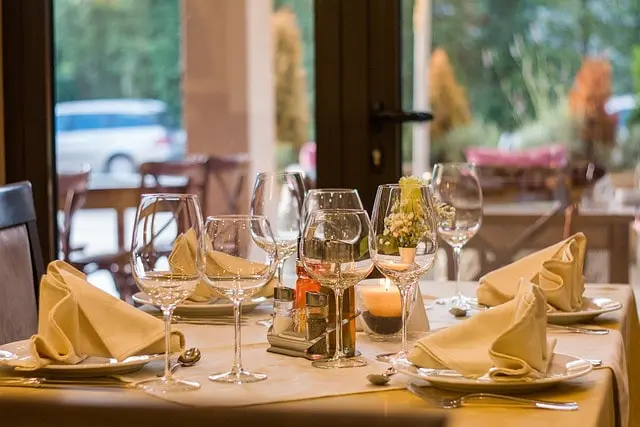

It’s 2:40 on a Tuesday. Two tables are occupied, both finishing coffee. You have three people on the floor, a cook on the line, the hood running, the walk-in humming, and rent accruing by the minute. Nothing is wrong. This is just what the middle of the afternoon looks like.
That stretch is your restaurant’s non-peak hours, and it is the most expensive quiet in the business. Every fixed cost you pay at 7 p.m. you also pay at 2:40 p.m. The difference is that at 7 p.m. the covers pay for it.
Most advice about slow hours jumps straight to a discount. Discounting is one option, and often the worst one, because a badly aimed promotion pulls people out of the hours you were already filling at full price. Before you decide what to offer, you need to know which hours lose money, and which of three very different levers fits them.
The Bottom Line
- Non-peak hours are the trading hours your doors are open but demand isn’t there: typically mid-morning, the 2–5 p.m. dead zone, and early weeknights.
- The problem is cost structure, not emptiness. Labor runs at a median of 36.5% of sales for full-service restaurants, and most of that clock keeps ticking whether or not anyone walks in.
- You have three levers, not one: create demand, shrink the cost of the shift, or fill the hour with off-premises volume. Most operators only ever try the first.
- Off-premises is the underused lever. Nearly 75% of restaurant traffic now happens off-premises, and those orders don’t need your dining room to be busy.
- Never build an off-peak offer that your peak-hour customers can use. That’s not new revenue, it’s a discount on revenue you already had.
Metrobi drivers are rated 4.97/5
Trusted by local businesses for:
- Background-checked professionals
- Specialized in business deliveries
- Same drivers for consistency
- 4.97/5 average delivery rating
What counts as non-peak hours at a restaurant?
Non-peak hours are the periods you are open and staffed but demand is structurally low. Not a bad night, but a predictable trough that shows up week after week.
For most full-service restaurants in the US, they cluster in three places:
- Mid-morning, roughly 9:30 to 11:30, after breakfast clears and before the lunch rush builds.
- The afternoon dead zone, roughly 2 to 5 p.m. This is the big one for most concepts, and the hardest to fill, because it doesn’t map to a mealtime.
- Early weeknights, particularly Monday and Tuesday between 5 and 6:30, when the dinner service is technically open but running at a fraction of Friday’s volume.
The exact shape is yours, not the industry’s. A brunch-led café’s trough starts at 1 p.m.; a late-night spot’s starts before 6. Which is why the useful question isn’t “when are restaurants slow” but “when am I slow, and what does that hour cost me?” Start with the mirror image of that question: when your lunch and dinner peaks actually fall, and how to measure your own instead of borrowing averages. Your troughs are defined by the peaks on either side of them.
Why slow hours cost more than they look
An empty hour doesn’t cost you nothing. It costs you nearly everything a full hour costs, minus the food.
That is the whole problem in one sentence, and the numbers behind it are unforgiving. Labor alone runs at a median of 36.5% of sales at full-service restaurants, with the more profitable operators holding it closer to 34.2% (Whipplewood CPAs, Restaurant Financial Benchmarks 2026). Add food cost and you’re at the industry’s prime cost target of roughly 60% of sales, the line most operators are measured against.
Now notice what happens during a trough. Food cost scales down with covers, because you don’t cook what nobody orders. Labor mostly doesn’t. Rent, insurance, equipment, refrigeration, the hood, the POS subscription and the loan payment don’t move at all. So during a slow hour, your cost per cover doesn’t drift up slightly. It can double or triple.
This is why slow hours show up in the profit line before they show up anywhere else. In 2025, 42% of restaurant operators reported their restaurant was not profitable, up from 29% a year earlier, and 60% reported softer customer traffic (National Restaurant Association, 2026 State of the Restaurant Industry, February 12, 2026). Softer traffic doesn’t usually mean the dinner rush vanished. It means the shoulders around it got thinner, and the shoulders were already the least profitable part of the day.
How to find your own non-peak hours in your POS data
Before you change anything, pull the numbers. You are looking for one thing: sales per labor hour, broken out by hour of the day and day of the week.
Here’s the sequence:
- Export hourly sales for a full quarter. A single week will mislead you, since one rained-out Saturday distorts everything. Most POS systems will give you net sales by hour and day; if yours won’t, a month of daily Z-reports with hourly subtotals works.
- Lay your labor hours next to it. Pull scheduled and actual hours for the same periods. Actual matters more, because the gap between the two is often where the money goes.
- Divide sales by labor hours for each block. Now you have sales per labor hour, hour by hour. Rank them worst to best.
- Find the break-even line. Work out what one operating hour costs you: labor plus the daily share of rent, utilities and fixed overhead divided by trading hours. Any block earning less than that is losing money, not simply running quiet.
- Separate the fixable from the structural. A Tuesday at 3 p.m. that has never worked in four years is structural. A Thursday at 5 p.m. that used to work and stopped is a change you can probably diagnose and reverse.
What usually surprises operators is how few hours are the real problem. It’s often not “weekday afternoons.” It’s six or eight specific blocks. That matters, because a targeted fix on eight hours is achievable, and a campaign to revive “weekdays” is not.
Lever one: give people a reason to come in during off-peak hours
The first lever is demand creation: making the empty hour attractive enough that someone reschedules their visit into it.
This is the lever everyone reaches for, and it works, with one hard condition: the offer has to be unusable during your peak. If your 3 p.m. deal is also redeemable at 7 p.m., you have just cut the price of your best hour. Build the constraint into the offer itself, not into the fine print.
What tends to hold up in the afternoon trough:
- A daypart-only menu, priced and portioned for the hour. A short late-lunch or pre-dinner list of four or five items the kitchen can fire fast, available 2 to 5 p.m. and nowhere else on the menu.
- Sell a different occasion rather than a cheaper meal. The afternoon is when remote workers, parents between school runs, and small meetings are looking for a table. Reliable wifi, outlets and a tolerance for someone sitting with a coffee for 90 minutes can be worth more than 20% off.
- A recurring anchor. A fixed weekly event on your worst night builds a habit that a one-off promotion never does. The point is predictability, not novelty.
- Standing group bookings. Local teams, clubs and community groups need somewhere to be at exactly the hours you’re empty, and they book weeks out.
Offer design is a deep subject in its own right, and it isn’t the only lever. Treating it as the only one is the mistake most operators make. Two more remain, and they don’t depend on convincing anyone to change their plans.
Lever two: cut the cost of running a slow shift
The second lever is the one nobody wants to talk about, because it isn’t growth. But an hour that loses $40 instead of $110 has improved by $70, and that is the same $70 a new customer would have brought you.
Practical moves, roughly in order of how quickly they pay back:
- Stagger the schedule to the curve, not the shift. Most restaurants schedule in blocks that match the trading day rather than the demand curve. Cutting one position for the middle three hours and adding it back at 5 is often the single largest line item available to you.
- Shut down the equipment you aren’t using. Idle fryers, a second oven, one of two hood fans and a bank of steam wells burn real money in a room serving four covers. This is a checklist, not a project.
- Move prep into the trough deliberately. The hours you can’t sell are the hours you should be doing tomorrow’s prep, deep-cleaning and training. That doesn’t earn revenue in the slow hour, but it removes labor from the hours you can sell, which is the same thing on the P&L.
- Trim the trading hours that never work. If 2 to 4 p.m. has lost money every Monday and Tuesday for two years, closing that window is a legitimate answer. It feels like retreat. It’s arithmetic.
One caution: cost-cutting has a floor. Strip the slow shift down far enough and you can’t execute for the customers who do show up, which damages the reviews that feed your peak hours. Cut the cost of being open, not the ability to serve.
Lever three: fill non-peak hours with delivery, takeout and catering orders
The third lever is the one that has changed most, and the one most under-used: put orders through the kitchen during hours when nobody is sitting in your dining room.
The case is straightforward. Nearly 75% of all restaurant traffic now happens off-premises, and 41% of full-service operators say off-premises represents a larger share of sales than it did in 2019 (National Restaurant Association, 2025 Off-Premises Restaurant Trends, April 16, 2025). An off-premises order doesn’t care whether your room looks busy. It uses the kitchen, the staff and the equipment you’re already paying for, and it needs no table.
Three specific plays inside the trough:
- Off-peak-only delivery and pickup offers. A reduced delivery fee or a pickup-only bundle available 2 to 5 p.m. moves orders out of your kitchen’s busiest window and into its emptiest. The same tactic that cannibalizes your dining room at 7 p.m. is pure upside at 3 p.m.
- Catering and group orders, which are structurally off-peak. Office lunches get delivered at 11:30 and picked up around 10:30, before the lunch rush. Restaurants running catering programs saw a 5.1% increase in overall revenue from 2023 to 2024, against 3.3% average growth for restaurants and bars, and average catering order values sit around $416 (ezCater). One $400 order in a dead hour outperforms a full afternoon of discounted two-tops.
- Scheduled deliveries you control. Recurring drops to nearby offices, gyms, salons or building lobbies can be set for the exact hours you’re quiet, which turns an unpredictable trough into a standing block of volume.
The constraint is fulfillment. Marketplace apps will bring orders, but they take a cut, and marketplace orders produce average order values 6 to 8% lower than first-party orders at lower margin (Food On Demand). For larger or multi-stop off-peak work, such as catering runs, standing office drops, or a handful of orders going to the same neighborhood, routing your own deliveries with drivers who know the route usually keeps more of the order value than handing it to a marketplace. Metrobi’s local delivery service is built for that kind of food, floral, catering and wholesale work, with multi-stop route optimization and the ability to work with the same drivers over time.
Which lever should you use? A comparison
The three levers differ in how fast they work, what they cost you and how much they can move. Most restaurants should be running all three, but not in the same order.
| Lever | Time to see results | Upfront cost | Risk | Best when |
|---|---|---|---|---|
| Create demand (daypart menus, events, group bookings) | 4–12 weeks | Marketing time, menu development, margin on the offer | Cannibalizing peak-hour sales if the offer isn’t fenced | Your trough is adjacent to a mealtime and you have local foot traffic to pull from |
| Cut shift cost (staggered labor, equipment, prep placement) | 1–2 weeks | Near zero | Under-serving the customers who do arrive | The trough is structural and has never responded to promotion |
| Add off-premises volume (delivery, takeout, catering) | 2–8 weeks | Delivery capacity, menu setup, packaging | Fulfillment costs eating the margin | You have kitchen capacity sitting idle and business customers nearby |
The cost lever is where to start, because it’s the fastest and it costs nothing to test. The off-premises lever is where the ceiling is. Demand creation is the one to do last and most carefully, because it’s the only one that can make your overall position worse.
Common mistakes when filling non-peak hours
Four errors account for most of the wasted effort here:
- Running an unfenced discount. The offer needs to be structurally unavailable at peak: different menu, different hours, different channel. “20% off, mention this post” will be redeemed on Friday night.
- Treating every slow hour the same. A 10 a.m. trough and a 3 p.m. trough have different customers available to them. One campaign for “slow hours” fits neither.
- Adding labor to chase off-peak demand. If a new afternoon offer requires two extra staff to execute, check the arithmetic before you launch. The trough’s problem was cost per cover.
- Judging it in a fortnight. Habit formation is the mechanism for most off-peak plays, and habits take a quarter. Set the measurement window before you start, and measure sales per labor hour rather than covers, or a busy-looking discounted afternoon will read as a win.
Frequently asked questions
What are non-peak hours at a restaurant?
Non-peak hours are the periods a restaurant is open and staffed but demand is predictably low, most commonly mid-morning, 2 to 5 p.m., and early weeknights. They differ by concept: a brunch café’s trough begins in the early afternoon, while a late-night restaurant’s falls before dinner service builds.
Should I close during my slowest hours?
It’s a legitimate option when a window has lost money consistently for a long period and hasn’t responded to demand or cost fixes. Check two things first: whether closing breaks a daypart your customers rely on, and whether the hours could carry off-premises orders instead of dine-in covers, which needs a kitchen but not a dining room.
How do I run an off-peak promotion without cutting into my busy hours?
Fence it structurally rather than with fine print. Use a separate short menu, a hard time window enforced in your POS, or a channel that only exists off-peak, such as a pickup-only bundle. If a peak-hour customer can redeem the offer, you’re discounting revenue you already had.
Can delivery orders really fill a slow dining room shift?
They can fill the kitchen, which is what matters financially. Off-premises orders use staff and equipment you’re already paying for and require no table. Catering is especially well-suited, because office lunch orders are dispatched before the lunch rush and carry far larger order values than a discounted afternoon two-top.
What to do this week
Pull one quarter of hourly sales, put labor hours next to it, and calculate sales per labor hour for every block. Rank them. You will probably find that six to ten specific hours account for most of the damage, and that changes the problem from “our afternoons are dead” to something you can actually fix.
Then work the levers in order of speed. Stagger the labor and shut down the idle equipment this month, because those cost nothing to try. Build the off-premises volume next, since that’s where the real capacity is sitting. Design the demand offer last, and fence it so tightly that a Friday-night regular couldn’t use it if they tried.