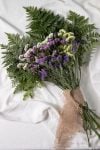


A lavender flower bouquet is one of the few things in a cooler that gets easier to sell the longer you own it. Dried lavender holds its color and scent for months, the stems are woody enough to take a van ride without complaint, and the color sits beside almost anything else on your bench.
That combination is rarer than it sounds. Most of what a florist stocks is a race against time and gravity: open bloom heads bruise, soft stems bend, and an unsold bunch on Friday is a write-off on Monday. Lavender breaks that pattern, which is why it belongs on the menu of any shop that sends a meaningful share of its orders out on a delivery route.
This is the case for carrying it as a product line: what it pairs with, who buys it, what it survives, and how to price it.
The Bottom Line
Dried lavender keeps its fragrance and color for several months to a year when it is stored airtight, cool and out of sunlight (Gardenia).
Fresh lavender holds a vase life of roughly 5 to 7 days with daily water changes (Windflower Florist).
The global dried flowers market was worth about USD 1.43 billion in 2024 and is forecast to reach USD 2.36 billion by 2033, a 5.7% CAGR (SkyQuest).
Woody stems and small, tight florets make lavender far more forgiving on a delivery run than open-headed blooms.
Lavender’s associations with calm and recovery put it in the get-well and sympathy lanes, which are the steadiest year-round delivery orders most shops have.
Metrobi drivers are rated 4.97/5
Trusted by local businesses for:
- Background-checked professionals
- Specialized in business deliveries
- Same drivers for consistency
- 4.97/5 average delivery rating
Why a lavender flower bouquet earns its shelf space
Because it fails in fewer ways than almost anything else you carry. The floret heads are small and tight rather than wide and open, the stems are woody instead of hollow, and a dried bunch has no water requirement at all. Nothing about that arrangement is waiting to go wrong between your bench and a customer’s hallway.
That matters most in shops built around delivery. The design decisions that keep an arrangement intact in a vehicle, meaning low containers, weighted bases and support at the neck of the stems, are all easier to satisfy with lavender, because a lavender bunch is naturally short, light and stable. A tall, top-heavy mixed arrangement asks for stabilizers and careful handling. A lavender bunch in a low jar asks for almost nothing.
It also has a second life as a premium product rather than a budget one. Preserved and dried work sells at the top of the market, where selling luxury flowers depends on longevity and presentation as much as on rare stems. A dried lavender piece in the right vessel is not a cheap alternative to fresh; it is a different product with a different reason to exist.
The market is moving that direction. The global dried flowers market sat at roughly USD 1.43 billion in 2024 and is projected to reach USD 2.36 billion by 2033, driven by demand for low-maintenance, long-lasting décor (SkyQuest). The narrower preserved-fresh-flower segment grew from about USD 230 million in 2025 to USD 243 million in 2026 (Preserved Fresh Flowers Market Outlook 2026-2032). Both curves point at the same customer: someone who would rather buy once and keep it.
Fresh lavender or dried lavender: which to stock
Carry both, for different jobs. They behave so differently that treating them as one line item will cost you money on one end or the other.
| Fresh lavender | Dried lavender | |
|---|---|---|
| Useful life | 5-7 days in water | Several months to a year |
| Water needed | Yes, changed daily | None |
| Fragrance | Strong, fades with the bloom | Retained for months if stored well |
| Delivery risk | Low | Very low |
| Best for | Seasonal fresh work, weddings in season | Year-round gifting, décor, corporate accounts |
| Waste exposure | Real, but slower than soft-stem blooms | Near zero |
Vase life per Windflower Florist; dried longevity and storage per Gardenia.
The dried column is the interesting one for a delivery shop. A product with near-zero waste exposure and no water to spill is a product you can hold inventory in without a clock running, which means you can buy it in volume at harvest and sell it in December.
If you dry your own, the timing is straightforward: cut just before the flowers reach peak, which gives the prettiest dried result, and allow two to three weeks for the bunches to dry fully (Gardenia). Store the finished bunches airtight, cool and away from light, or the color and scent you paid for will leave.
What lavender pairs with in an arrangement
Lavender is a supporting color that happens to work as a solo act, which is why it earns a place in so many recipes.
White and cream. Pairing lavender with white or cream flowers makes the purple read stronger; peonies and roses in particular do this well.
Pinks, from blush to hot. Lavender sits inside the same family, so blush and hot pink alongside true purple gives you a graduated, ombré effect without a color clash.
Lime green and true yellow. The contrast option. This is the pairing for a bouquet that should look spontaneous and garden-picked rather than formal.
Wildflowers and bluebells. An eclectic mix where lavender’s vertical line does the structural work and the rest fills in.
Nothing at all. A generous dried bunch wrapped in natural twine is a complete product, and one of the fastest things you will ever build.
What lavender contributes to a design is movement without bulk. It adds height and line, softens the mood, and gives a mixed arrangement a finished edge, all without eating the volume budget the way a large focal flower does. That is a useful property when you are trying to hit a price point without inflating stem count.
Who buys lavender bouquets
Four buyer groups account for most of the volume, and three of them order for delivery.
Get-well and recovery. Lavender is widely read as a flower of healing and calm, which puts it squarely in the get-well and hospital-send category. These orders arrive year-round, are rarely price-shopped, and almost always need delivering.
Weddings and events. Lavender runs through wedding work as bouquets, centerpieces, boutonnières and table jars, and a single sprig makes a complete groomsman’s boutonnière. Purple and lavender palettes stay in steady rotation rather than spiking and vanishing.
Interiors and design-led gifting. The long-life, low-maintenance buyer. This is where dried lavender competes against a candle or a ceramic rather than against another bouquet, and the margin reflects it.
Corporate and recurring accounts. Offices and hospitality want something that looks intentional and does not need replacing weekly. Dried lavender fits that brief better than almost any fresh option.
The get-well lane deserves particular attention if delivery is a meaningful part of your revenue. Those orders are placed by someone who cannot visit in person, which means the delivery is the product, and it means the recipient address is frequently a hospital or a care facility with its own access rules.
Lavender bouquet care: what to tell the customer
Say it at the point of sale and put it on the card. Lavender is low-maintenance, not no-maintenance, and the complaints you will get are entirely preventable.
For fresh bunches: change the water daily, which is what gets you to the 5-to-7-day end of the range rather than the 3-day end (Windflower Florist).
For dried bunches: keep them out of direct sunlight and away from moisture. Sun bleaches the purple out faster than anything else, and a bathroom windowsill is the worst place in the house for them.
For fragrance: a gentle squeeze of the florets releases the scent again after a few weeks. Customers do not know this and are delighted when told.
For display: dried lavender does not need a vase of water, so it works standing in a jar, tucked into a basket, or hung upside down in a window. Say this at the counter, because it doubles the number of places the customer can put it.
Lavender’s calendar, and what to do off-season
Fresh lavender is seasonal and the window is narrower than most people expect. In temperate regions it generally blooms from June through July; English lavender runs roughly late May to early July with the more intense fragrance, and Lavandin varieties come later, into mid or late July. In warmer climates it can start as early as March or April (Gardenia).
Which leaves eight or nine months to cover. The answer is to treat harvest season as a buying season: take fresh volume while the price and quality are good, dry what you will not sell, and run the dried inventory through the rest of the year. A shop that does this has lavender on the menu in February, when everyone else has a gap where purple should be.
How to price a lavender flower bouquet
Price it as a design, not as a commodity bunch. The standard industry approach marks fresh product up 3.5x wholesale and hard goods 2.5x, then adds a labor charge of around 25% (Florists’ Review).
Two adjustments apply to lavender specifically. Build time is short, especially for a wrapped dried bunch, so the labor component is small and you should not pretend otherwise. The useful life, though, is months rather than days, and customers will pay for that. Someone comparing a $55 dried arrangement against a $45 fresh one that lasts a week is not making a like-for-like comparison, and saying so out loud closes the sale.
The real margin advantage is on the other side of the ledger. Dried stock does not spoil, so it does not contribute to the wholesale waste that quietly eats a flower shop’s profit. A product line with near-zero write-off carries a better effective margin than its retail price suggests.
Frequently asked questions
How long does a lavender flower bouquet last?
Fresh lavender lasts about 5 to 7 days in water when the water is changed daily (Windflower Florist). Dried lavender lasts several months to a year, keeping both color and fragrance, as long as it is stored airtight, cool and out of direct sun (Gardenia).
When is lavender in season?
Broadly June and July in temperate regions. English lavender blooms from around late May into early July, Lavandin varieties later in July, and in warm climates flowering can begin as early as March or April (Gardenia).
Does lavender travel well in a delivery vehicle?
Better than most flowers. The florets are small and tight rather than wide and open, the stems are woody rather than soft, and a dried bunch carries no water to spill. It still needs to be secured so it cannot slide, but it is one of the lowest-risk things you will put in a van.
What flowers go with lavender in a bouquet?
White and cream peonies and roses make the purple read strongest. Blush and hot pink give a graduated purple-to-pink effect. Lime green and true yellow provide a deliberate contrast for a looser, garden-style bouquet. Lavender also stands alone perfectly well as a wrapped bunch.
Can you dry your own lavender to sell?
Yes, and it is one of the better uses of harvest-season buying power. Cut just before the flowers hit peak for the best dried appearance, allow two to three weeks to dry fully, then store airtight in a cool dark place (Gardenia).
Put lavender on the standing menu
Lavender is not a seasonal novelty you wheel out in July. Handled properly it is two products: a fresh line for eight weeks of the year and a dried line for the other forty-four, both of them cheap to hold and unusually hard to damage.
If you take orders for delivery, add one wrapped dried lavender bunch and one low dried arrangement to your standing menu this month, buy your fresh volume at harvest and dry the surplus. It is the closest thing in this trade to inventory that waits for you.