Most people who want to start a brewery begin with the beer. That is the part they already know how to do.
The brewery is the other 90%. It is a manufacturing plant, a bar, a federal excise taxpayer, a landlord’s tenant, and a delivery operation, and every one of those pieces has to be in place before a single pint gets sold. Getting them in the wrong order is what turns an 18-month project into a four-year one.
This guide walks the whole sequence, from the first business decision to the first commercial pour, and tells you which stage you should be in when. Four of the stages are big enough to have their own guides, and this page hands you off to them: what it costs to open a brewery, the licences and permits you need, the building requirements that decide your site, and how to build the brewery’s website.
The Bottom Line
- Expect 18 to 36 months from decision to first pour. The licensing and buildout stages run in parallel, not in sequence, and that is where most of the time is won or lost.
- A taproom-first brewery on a 7 to 15 barrel system generally needs $500,000 to $1.5 million all in. Equipment alone eats 50% to 70% of it.
- The federal Brewer’s Notice is free to file but takes 60 to 120 days, and the clock does not start until the TTB agrees your application is complete.
- Sign nothing before you confirm the zoning allows both brewing and a taproom. A conditional use permit adds three to six months and can be denied.
- There were 9,344 operating US breweries in June 2026, down 1.8% year over year. The market no longer rewards simply existing, so your channel plan matters as much as your recipes.
Boost customer satisfaction with just a few clicks
Most-Loved Features:
- On-demand drivers
- Real-time GPS tracking
- Delivery confirmation photos
- Over 50% of customers report a smoother delivery experience
What it actually takes to start a brewery
Opening a brewery is nine stages, and only two of them are about beer.
In rough order: pick a business model, build a financial plan, raise the money, secure a site, file for federal and state licences, buy and install the brewhouse, pass your inspections, build an audience, then open. Stages four and five overlap heavily, because the TTB wants to know your premises address and your landlord wants to know you will be licensed.
Four to 12 months is the commonly quoted range for getting up and running (LivePlan), and that is the optimistic end. Founders who have been through it tend to describe 18 to 36 months once a buildout, a conditional use permit, and an equipment lead time are all stacked on top of each other.
The expensive mistake is treating the list as sequential. If you wait for your licence before you start your buildout, you add six months. If you start your buildout before you confirm zoning, you can lose the whole lease.
Metrobi is transforming beverage deliveries
Specialized solutions for beverage businesses:
- Beverage-trained drivers
- Proper handling equipment
- Peak day delivery support
- 23% average cost reduction
How much money you need before you open a brewery
A microbrewery with a taproom generally requires $250,000 to $2.5 million in total capitalisation, with most 7 to 15 barrel systems landing between $500,000 and $1.5 million all in (StartupCostHub).
The spread is that wide because it is really three different businesses. A nanobrewery running a 1 to 3 barrel system can open for $150,000 to $500,000. A production brewery with a canning line starts at $1 million and keeps going.
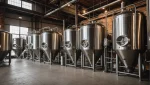
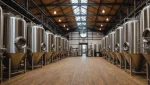
Equipment is 50% to 70% of the budget, which is the single most useful number in brewery planning: once you know your brewhouse size, you can estimate the whole project. A 10 barrel two-vessel system commonly runs $300,000 to $500,000 installed, and fermentation and brite tanks add $10,000 to $30,000 each, with most startups needing four to eight of them to keep a rotation going.
Two things founders routinely underfund:
- Working capital. You pay rent, payroll, and excise tax for months before revenue is meaningful. Budget six months of operating costs on top of the buildout.
- The gap between licence and sale. Your equipment is installed, your rent is running, and you legally cannot sell yet. That gap is normal and it has to be funded.
For the line-by-line version, including what each item costs at each brewhouse scale, see the brewery startup cost breakdown.
Choosing a brewery business model: taproom, production or brewpub
Your business model decides your licence, your zoning, your square footage, and your margins. Pick it first, because almost every later decision inherits from it.
The same barrel of beer is worth roughly $120 to $180 wholesale through a distributor and roughly four times that poured in your own taproom. That gap is why taprooms and brewpubs now make up 73% of all craft brewery businesses while producing only 15% of the volume (Brewers Association).
| Model | Typical system | Where the revenue comes from | Main constraint |
|---|---|---|---|
| Nanobrewery | 1–3 bbl | Taproom, growler fills, local accounts | Volume too low to absorb fixed costs |
| Taproom brewery | 7–15 bbl | 60–80% on-premise pints and cans to go | Needs foot traffic and parking |
| Brewpub | 7–15 bbl | Beer plus a full food programme | Running a kitchen as well as a plant |
| Production brewery | 20–30 bbl+ | Distribution, packaged retail, self-delivery | Capital, and a distributor who cares |
Taprooms were the best-performing brewery type by volume in the first half of 2026, and 58% of craft drinkers said they bought more of a brewery’s product after visiting its taproom, up from 51% in 2025 (Brewers Association). If you are choosing between models with similar economics, the one with a room in it has the better feedback loop.
Writing a brewery business plan lenders will fund
A brewery business plan has one job beyond organising your thinking: proving to a lender that the beer will service the debt.
That means the numbers do the talking. Barrels per year at what utilisation, split by channel, at what price per barrel, against a fixed cost base you can actually name. A plan that opens with your brewing philosophy and gets to the capacity model on page 14 reads as a hobby to an underwriter.
Funding for a brewery usually comes in layers rather than one cheque:
- SBA 7(a) loans go up to $5 million and can cover working capital, real estate, and equipment, with terms to 10 years, or 25 if the loan includes the building (ICSC). Expect 30 to 90 days, longer if your documentation is not ready.
- Equipment financing moves much faster, often a decision in one to three business days. The catch is that most brewery equipment lenders want to see an active Brewer’s Notice before they fund, which puts licensing on your critical path.
- Local and investor capital, which is how most taproom breweries close the gap, and where a clean pitch deck earns its keep. A tool like an AI pitch deck generator is a reasonable way to get a first draft in front of people quickly, as long as the numbers underneath it are yours.
Licensing a brewery: federal, state and local
You need approval at three levels, and they are not independent: the state usually wants to see your federal notice, and the federal application wants a premises address your local zoning has already blessed.
The federal piece is the TTB Brewer’s Notice. It has no application fee, and it takes roughly 60 to 120 days. The TTB’s own service goal is to issue 85% of permits within 75 days, but the clock does not start until the bureau confirms your application is complete, which is why incomplete filings are the most common cause of a six-month delay.
State manufacturer licences range from about $100 a year for a Michigan small brewer to around $3,700 for a New York microbrewery, and total licensing across federal, state, and local typically lands between $2,000 and $15,000.
Then there is the local layer that founders forget: certificate of occupancy, health permit, sign permit, food permit if you serve food, and often a conditional use permit for alcohol production. Full detail on the whole stack, in filing order with lead times, is in the guide to brewery licence requirements.
Finding a building that can legally hold a brewery
A brewery needs a building that can take 20,000 pounds of liquid on the floor, drain six barrels of effluent for every barrel of beer, and legally host the public. Very few vacant retail units can do all three.
The rule of thumb is one square foot for every barrel of annual production, with real-world breweries landing between 1.6 and 4.6 square feet per barrel once you account for cold storage, packaging, and a taproom. Beyond floor area, the deal-breakers are structural: 18 feet of clear height if you want tall narrow fermenters, trench drains with a quarter-inch-per-foot slope, three-phase 208V power, and a water supply that can deliver four to seven litres for every litre of beer you brew.
The zoning trap is the one that ends projects. Breweries are usually classified as light industrial, while taprooms are a retail use, and a lease that permits one may not permit the other. A conditional use permit can take three to six months and can arrive with conditions on closing time, parking, and noise that break your business model. Confirm both uses in writing before you sign. The brewery building requirements guide covers the full site checklist.
Buying and installing the brewhouse
Size the system for the brewery you will have in year three, not the one you open with, because replacing a brewhouse is a rebuild and adding a fermenter is a Tuesday.
Practical sequencing notes:
- Order early. Brewhouse lead times are measured in months, and the install has to be scheduled against your buildout, not after it.
- Buy fermenters generously. Tank capacity, not brewhouse size, is what caps how much beer you can actually sell. Four to eight fermenters per brewhouse is the normal starting ratio.
- Used equipment cuts 30% to 50% off the purchase price and can bring repair costs and no warranty with it. It is a real option for tanks, a riskier one for the brewhouse itself.
- Account for the cellar and the cold room. Glycol, a walk-in, and kegs are not glamorous line items and they are not optional.
Building the brewery’s audience before you open
The brewery that opens with a mailing list and a working website sells more beer in month one than the brewery that opens with better beer and neither.
Your website is the operational hub, not a brochure. It answers the two questions every prospective visitor has, which are whether you are open and what is on tap, and it is where online ordering and local search both land. Mobile ordering by QR code is now used by 40% of breweries, and cloud-based taproom platforms by 78% (Raspberry Pints), so the site needs to connect to real systems rather than sit beside them.
Get it live during the buildout, while you still have construction photos to post. The full build, page by page, is covered in the guide to brewery website design, and the launch campaign itself is a separate exercise worth planning early with these brewery marketing ideas.
Getting the beer out the door
Deciding how beer physically leaves the building is a day-one decision, not a year-two one, because it changes your licence, your cold storage, and your floor plan.
There are three routes, and most breweries use two of them:
- Taproom and direct sales, the highest margin per barrel and the lowest volume ceiling.
- Distribution, which trades roughly two thirds of your revenue per barrel for reach, and in most states is difficult to unwind once signed.
- Self-distribution, legal for small brewers in many states and the middle path. You keep far more of the margin and you take on the routing, the cold chain, the invoices, and the vehicle. Breweries that go this way usually underestimate the dispatch side rather than the driving side.
Self-distribution is also the point where a brewery becomes a logistics operation, with keg returns, delivery windows, and accounts that expect a consistent arrival time. Plan the routes before you promise the accounts.
How long it takes to open a brewery
| Stage | Typical duration | Can run in parallel with |
|---|---|---|
| Business model and plan | 1–3 months | — |
| Raising capital | 3–9 months | Site search |
| Site search and lease | 2–6 months | Capital raise, plan refinement |
| Zoning and conditional use permit | 3–6 months | Federal licence application |
| TTB Brewer’s Notice | 2–4 months | Buildout, zoning |
| State and local licences | 1–4 months | Buildout |
| Buildout and equipment install | 4–12 months | Licensing, marketing |
| Pre-opening and audience building | 2–3 months | Buildout tail |
Read the right-hand column twice. The founders who open in 18 months are not moving faster through any single stage, they are running four of them at once.
Frequently asked questions
How much does it cost to start a brewery?
Most taproom breweries on a 7 to 15 barrel system need $500,000 to $1.5 million in total capitalisation, with nanobreweries starting around $150,000 and production breweries starting above $1 million. Equipment accounts for 50% to 70% of the total.
How profitable is a brewery?
Profitability tracks channel mix more than volume, because a barrel sold in your own taproom is worth roughly four times a barrel sold through a distributor. A brewery with a busy taproom can run healthy margins at modest volume, while a distribution-only brewery usually needs scale before the numbers work.
How difficult is it to start a brewery?
The brewing is the manageable part. The difficulty is concurrency: licensing, zoning, financing, and construction all have long lead times and depend on each other, and the industry contracted 1.8% in the year to June 2026, so new breweries open into a market with no slack for a weak location or an unclear model.
Do you need a brewing degree to open a brewery?
No. There is no credential requirement in federal or state licensing. What lenders and landlords look for is a head brewer with commercial production experience, which is a different thing from homebrewing experience and is the gap most founding teams have to hire for.
Can you start a brewery with no money?
Not realistically, but you can start with far less of your own. Contract brewing lets you sell beer under your own brand using someone else’s licensed facility, which builds the brand and the sales history that make financing possible later. It is the most common route from homebrewer to brewery owner.
Where to start this week
If you are at the beginning, the order that saves the most time is this: decide your model, build the capacity-and-channel model that proves it, and only then start looking at buildings, because the model tells you how many square feet and which zoning you need.
Once you have a site in mind, file the Brewer’s Notice early and completely. It is free, it is slow, and almost everything else, including equipment financing, waits on it.
Then build in parallel and keep the two long poles, licensing and construction, moving at the same time. That single habit is the difference between opening next year and opening the year after.