
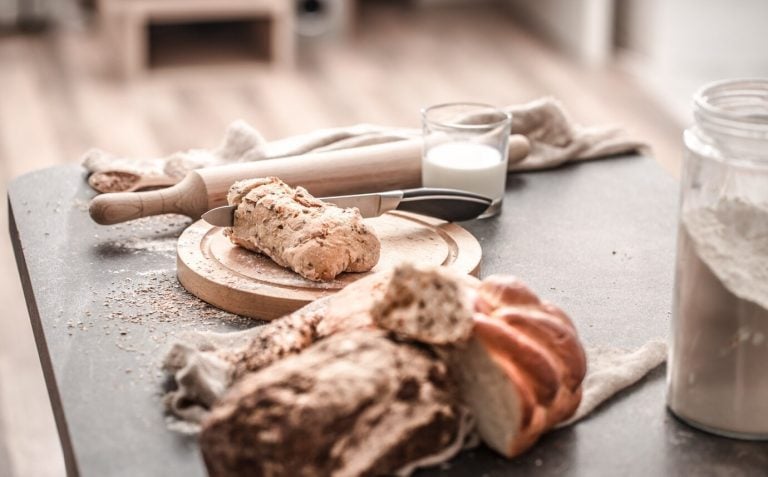

Most people who want to sell baked goods from home discover the same uncomfortable thing: there is no single answer to whether they need a license. There is a Facebook group telling them it’s fine, a neighbor who got a visit from the health department, and a state website written for commercial processors.
The honest answer is that a home bakery license is a state-level question with a local layer on top, and the two can point in different directions. Every US state now has some form of home-baking exemption, but what it is called, what it covers, what it costs and whether anyone inspects your kitchen varies enormously, from no permit at all to a registration, a fee and a visit.
This guide covers the paperwork gate: which permit your state actually requires, what you are allowed to sell under it, what has to go on the label, the sales cap attached, and how to apply without losing a month to the wrong office. It is the step that comes before everything else: before pricing, before packaging, and before you work out how to get a finished cake to a customer in one piece.
Key Takeaways
- All 50 states allow some form of home food production, but the permit ranges from nothing at all to a registration with a kitchen inspection.
- What you can sell is decided by food safety, not by product category: shelf-stable items are broadly allowed, anything needing refrigeration usually is not.
- Fees are small in most states, often $0 to $75, though some jurisdictions run to several hundred dollars once local licensing is included.
- Nearly every state requires a label declaring the food was made in a home kitchen that is not state-inspected.
- Your state permit does not override local zoning. Check with the city or county before you apply.
Save 80% of delivery management time
We handle everything:
- Dedicated operations manager
- Real-time tracking dashboard
- Automated customer notifications
- Urgent issue resolution
Do you need a home bakery license to sell baked goods?
In most states, yes, though the permit is usually far lighter than people expect, and in about a dozen states there is no permit at all, only rules you have to follow.
The mechanism is called a cottage food law: a state-level exemption that lets an individual make and sell certain low-risk foods out of a home kitchen without the licensing, inspection and commercial-kitchen overhead a full food business carries. Every state has one in some form, though the name changes at the border. You will see “cottage food operation,” “home processor exemption,” “limited food establishment,” “home-based food production” and “food freedom act” describing broadly similar things (Cottage Food License; BakingSubs).
A few states run a separate, stricter track specifically named for bakeries. Ohio is the clearest example: a “Home Bakery” there is licensed and inspected by the Ohio Department of Agriculture’s Division of Food Safety, with an annual fee of $10 (Ohio Department of Agriculture). That is unusual in naming, not in substance. Most states reach the same outcome through their cottage food statute.
The reliable way to find your own answer is to search for your state plus “cottage food law” or “home bakery requirements” and read the result from your state’s department of agriculture or department of health. Skip the aggregators for the primary question; use them for context.
Cottage food permit or home bakery license: which one applies to you
The distinction that matters is not the name of the permit, it is which of three tiers your state puts you in.
- No permit required. You follow the cottage food rules on allowed products, labeling, sales channels and revenue cap, and sell without registering with anyone at state level.
- Registration, no inspection. You file a form, pay a fee, and are on a list. Pennsylvania’s Limited Food Establishment route sits close to this, with a $35 state registration that does include a home kitchen inspection (BakingSubs).
- Licence and inspection. Your kitchen is visited and approved before you sell, and usually re-inspected on a cycle. Ohio’s home bakery licence works this way.
Knowing your tier tells you how long this takes. Tier one is same-day. Tier three commonly runs two to four weeks from application to approval, because an inspection has to be scheduled and passed first.
What you can sell under a home bakery license
The line is drawn on food safety, not on product type, and it is essentially the same line everywhere: shelf-stable is allowed, temperature-controlled is not.
Broadly permitted:
- Cookies, brownies, bars and muffins
- Breads, rolls and most yeast goods
- Cakes and cupcakes with shelf-stable frostings such as buttercream or royal icing
- Jams, jellies and preserves in many states
- Dry mixes, granola and candy
Broadly excluded without a commercial kitchen or an additional permit:
- Cheesecake, custard and cream pies
- Cream-filled pastries and anything with a perishable filling
- Meat pies and anything containing cooked meat
- Frostings and fillings that require refrigeration
- Most items sold frozen or requiring cold holding
Cakes are where this catches people, because a cake is allowed or not allowed depending entirely on what is on and inside it. A buttercream-decorated birthday cake is usually fine. The same cake with a cream cheese filling often is not.
Sales channels carry their own restrictions. Many states permit direct-to-consumer sales from home, at farmers markets and at fairs, while limiting or prohibiting wholesale, retail placement, and sometimes shipping across state lines. If you intend to supply cafés or grocers rather than individuals, check that specific permission before you build the business around it, because that is the restriction most likely to push you out of the cottage food tier entirely.
What a home bakery license costs
Less than most people fear, in the majority of states, and more than they expect in a minority.
| Cost item | Typical range | Notes |
|---|---|---|
| State cottage food permit or registration | $0–$75 | Many states charge nothing; Ohio’s home bakery licence is $10/year |
| Home kitchen inspection | Often bundled with the permit | Pennsylvania’s Limited Food Establishment registration is $35 and includes one |
| Food handler certificate | $10–$25 | Required in roughly half of states; 2–4 hours online |
| Local business licence | Varies widely | Often required by city or county regardless of cottage food status |
| Full food service licence (if you exceed the exemption) | $300–$650+ | Pennsylvania’s food service licence range, by facility classification |
Sources: state agriculture departments; 2026 licensing cost guides from Restroworks and Business License Guide.
Broader guides that quote $200 to $1,000+ for a “bakery licence” are generally pricing a commercial bakery, not a home one. They are not wrong, they are answering a different question, which matters if your plans are bigger than your kitchen.
Home bakery labeling requirements
Nearly every state with a cottage food law requires a disclosure on the label stating that the food was made in a home kitchen not subject to state inspection. The exact wording is prescribed by the state and should be copied from your state’s guidance rather than paraphrased.
Beyond the disclosure, a standard compliant label carries:
- The name and address of the home bakery
- The product’s common name
- A full ingredient list in descending order by weight
- Allergen declaration covering the major allergens
- Net weight or count
- The date of production, where your state requires it
Labeling is the most commonly cited violation in home bakery enforcement, and it is also the cheapest thing on this page to get right. Build one compliant template, populate it per product, and check it against your state’s guidance once a year, because the disclosure language does get amended.
Sales caps and what happens when you reach one
Most states cap annual cottage food sales, commonly somewhere between $25,000 and $75,000, with some states applying no cap at all. New York’s standard home processor exemption path, for instance, carries a $50,000 annual gross sales limit (Butterbase).
The cap is on gross sales, not profit, which is a distinction to plan around. Hitting it does not end the business; it moves you into the next tier: a licensed commercial kitchen, a shared or rented commissary, or a full food service licence. That transition is a planning exercise rather than an emergency, but it is much easier done in advance than in the month you cross the line.
It is also the point at which the economics of the business change shape, because a licensed operation usually means wholesale accounts, larger orders and real delivery volume. Understanding what each order costs you to fulfil and deliver before you get there is what makes the step up a decision rather than a scramble.
Zoning and the local approvals people forget
A state permit does not grant you permission to run a business at your address. Zoning does, and it is administered locally.
Most cities and counties require a general business licence regardless of your cottage food status, and residential zoning may restrict or prohibit a food business at a home address. The approval you may need can involve a zoning application through the city planning department, a site plan, and occasionally a public hearing.
Two practical points save a lot of time here. First, call the local planning office before you apply for anything at state level, because several states will not process your application until you confirm that local zoning permits a food business at your address. Second, ask specifically about the parts of the operation that are visible from the street: customer pickup, signage, parking and commercial deliveries are what neighbors notice and what ordinances tend to address.
Homeowners associations and rental leases are a separate layer again, and neither is overridden by a state permit.
How to apply for a home bakery license, step by step
The sequence matters more than the paperwork. Running these out of order is what turns a two-week process into a two-month one.
- Identify your state’s route. Find your state department of agriculture or health page for cottage food or home bakery. Note which of the three tiers applies and which agency issues the permit.
- Confirm local zoning. Call the city or county planning office and ask whether a home food business is permitted at your address, and what local licence you need.
- Take the food handler course if your state requires it. Two to four hours online, $10–$25, and it is a prerequisite for the application in many states.
- Prepare your kitchen to the written standard. Where inspection applies, expect requirements along the lines of Ohio’s: cleanable walls, ceilings and floors in good repair, no carpet in the kitchen, no pests, and pets excluded from the area during production.
- Submit the application and fee. Attach your product list and label drafts if the form asks for them; an incomplete product list is a common cause of a second round.
- Request and pass the inspection. Where required, this is usually a separate request form sent to the food safety division. Expect roughly two to four weeks from application to approval once the inspection is scheduled.
- Register the business and sort tax. A business name registration, an EIN if you need one, and a sales tax permit. These are separate from the food permit and are easy to overlook.
When a home bakery license stops being enough
Four situations push a home baker out of the cottage food tier, and it is worth knowing them early because each one is a sales opportunity you would otherwise have to turn down.
You want to sell wholesale to cafés, restaurants or grocers. You want to ship interstate. You want to make products that need refrigeration. Or you are approaching the state’s revenue cap.
Events are a fifth case that surprises people. Catering a wedding or a corporate lunch is usually a different permit entirely, so if that work is on your roadmap, read up on how to get a catering license for your business before you quote for it rather than after.
None of these require you to open a storefront. The usual next step is a shared commercial kitchen or commissary rented by the hour, which gets you an inspected facility and the licence that goes with it without the capital of your own space. Plan the move when you are at roughly 70% of your cap, not at 100%.
Frequently asked questions
Do I need a license to sell baked goods from home?
In most states you need either a cottage food permit or a home bakery licence, though roughly a dozen states require no permit at all and ask only that you follow the rules. The requirement is set at state level, so the only reliable answer comes from your state’s department of agriculture or health.
How much does a home bakery license cost?
In most states, between nothing and about $75 for the state permit. Ohio’s home bakery licence is $10 a year; Pennsylvania’s Limited Food Establishment registration is $35 and includes a kitchen inspection. Add $10–$25 for a food handler certificate where required, plus whatever your city charges for a general business licence.
Will someone inspect my kitchen?
It depends on the state. Some states issue a cottage food permit with no inspection at all. Others, including Ohio and Pennsylvania, inspect the home kitchen before approving you. Where inspection applies, the standard focuses on cleanable surfaces, good repair, absence of pests and exclusion of pets during production.
Can I sell cakes under a home bakery license?
Usually yes, provided the cake is shelf-stable. Buttercream and royal icing are generally fine. Cream cheese frosting, custard or cream fillings, and anything else needing refrigeration will typically fall outside the exemption and require a licensed kitchen.
How long does it take to get a home bakery license?
Where no permit is required, you can begin immediately. Where registration only is required, days. Where an inspection is involved, plan on two to four weeks from application to approval, driven mostly by how quickly the inspection can be scheduled.
Can I sell my baked goods online?
Generally yes to local customers, with pickup or your own delivery. Shipping is where states diverge sharply. Many restrict or prohibit interstate shipment under a cottage food permit. Check your state’s rules on sales channels specifically, because online sales are usually governed by where the food goes, not where it is listed.
Getting the paperwork behind you
The licensing step looks larger from the outside than it is. For most home bakers it comes down to one state page, one phone call to the local planning office, a short food handler course and a form, and then the business is legal and the real work starts.
The order is what saves you time: state route first, local zoning second, training third, application fourth. Get the labels right from day one, keep an eye on the revenue cap, and know in advance which of your product ideas will need a commercial kitchen so that the day a café asks for a standing wholesale order, you already know what your answer is.
With the permit in hand, the harder question is the one licensing cannot answer for you — what you actually sell, to whom, and why they come back. That is the subject of how to start a home bakery that customers recommend, and it is where the business gets built.