
A busy takeout counter can hide a losing business. The tickets print, the bags go out, the sales line climbs, and the month still closes tighter than it should. That is the strange thing about takeout: volume and profit come apart, and most operators find out from the P&L rather than from the pass.
Takeout profitability is decided before the bag leaves the pass. By the time a driver picks it up, the channel fee is set, the packaging is bought, the price is printed, and the distance is whatever it is. Everything that determines whether that order made money was chosen earlier.
This guide walks the cost of one takeout order from the moment it lands to the moment it arrives: what each ordering channel takes, what the container really costs, how far you can afford to drive, and which levers actually move the number. It is written for food businesses that run their own local delivery, or are deciding whether to: bakeries, caterers, small restaurants, and anyone who has watched a 30% commission eat a dinner rush.
Key Takeaways
- Third-party marketplaces advertise 15–30% commission, but operators putting real numbers together land nearer 30–45% per order once packaging, processing and promotions are counted.
- Packaging adds roughly $0.75–$2.50 to a takeout order compared with the same food served on a plate, which is a material share of a 3–9% net margin.
- Digital orders tend to carry a larger check than counter orders, so average order value is the cheapest lever on this list, and it costs nothing to raise a minimum or build a bundle.
- The last mile is the cost most operators never assign to the order that caused it. Zones and minimums are how you make distance pay.
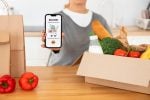
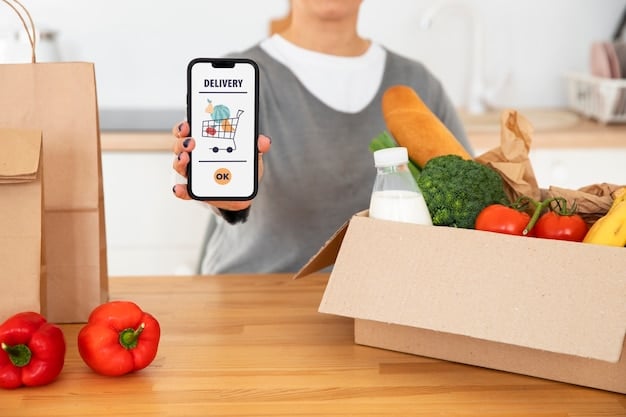
Lower your delivery costs by 23%
How we reduce costs:
- No delivery vehicle expenses
- Optimized local routes
- Pay-per-delivery model
- Average 23% delivery cost reduction
What takeout profitability actually measures
Takeout profitability is the margin left on a to-go order after every cost that order caused: food, labor, packaging, channel commission, payment processing, and the trip to the customer. It is not the same as your restaurant’s overall profit margin, and treating them as one number is how the channel hides its own losses.
The gap matters because the typical independent operator has very little room to absorb a mistake here. Industry write-ups on restaurant economics generally put independent net margins in the low single digits. Toast’s 2026 roundup of restaurant industry statistics and most trade coverage of the subject both land in the 3–9% band (Toast). Against a margin that thin, a 25% commission on an order does not reduce the profit on that order. It removes it and keeps going.
Two things make takeout different from dine-in on the same menu. The first is that someone else may be standing between you and the customer, taking a cut. The second is that the order has to physically travel, in a container you paid for, driven by someone you are also paying. Neither cost exists when the food goes ten feet to a table.
That is also why takeout rewards businesses that already know how to move goods. If you are a home baker still working out what license your state requires before you can sell at all, the economics below are the next thing to learn, because the permit gets you a business, and the unit economics decide whether it is a good one.
Where the margin on a takeout order disappears
Four costs turn a healthy dine-in ticket into a marginal to-go one, and they stack in the same order every time.
- Channel commission. If the order came through a marketplace, this is the largest single line and the one you control least.
- Packaging. Every item needs a container, a lid, a bag, and often a label. None of it is recovered.
- Payment processing. Card fees apply to the whole ticket, including the delivery fee you collected and passed on.
- The trip. Driver time, fuel, vehicle wear, and the dead miles between the last drop and the shop.
Food and labor cost roughly what they always did. It is these four that decide the outcome, and only the first is widely discussed. The trip in particular tends to be treated as an overhead (a driver on a shift) rather than a cost caused by a specific order going to a specific address. Assign it per order and the map changes quickly.
A worked example is more useful than a rule. Take a $40 order. Food cost at 30% is $12. Packaging is $2. Processing at 3% is $1.20. If the order came direct and a driver already heading that way drops it, you are in reasonable shape. If it came through a marketplace at 25%, that is another $10 off the top, and the same order is now fighting for a couple of dollars against labor it has not yet paid for.
Third-party commissions versus direct online ordering
Marketplaces charge a headline commission of roughly 15–30%, tiered by how much visibility you want. Independent 2026 breakdowns of what DoorDash, Uber Eats and Grubhub actually cost restaurants put the effective rate higher, commonly 30–45% per order once you add packaging, processing, promotional participation and refunds (Rezku; OPA!).
Direct ordering avoids the commission but not the work. You pay for the ordering software, you do your own marketing, and you either hire drivers or hand the last mile to someone who does it for you. The trade is real, and it is not automatically in favor of direct. A marketplace that brings you a customer you would never have reached has done something your website did not.
| Cost line | Marketplace order | Direct order |
|---|---|---|
| Commission | 15–30% headline, often 30–45% effective | None |
| Ordering software | Included in commission | Flat monthly or per-order fee |
| Payment processing | Usually bundled | 2.5–3.5%, paid by you |
| Customer data | Held by the platform | Yours |
| Demand generation | Platform marketplace | Your own marketing |
| Last mile | Platform driver | Your driver or a delivery partner |
Sources: 2026 third-party fee breakdowns from Rezku and OPA!; channel comparisons from Toast and ChowNow.
The practical answer most operators arrive at is not either-or. Marketplaces are an acquisition channel with a known, high cost of customer acquisition; direct ordering is where you want the repeat customer to end up. Run both, price them differently, and measure them separately. Toast’s own platform data shows digital orders carrying a larger average check than in-store ones, around 23% larger on their system (Toast), which is why the direct channel is worth building even while the marketplace is paying the bills.
How packaging costs change takeout margin
Packaging typically adds $0.75–$2.50 per order versus serving the same food on a plate, according to 2026 operator cost breakdowns. On a $15 lunch that is a noticeable slice of whatever margin survived the commission.
The mistake is not spending too much on packaging. It is spending without matching the container to the job. A clamshell that costs eleven cents less but lets steam collect will cost you the reorder, and a remake costs more than every container you saved on that week. Fragile and premium items are the clearest case: a damaged product is a 100% loss plus the labor to replace it, which is why getting a finished cake to a customer intact is a margin question as much as a craft one.
Three habits keep this line honest:
- Cost packaging per menu item, not per month. You cannot price a dish correctly if you do not know what its container costs.
- Stop shipping free extras. Cutlery, napkin packs and condiment sachets added by default are pure leakage; make them an opt-in at checkout and the spend drops immediately.
- Buy the container for the trip, not the counter. Anything traveling more than fifteen minutes has different structural and moisture requirements than anything handed over at a till.
Pricing and menu design for profitable takeout
The most common fix operators apply is a price difference by channel. Trade coverage of third-party economics reports that most now list higher prices on marketplaces than on their own channels, commonly by 10–25%, to offset the commission (KwickToGo). This is normal practice and the platforms permit it, but it has a ceiling: price too far above your direct channel and you train customers to distrust both.
Menu design does more work than pricing and gets less attention. A takeout menu is not your full menu in a smaller font. It should be built from what survives a car ride and what carries margin.
- Cut what travels badly. Anything that arrives visibly worse than it left is generating refunds and lost repeat business at the same time.
- Build bundles rather than discounting items. Family platters and multi-course boxes raise the ticket while lowering the packaging and labor per dollar sold.
- Put your high-margin items where the eye lands. Digital menus make position and photography much easier to test than a printed board.
- Add pre-order windows. Orders placed in advance let you batch prep and smooth labor, which is a real cost saving rather than a revenue trick.
Average order value is the cheapest lever available to you. Raising it costs nothing per order, unlike commission reduction (needs a channel change) or packaging savings (needs new inventory). A $6 increase in average ticket on a $40 order moves the margin more than most cost-cutting available to you in the same month.
Delivery zones and order minimums that make distance pay
Distance is the cost that goes unassigned in most takeout operations. A driver’s shift shows up as labor; it rarely shows up against the eleven-mile order that consumed forty minutes of it.
Setting that right needs only two controls, both of which you probably already have in your ordering system.
- Zones. Draw them by drive time, not radius. A five-mile ring means very different things across a river, across a downtown, and along a highway. Price each ring separately and let the far ring carry its own cost.
- Minimums. A minimum is not a barrier to sales; it is the line below which an order cannot pay for its own trip. Work it out properly. Take your fully loaded cost per drop, divide by your contribution margin, and that is your floor. Most operators find their real floor is higher than the one they guessed. The same logic that sets a minimum order quantity on the wholesale side applies here: you are pricing the fixed cost of fulfilling an order, not rationing demand.
Batching is the other half of this. A single drop to an address eight miles out is expensive; three drops on one run to the same neighborhood is not. Anything that increases the density of your route, whether that is pre-order windows, delivery day slots by zone, or minimums that nudge customers into the same evening, is a margin lever disguised as a scheduling decision.
The takeout orders worth refusing
Not every order should be accepted, and a takeout program with no refusals is usually one that has never measured itself.
The orders to look hardest at are the small ones going far, the ones made almost entirely of low-margin items, the ones placed at your absolute peak that will push six other tickets late, and the ones on promotional codes so deep that the discount exceeds the contribution. Each of those has a fix that is not refusal: raise the minimum for that zone, rebuild the bundle, cap order volume in the ordering system during peak, end the promotion. But you cannot apply any of them until you can see the orders individually.
That visibility is the point. “Takeout is up 20%” is not a finding. “Takeout is up 20%, and the growth is entirely marketplace orders under $25 going to our outer zone” is a finding, and it tells you exactly which control to touch.
The numbers to track weekly
Five figures, reviewed weekly, are enough to run this well. More than that and nobody looks.
- Contribution margin per order, by channel. Revenue minus food, packaging, commission and processing. Split direct from each marketplace. If one channel is negative, you now know.
- Average order value, by channel. The cheapest lever, and the fastest to respond to a bundle or a minimum.
- Packaging cost per order. Total packaging spend divided by order count. A creeping number here usually means free extras.
- Cost per drop. Total delivery labor, fuel and vehicle cost divided by drops completed. This is the number that makes zones and minimums arguable rather than instinctive.
- Repeat rate, direct versus marketplace. This tells you whether the acquisition cost you are paying a platform is buying a customer or just buying an order.
Delivery has kept growing as a share of restaurant sales through the decade. NetSuite’s summary of the shift notes the majority of restaurants reporting delivery at a higher share of sales than pre-2020 (NetSuite). The channel is not going away, which means the choice is between running it deliberately and letting it run you.
Frequently asked questions
Is takeout more profitable than dine-in?
Not automatically. Takeout avoids some front-of-house labor and table turn constraints, but it adds packaging, channel commission and the trip, and it loses the high-margin add-ons (drinks, desserts, a second round) that dine-in guests buy. Operators and trade analysis generally find dine-in tickets carry more of those attachments. Takeout wins on frequency and capacity, not on per-order margin.
What commission do delivery apps really charge?
Headline rates run roughly 15–30% depending on the tier you choose. Breakdowns published in 2026 that add packaging, processing, promotions and refunds put the effective cost nearer 30–45% per order. The number to work with is your own: total platform deductions for a month divided by gross platform sales for that month.
Should I raise prices on delivery apps?
Most operators do, commonly by 10–25%, and the platforms allow it. The risk is credibility rather than policy. Customers who see both menus notice a large gap. Keep the difference roughly in line with the commission you are recovering, and make sure your direct channel is easy to find so the cheaper price is available to anyone who wants it.
What is a reasonable delivery minimum?
Take your fully loaded cost per drop, divide it by your contribution margin percentage, and that is the order value at which a delivery breaks even. Set the minimum above it. For most local food businesses that lands well north of the $15–20 minimum they started with, especially in outer zones.
Is it cheaper to deliver myself or use a marketplace?
It depends on density. Self-delivery has a high fixed cost and a low marginal cost, so it wins once you have enough drops per run to keep a driver busy. Marketplaces have no fixed cost and a very high marginal cost, so they win at low volume and get worse as you grow. The crossover is specific to your route density, so track cost per drop and you will see it arrive.
Where to start
Takeout profitability is not one decision. It is a channel mix, a container spec, a price list, a zone map and a minimum, and each one is worth a point or two of margin that the others cannot recover for you.
If you are starting from nothing, start with measurement: contribution margin per order, split by channel, for one week. That single number tells most operators something they did not expect, and it makes every other choice on this page argue for itself. Then fix the largest leak, not the easiest one — usually the channel, occasionally the distance, and more often than anyone likes, the free cutlery.