
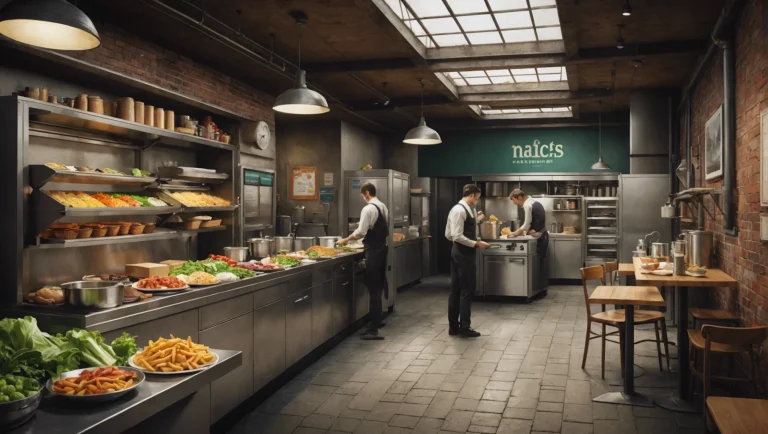

Most food businesses count waste in the kitchen. If you also run deliveries, you are counting about half of it. The rest disappears between the pack bench and the customer’s door: orders prepped for a day that never showed up, a tray that sat at room temperature for forty minutes on the third stop of a route, a wholesale drop that came back because nobody was there to sign for it. None of that lands in the bin by the prep station, so most owners never see it in a number.
Food waste in delivery operations is worth tracking on its own because the causes are different and the fixes are different. This guide covers the whole pipeline: what it costs, the six places it leaks, and the order to attack them in. For the day-to-day habits that stop waste before food gets packed, there is a companion piece on how to reduce food waste in commercial kitchens.
The Bottom Line
- U.S. restaurants waste between 4% and 10% of all the food they buy, and the industry spends an estimated $162 billion a year on costs tied to that waste (OysterLink, compiling NPR, National Restaurant Association and Food Waste Reduction Alliance data).
- Waste in a delivery operation has six distinct sources. Four of them sit outside the kitchen, which is why kitchen-only tracking understates the problem.
- Temperature and time in transit do the most damage per dollar. The FDA Food Code puts the bacterial danger zone at 41°F to 135°F, so a route that parks packed food there is a food safety problem before it is a waste problem.
- Start with measurement, then fix delivery windows and route order, then packaging. Donation is the last step, not the first: it handles surplus you failed to prevent.
Boost customer satisfaction with just a few clicks
Most-Loved Features:
- On-demand drivers
- Real-time GPS tracking
- Delivery confirmation photos
- Over 50% of customers report a smoother delivery experience
What food waste costs a business that delivers
Waste is not a rounding error on food cost. It is usually the largest controllable line an owner never looks at directly.
Start with the national picture. ReFED’s 2026 U.S. Food Waste Report put total surplus food in 2024 at 70 million tons, roughly 29% of the U.S. food supply, with a value of $380 billion (ReFED, 2026). At the operator level the numbers are just as blunt: U.S. restaurants generate somewhere between 22 and 33 billion pounds of food waste a year, and waste 4% to 10% of everything they purchase (OysterLink).
Translate that into your own books. If you buy $40,000 of food a month and waste sits at 8%, that is $3,200 a month, or about $38,000 a year, walking out in bags. Cut it to 4% and you have found $19,000 without raising a price or adding a customer.
Delivery adds costs that pure dine-in operations never pay on a wasted item:
- The labor that prepped, portioned and packed it.
- The packaging it went out in, which is thrown away whether the food is eaten or not.
- The delivery itself, which costs the same whether the food arrives in sellable condition or not.
- The credit or refund you issue when it arrives wrong, late or warm.
- The disposal fee on the way out.
A wasted plate in a dining room costs you the food and the labor. A wasted delivery order costs you the food, the labor, the packaging, the trip and often the customer’s next order too. That is why the same waste percentage hurts a delivering business more than it hurts its neighbors.
Metrobi is transforming catering deliveries
Specialized solutions for catering businesses:
- Catering-trained drivers
- Proper handling equipment
- Peak day delivery support
- 23% average cost reduction
Where food waste leaks out of a delivery operation
Six places, in the order food moves through them. Two are inside the kitchen; four are downstream, which is where most operators have no data at all.
| Leak point | What it looks like | First fix |
|---|---|---|
| Over-ordering | Deliveries arriving faster than you use them; cases dated past their turn | Order to a forecast built from your own delivery volume, not last year’s dine-in covers |
| Prep and overproduction | Trays batched for a demand curve that never arrived | Prep to confirmed orders plus a small buffer; batch twice a day instead of once |
| Holding and pack-out | Finished orders waiting on a bench for a pickup window | Tighten the gap between pack time and departure time to under 20 minutes |
| Temperature in transit | Cold items above 41°F on arrival; hot items sweating in a sealed box | Pre-chill carriers, separate hot and cold, sequence perishables first |
| Failed and refused drops | Nobody home, dock closed, order refused on condition | Notification before arrival, a named contact per stop, photo proof on delivery |
| Remakes on wrong orders | Item remade and the original thrown out | Pack-list check at the bench, not at the door |
The two kitchen rows are covered in depth in the commercial kitchen food waste guide; the four downstream rows are the rest of this article.
One thing to notice about the table: the fixes get cheaper as you move down it. Rebuilding your forecasting is a project. Pre-chilling a carrier and reordering a route are a morning’s work.
How to measure food waste with a waste log
You cannot cut what you have not weighed, and a delivery operation needs one extra column in the log that a dine-in kitchen does not.
A working food waste log records the item, the weight, the reason, and the estimated cost, logged at the moment it is thrown out rather than reconstructed at the end of a shift. The reason codes are what make it useful: expired, spoiled, overproduction, prep trim, plate return, temperature failure. Add two more if you deliver: failed delivery and remake. Within three weeks you will know whether your waste problem is a kitchen problem or a route problem.
Two numbers to run monthly:
- Waste as a percentage of COGS. Total logged waste cost divided by cost of goods sold. This is the number that connects waste to profit, and it is the one to put in front of a manager.
- Waste per delivered order. Total waste weight divided by orders delivered. This isolates the delivery side: if it climbs while dine-in waste stays flat, the problem is downstream.
Benchmark against the 4% to 10% range above and aim at the bottom of it. The kitchen-side mechanics of running the log day to day (who weighs what, which bins, how to keep staff honest about recording it) live in the companion post.
Spoilage in transit: temperature, time and packaging
Transit is where a perfectly good order becomes unsellable, and temperature does most of the damage.
The FDA Food Code puts the danger zone at 41°F to 135°F and requires that food held there without temperature control be discarded after four hours (FDA Food Code, section 3-501.16). Food held there long enough is not just lower quality, it is unsafe, and the right call is to throw it out. That makes every minute a packed order spends between the walk-in and the customer’s fridge a waste risk you can actually manage.
What works, in rough order of payoff:
- Pre-cool the vehicle or the carrier before loading. Loading cold product into a warm box spends your entire temperature budget in the first ten minutes.
- Separate hot and cold in different carriers. A shared bag equalizes toward the middle, which is the danger zone by definition.
- Sequence the most perishable stops first. Seafood, dairy and dressed salads should not be the last three drops on a fifteen-stop route.
- Check temperature at handoff, not just at load. A probe reading at the receiving end is the only evidence that the cold chain held, and it is what lets you argue a claim instead of eating the loss.
- Match packaging to the item, not to the order. Vented containers for anything fried, rigid ones for anything that gets stacked, insulation for anything that has to stay below 41°F. Sogginess and crushing are waste even when the food is technically safe.
Packaging deserves its own note, because it is the fix most operators reach for first and it is rarely the biggest lever. Better boxes stop damage. They do not stop a two-hour route.
Failed deliveries and remakes: the waste nobody logs
A failed delivery on perishable goods is usually a total loss, and it almost never appears in a waste number.
Industry estimates put first-attempt delivery failure at roughly 5% to 10% across retail and e-commerce, with the direct cost of each failure commonly put in the $17 to $30 range before you count the lost order (SmartRoutes). For a parcel, a failure means a second attempt. For a tray of prepared food or a case of cut flowers, a failure means the product is gone, and you pay for the second attempt as well.
The causes are boring and fixable:
- Nobody expected you. A notification when the order dispatches and again when the driver is close converts most of the “not home” failures into successful drops.
- No named contact at the stop. Commercial drops fail on closed docks and locked back doors. One phone number per stop, attached to the stop rather than the account, solves a surprising share of it.
- No proof of what arrived. Without a photo at handoff, every condition dispute becomes a refund, and a refund on perishable goods is a waste event you never logged.
- Wrong order, remade. The original comes back and goes in the bin. Checking the pack list at the bench catches this for pennies; catching it at the customer’s door costs the whole order twice.
This is the one area where tooling moves the number most. Metrobi’s platform sends customizable automated delivery notifications on dispatch, progress and completion, and makes real-time tracking and proof-of-delivery photos available to the receiver, which removes two of the four causes above. Its route planner also optimizes multi-stop routes, which is the lever in the next section.
How route planning changes your spoilage numbers
Route order is a waste control, not just a fuel control.
Every minute you cut from the average stop-to-stop time is a minute perishable product is not sitting in the danger zone. Optimizing a fifteen-stop route from three and a half hours to two and a half does not just save fuel and driver hours; it moves the last four stops from “borderline” to “fine” and eliminates the two or three condition complaints a week that were coming from them.
Three route decisions with a direct waste consequence:
- Perishability-weighted sequencing. Optimize for time-to-delivery on the most fragile items rather than shortest total distance. The two are rarely the same route.
- Delivery windows you can actually hold. A promised window that is 30 minutes too tight produces packed orders waiting at the bench and rushed handoffs at the door. Both create waste.
- Route consistency. A driver who has run your route before knows which dock is locked at 9 a.m. and which customer wants the box in the shade. Metrobi lets you add top-performing drivers to a preferred network so they get priority on your future jobs, which is how that knowledge accumulates instead of resetting every morning.
Routing has a hard limit, though. It fixes the time and temperature problem and does nothing about ordering too much food in the first place.
What to do with surplus food you can’t sell
Donation is the right answer for surplus you could not prevent, and the liability worry that stops most operators is largely settled law.
The Bill Emerson Good Samaritan Food Donation Act protects food donors and the nonprofits that receive donations from civil and criminal liability, leaving donors liable only for gross negligence or intentional misconduct. It expressly covers restaurants, caterers, wholesalers, grocers and manufacturers, and it applies to “apparently wholesome food,” meaning food that meets quality and labeling standards even if it is not readily marketable because of appearance, age, freshness, grade, size or surplus. The Food Donation Improvement Act of 2022 extended those protections to organizations that pass donated food along at a price covering handling and distribution costs (USDA).
The opportunity is real: ReFED found that just under 13% of food that could have been donated actually was (ReFED, 2026).
Practical version for a business that already has vehicles moving:
- Find one recovery partner and fix a standing pickup or drop time, rather than calling around whenever you have a surplus.
- Donate on a leg you are already driving. Surplus that requires a dedicated trip usually does not get donated twice.
- Keep the same temperature discipline on donated food as on sold food. Gross negligence is the one thing the Act does not cover.
- Log donations in the waste system with their own reason code, so diverted food does not look like prevented waste. They are different wins, and you want to see which one you are actually getting.
A 30-day plan to cut food waste in delivery operations
Order matters more than effort here. Most operators start with packaging, which is the third-cheapest fix, and skip measurement, which is the only one that tells them whether anything worked.
Days 1 to 10: measure. Put a log in place with the two delivery reason codes added. Weigh everything. Do not change anything else yet. You need a baseline you trust.
Days 11 to 17: fix the schedule. Look at where the waste clustered. If it clustered on late stops, resequence perishables to the front and pre-cool carriers. If it clustered on the bench, tighten the pack-to-departure gap.
Days 18 to 24: fix the failures. Turn on arrival notifications, attach a named contact to every recurring stop, and start capturing photo proof at handoff. Then compare your failed-delivery count against the baseline.
Days 25 to 30: fix the order book. With three weeks of real waste data, rebuild the par levels on your five worst-offending items. This is the one that keeps paying after the month ends.
Packaging changes and donation partnerships come after, once you know what is left.
Frequently asked questions
How much food do restaurants waste?
U.S. restaurants waste between 4% and 10% of all the food they purchase and generate an estimated 22 to 33 billion pounds of food waste a year, with roughly 15% of the food in U.S. landfills coming from restaurants (OysterLink). Businesses that also deliver typically sit at the higher end of that range because they carry failed drops and remakes on top of normal kitchen waste.
What is a good food waste percentage?
Aim for 4% of purchases or below, measured as waste cost against cost of goods sold. The 4% to 10% industry range means the bottom of it is achievable with ordinary discipline rather than new equipment. If you deliver, track waste per delivered order alongside it, because a route problem and a prep problem need opposite fixes.
Does food waste show up in food cost?
Yes, but invisibly, which is the problem. Wasted food is already inside your COGS number. It was purchased, so it was counted; it just never produced a sale. That is why a rising food cost percentage with stable supplier prices and stable menu prices usually means a waste problem, not a purchasing one.
Can you donate food that was prepared for a delivery but never went out?
Generally yes, if it is still wholesome and has been held at safe temperatures. The Bill Emerson Good Samaritan Food Donation Act covers restaurants and caterers donating apparently wholesome food and limits liability to gross negligence or intentional misconduct (USDA). Food that spent time in the 41°F to 135°F danger zone is a different matter and should be discarded.
Where to start
The delivery side of food waste is more fixable than the kitchen side, because the causes are mechanical rather than behavioral. A route in a better order, a notification that lands before the driver does, a photo at handoff, a carrier cooled before it is loaded — none of those require a culture change or a new POS.
What they do require is a baseline. Spend ten days weighing waste with delivery reason codes in the log, and the ranked list of what to fix writes itself. Then pair it with the kitchen-floor habits in the guide to reducing food waste in commercial kitchens, because the two halves compound: tighter prep produces fewer orders sitting on the bench, and a faster route means what you did prep arrives in sellable condition.