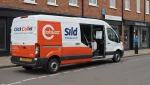

A driver hands over eighteen trays of catering, and the customer says the check is with accounts payable. That is the moment QR code payments are for. Not the counter and not the table. The doorway, where you have the goods, the customer, and about ninety seconds.
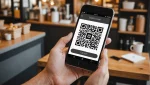
QR code payments let a customer pay by scanning a square code with their phone camera, which opens a payment page tied to your account. There is no card reader, no terminal rental, and nothing for your driver to carry beyond a printed card or a phone screen. For a business that delivers its own orders, that is the whole appeal: you can get paid at the handoff instead of mailing an invoice and waiting three weeks.
This post covers how the codes work, what they cost, how to make one, and how to keep the one taped to your delivery folder from being swapped by someone else. If you want the business case instead (what changes in fees, cash flow and customer behaviour once you turn this on), that is covered in detail in the impact of QR code payments on small businesses.
The Bottom Line
- A QR code payment is just a link in visual form. The scan opens your payment page; the money moves over the same card or wallet rails you already use.
- Static codes are free and reusable but make the customer type the amount. Dynamic codes carry the amount and invoice number, which is what you want on a delivery.
- Expect roughly 1.9% to 2.3% plus a fixed cent charge per transaction on the mainstream US wallets, so a QR code is not automatically cheaper than a card.
- The main risk is physical: the FBI has warned since 2022 about criminals pasting their own codes over legitimate ones. Check the sticker before the driver leaves.
Metrobi drivers are rated 4.97/5
Trusted by local businesses for:
- Background-checked professionals
- Specialized in business deliveries
- Same drivers for consistency
- 4.97/5 average delivery rating
How QR code payments work
A payment QR code is a machine-readable version of a URL or a payment instruction. The customer points a phone camera at it, the phone offers to open the link, and the link lands on a hosted checkout page or inside a wallet app where they confirm the amount.
Two directions exist, and it matters which one you are set up for.
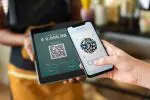
- Merchant-presented is the common one in the United States. You show the code, printed on a card, stuck to a packing slip, or displayed on your driver’s phone, and the customer scans it. The scan carries your account details, so the payment flows to you.
- Consumer-presented flips it. The customer’s wallet app generates a one-time code on their screen and you scan it with a reader or phone. This is how a lot of Asian markets run, and how some US point-of-sale terminals handle wallet payments, but it needs scanning hardware on your side.
Behind either version, nothing exotic happens. Stripe describes QR codes as an access layer rather than a payment method of their own: the scan routes the customer to a checkout, and the transaction then settles over cards, bank transfer or a stored wallet balance the same way it otherwise would (Stripe, retrieved 29 September 2026). That is a useful thing to keep in mind when someone tells you QR payments will kill your processing fees. They generally do not, because the rails underneath are unchanged.
What does change is the hardware and the friction. You avoid buying a terminal, your driver avoids handling cash, and the customer pays with the device already in their hand.
Static vs dynamic QR codes, and which one belongs on a delivery
A static code is fixed at the moment you generate it. It points to one destination forever, it is free to make, and you can print a thousand of them. The trade-off is that it carries no amount: the customer scans, then types in what they owe.
A dynamic code is generated per transaction. It carries the amount, and usually an invoice or order number as well, so the customer scans and confirms. It can also be edited or re-pointed after printing, which matters if your payment provider or landing page ever changes; the mechanics of updating a live code are explained well in this guide to editing QR codes after they are printed.
For a delivery, the difference is not academic.
- Static is fine for a fixed price. A florist delivering a standard $65 arrangement, a bakery running a flat weekly wholesale drop. The number is known, and a printed card in the box works.
- Dynamic is what you want for variable orders. Catering invoices, wholesale cases short-shipped at the last minute, anything with a delivery fee or tip attached. Asking a customer to hand-enter $1,842.50 on a doorstep is how you end up with $184.25 in your account.
- Dynamic codes give you reconciliation. When the code carries the order number, the payment shows up in your records attached to the order instead of as an anonymous deposit you have to match by hand on Friday.
Most small operators end up using both: a static code at the shop counter and on the website, dynamic codes generated per invoice for deliveries.
What QR code payments cost a small business in 2026
There is no separate “QR fee.” You pay your provider’s normal transaction rate, and the QR code is just how the transaction was initiated. Here is where the mainstream US options sit for in-person, goods-and-services payments:
| Method | Seller fee per transaction | Setup or monthly cost |
|---|---|---|
| PayPal QR code (in person) | 2.29% + $0.09 | None |
| Venmo business profile (QR) | 1.9% + $0.10 | None |
| Venmo Tap to Pay | 2.9% + $0.09 | None |
| Typical card-present terminal rate | roughly 2.5% to 3% | Hardware or lease, varies |
Sources: PayPal and Venmo, both retrieved 29 September 2026.
On a $500 catering delivery, the gap between 1.9% and 2.29% is about two dollars. The reason to do this is the invoice you no longer have to chase, and the check that stops sitting in a glovebox until Thursday. The two dollars are noise.
Two costs people forget. First, instant transfers to your bank usually carry an extra percentage, so leave the money to settle on the standard schedule if you can. Second, if you are moving customers off paper checks, which cost you nothing in processing, every QR payment is a new fee you were not paying before. Run that math on your own volume before you switch your wholesale accounts over.
The category is growing fast enough that provider options keep improving: Grand View Research values the QR code payment market at $16.6 billion in 2026 and projects $61.7 billion by 2033, a 20.7% compound annual growth rate (Grand View Research, retrieved 29 September 2026). Practically, re-check the rates above each year rather than treating them as permanent.
How to create a payment QR code for your business
The setup is short. Most owners finish it in an afternoon, and the only real decision is which provider holds the money.
- Pick the account the money lands in. PayPal and Venmo business profiles are the fastest to open; a full payment processor or your POS provider is better if you already run one and want the payment in the same ledger as everything else.
- Generate the code inside that account, not outside it. Every major provider has a “create QR code” screen. A code made in your merchant dashboard is tied to your verified account. A code made on a random generator site and pointed at a payment link is one more thing that can break or be spoofed. If you need a walkthrough of the general process, this step-by-step on creating a payment QR code covers the mechanics.
- Decide static or dynamic per use case, using the split above. Fixed price gets a printed static code; variable invoices get a dynamic code generated at the time you build the invoice.
- Test it with a real dollar. Scan it with an iPhone and an Android, from an arm’s length, in bad light. Then refund yourself. A code that only scans cleanly under shop lighting is useless in a dim loading bay at 6 a.m.
- Print it big enough and put it where it survives. Minimum around two inches square for a doorstep scan, laminated or under clear tape, on the packing slip and the invoice rather than on the box that gets recycled.
- Tell your drivers what “paid” looks like. The customer’s screen showing a confirmation is not proof. Your own account notification is. Set up push notifications on the phone that goes out on the route.
PNC’s small business guidance makes the same point about where to place these: scan-to-pay and click-to-pay options belong on delivery paperwork, case labels, packing slips and the text confirmation, because delivery teams accepting payment on the spot cuts the reliance on checks and shortens the time from handoff to cleared funds (PNC Insights, retrieved 29 September 2026).
Taking QR code payments at the customer’s door
Doorstep payment has failure modes a countertop does not, and they are all about the other person’s phone and the other person’s authority to pay.
- Bad signal kills the transaction. A basement kitchen, a walk-in cooler, a loading dock under a parking garage: the code scans fine, then the checkout page never loads. Give your drivers a fallback before it happens. The same payment link sent by text, which the customer can open when they get upstairs, keeps the sale from turning into an argument.
- The person receiving is often not the person paying. A line cook signs for the delivery; the owner pays the bills. For wholesale accounts, this is the normal case rather than the exception. A dynamic code on the invoice with the order number on it means the driver can leave, the owner scans that evening, and the payment still reconciles to the right order.
- Tips are easier to collect. If your provider’s checkout supports a tip field, a scan-to-pay page presents it. A check does not. For businesses whose drivers are their own employees, that is a retention argument as much as a payments one.
- Cash is still a customer segment. Some accounts will keep paying by check for reasons of their own accounting, and pushing hard against that can cost you a standing wholesale order. Add the code to the invoice and let adoption happen on its own.
One operational note matters more than any of this: the payment step is the last thirty seconds of a delivery, and it only goes well if everything before it went well. If drivers are running late, improvising stop order, or calling the shop to ask where they are going, nobody is getting a clean scan at the door.
Are QR code payments safe? What tampering looks like
The technology is not the weak point. The sticker is.
The FBI’s Internet Crime Complaint Center has warned since January 2022 that criminals tamper with both digital and physical QR codes, replacing legitimate codes with their own so the scan lands on a lookalike page that harvests card details and login credentials (IC3, retrieved 29 September 2026). The attack needs no hacking. It needs a printer and thirty seconds of unsupervised access to your code.
In July 2025 the IC3 issued a variation that should interest anyone who ships goods: unsolicited packages arriving with QR codes inside, which prompt the recipient to enter personal and financial details or trigger a malware download (IC3, retrieved 29 September 2026). Once that scam is in circulation, a legitimate code in a legitimate delivery box gets scanned with more suspicion. That is a cost your business pays for someone else’s fraud.
What to actually do:
- Inspect any code that lives in public. A code on a counter card, a door decal or a display stand should be checked daily for a sticker over the original. Codes that travel out and back with a driver are much harder to tamper with than ones left in a lobby.
- Print your payment URL next to the code in plain text. A customer who can read “pay.yourbakery.com” and compare it to what their browser opened has a defence that the code alone does not give them.
- Never ask for card details over a channel a customer cannot verify. If your checkout page does not clearly show your business name, fix that before you ask anyone to scan.
- Harden the phones that do the scanning. Drivers scanning customer-presented codes are exposed to the same lookalike-site risk consumers are, and phishing filtering at the network level, the kind bundled into tools like NordVPN’s anti-phishing protection, blocks a class of known malicious destinations before the page loads.
- Tell customers what you will never do. You will never text them a code asking them to re-enter card details for an order they already paid for. Say it once in your confirmation email and it saves a support call later.
When a QR code is the wrong way to get paid
Three situations where this tool is the wrong one.
- High-value wholesale on terms. If a restaurant group buys on net-30 and pays by ACH, a QR code does not improve anything; it adds a card fee to an invoice that currently costs you nothing to collect. Keep the terms.
- Recurring standing orders. A weekly delivery to the same twelve accounts belongs on stored payment credentials or automatic billing rather than a fresh scan at every drop. The scan is manual work repeated fifty-two times.
- Any customer who has told you no. Some owners will not pay from a phone, and the reasons are usually about who in their business is allowed to spend money. Offer it, note the preference, and stop offering.
Frequently asked questions about QR code payments
Do QR code payments cost less than card payments?
Usually only slightly, and sometimes not at all. In the US the scan opens a checkout that settles over the same card and wallet rails, so you pay a normal transaction rate of around 1.9% to 2.3% plus a fixed charge on the mainstream wallets. The savings are in hardware you do not buy and invoices you do not chase, not in the percentage.
Can I take QR code payments without a card reader?
Yes. That is the main practical advantage. A printed code or a code on your driver’s phone screen is the entire hardware requirement for merchant-presented payments. You only need scanning hardware if you want to scan codes displayed on the customer’s phone.
What happens if the customer’s phone has no signal at the door?
The scan opens the camera fine, but the checkout page will not load. Have the driver send the same payment link by text so the customer can complete it once they have signal, and record the delivery as unpaid until your own account confirms the money arrived.
Are static QR codes safe to print on packaging?
They are safe in the sense that the code itself cannot be hacked, but a printed code in a public place can be covered with a fraudulent sticker. Print the destination URL in plain text beside it, and inspect any code that sits unattended in a customer-facing location.
How do I match a QR payment to the right invoice?
Use dynamic codes generated per invoice, with the order or invoice number embedded. A single static code across all customers produces deposits with no order attached, which turns into manual matching at the end of the week.
Where to start
If you deliver your own orders and you are still collecting checks at the door, generate one dynamic code on your next invoice and see what happens. That single test tells you more than any comparison of provider rates: whether your customers scan, whether the signal holds where you deliver, and whether the money lands attached to the right order.
Then do the arithmetic on the accounts you would actually move. A 2% fee on a check that currently costs you nothing is a real expense, and it is only worth paying where it buys you weeks of waiting back. For most food, floral and catering operations, that is exactly what it buys.