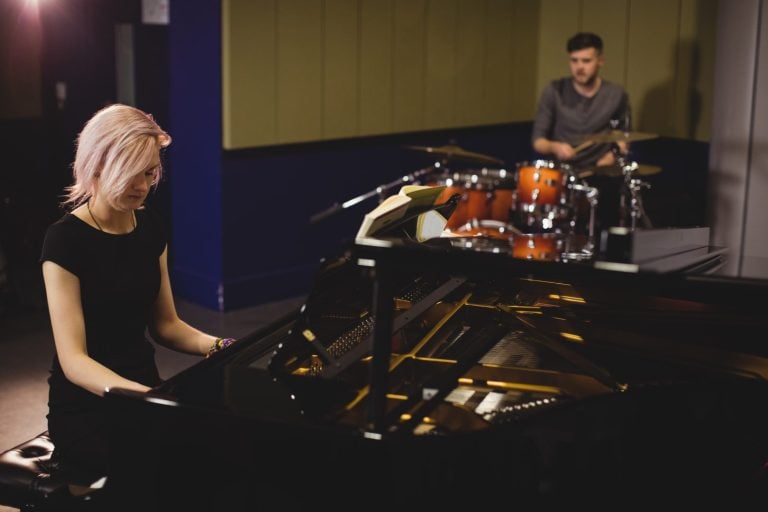

Restaurant music is the one design element you can change this afternoon, for free, and feel the difference by dinner service. Lighting takes an electrician. A new layout takes a contractor. The soundtrack takes someone with access to the aux settings and a reason to care.
Most operators treat it as decoration anyway. Someone picks a playlist in the first week, it plays on shuffle for three years, and nobody notices until a regular mentions that the room feels tired. Meanwhile the research on background music in restaurants keeps pointing the same direction: tempo changes how long people stay, volume changes whether they come back, and both are decisions you are making whether or not you make them on purpose.
This guide covers the whole sound decision for a restaurant: what music actually changes about a guest’s visit, how to match genre to your concept, what tempo and volume to run at each hour of the day, where to get music you can legally play, and how to keep the whole thing from drifting back to that one playlist from opening week.
The Bottom Line
- Tempo controls dwell time. Milliman’s classic restaurant experiment compared roughly 72 BPM against 92 BPM across 1,392 dining parties and found slower music kept parties at the table longer and raised beverage spending, while food spending barely moved.
- Volume is the bigger risk. A survey of more than 1,300 New York City restaurants put the average dining room at about 77 decibels, loud enough that most guests raise their voices to be heard.
- Noise is now a leading reason guests avoid a restaurant, which makes the volume knob a retention tool, not a taste preference.
- A personal Spotify or Apple Music account does not cover commercial play. You need either performing rights licences or a licensed business music service.
- Program by daypart. One playlist running from breakfast to last call is the most common restaurant music mistake there is.
Lower your delivery costs by 23%
How we reduce costs:
- No delivery vehicle expenses
- Optimized local routes
- Pay-per-delivery model
- Average 23% delivery cost reduction
What music actually changes about a guest’s visit
Music changes pace, and pace changes the check. The most-cited evidence is still Ronald Milliman’s field experiment in a mid-priced chain restaurant, published in the Journal of Consumer Research in 1986. Servers recorded data on 1,392 dining parties on Friday and Saturday evenings without knowing the hypothesis. Under slow-tempo music of about 72 BPM, parties stayed longer and spent more at the bar than under fast-tempo music of about 92 BPM. Food spending showed no meaningful difference (Journal of Consumer Research, vol. 13 no. 2, 1986; study summary via Equal Strategy, retrieved 2026-11-13).
That split matters more than the headline. Music does not make anyone order a second entrée. It changes how long a table feels comfortable sitting there, and a longer sit sells another round, a dessert, a coffee. Trade analyses of the same data put the dwell-time gap at roughly eleven minutes and the drink-revenue gap near 40% (Moodby, retrieved 2026-11-13). Treat those numbers as directional rather than a forecast for your room (one venue, one era, one music format), but the direction has held up well enough that every commercial music service now sells against it.
The practical reading: decide what you want from each service period before you pick a genre. A Tuesday dinner service with empty two-tops wants people to linger and order another glass. A Saturday brunch with forty people on the waitlist wants tables to turn. Those are opposite music decisions, and running one playlist across both means you are optimizing for neither. Live performance is a third lever on the same pace dial, and it works differently enough that live music for restaurants deserves its own math on cost and payoff.
How to match music genre to your restaurant’s concept
Genre should come from your concept and your guest, not from the owner’s taste. The test is simple: if a guest could not have guessed your menu from thirty seconds of the soundtrack, the music is doing nothing for the brand. That makes the soundtrack part of the concept itself: the same decision as the menu, the lighting and the service style, and worth revisiting whenever you look at restaurant concepts and what each one promises a guest.
The working conventions across the industry look like this:
| Service style | Genre that fits | Typical tempo | Target volume | Why |
|---|---|---|---|---|
| Fine dining | Jazz standards, classical, instrumental | 60–80 BPM | Low, under conversation | Long sits, high beverage attachment, conversation is the experience |
| Casual full-service | Soul, soft rock, acoustic pop, indie | 90–110 BPM | Moderate | Energy without pushing guests out |
| Cafés and brunch | Acoustic, bossa, light electronic | 80–100 BPM early, higher later | Low to moderate | Morning guests are reading and working |
| Fast casual and QSR | Contemporary pop, upbeat electronic | 115 BPM and up | Moderate | Order, eat, leave — pace is the point |
| Bars and late service | Whatever your crowd came for | 115 BPM and up | High, deliberately | Volume is part of the product after 9pm |
Two rules travel across all of them. Prefer instrumental or low-vocal tracks during peak conversation hours, because lyrics compete with the table’s own talk. And screen for content: explicit versions, breakup ballads and anything with a jarring key change will land badly in a dining room even when the genre is right. Choosing the specific playlists and services to run is covered in the best restaurant music playlists for each service style.
The best tempo for each service period
Tempo should move through the day in the same direction your service does. Commercial music services generally break it into three bands: below 90 BPM for fine dining and wine bars, 90 to 110 BPM for casual dining, and 120 BPM and above for cafés and fast-casual rooms (SoundMachine, retrieved 2026-11-13).
A workable schedule for a full-service restaurant:
- Breakfast and brunch, opening to 11am: slower, warmer, mostly instrumental. Guests are waking up, reading, having a quiet meeting.
- Lunch, 11am to 2pm: faster. Lunch guests have somewhere to be, and a brisker soundtrack helps the room turn without anyone feeling rushed.
- Afternoon lull, 2pm to 5pm: slow and sparse. The few tables you have are the ones you want to keep ordering.
- Dinner, 5pm to 9pm: slow to moderate, building over the evening. Early dinner wants calm; by eight the room should feel busier than it is.
- Late service, after 9pm: faster and louder if you have a bar crowd, which is a different business from dinner and should sound like one.
Most operators get this wrong in one specific way: they set the music once and let the room’s own noise do the rest of the work. A room that is quiet at 5pm and packed at 8pm needs two different settings, because forty talking guests add their own volume layer the music has to sit under.
How loud should restaurant music be?
Under the conversation, always. In practice that means music sitting below normal table talk of roughly 60 to 65 decibels, so two people on a four-top can speak without lifting their voices.
The data says most restaurants miss this badly. An exploratory survey of more than 1,300 New York City restaurants and bars measured an average of about 77 decibels, with a quarter of venues above 81 decibels and only about one in ten at or below 70 (Journal of Environmental Protection via SciRP, retrieved 2026-11-13). Crowd-sourced measurement work since then has put typical restaurant levels in the same 75 to 77.5 decibel range (University of Nebraska–Lincoln architectural engineering research, retrieved 2026-11-13).
That is a retention problem, not an acoustics footnote. Noise has moved to the front of the list of things diners complain about, ahead of price and service; 72% of New York diners reported actively avoiding restaurants they find too loud, and analysis of complaint data found grievances ramping up once a room passes about 70 decibels (Popular Science, retrieved 2026-11-13). A separate survey of 1,461 UK respondents found almost 80% had walked out of a bar, café or restaurant because of noise (The Hearing Journal, retrieved 2026-11-13).
Three things fix most of it:
- Measure instead of guessing. A phone decibel app during a full service tells you more than any opinion in the room, including yours. Take readings at the bar, in the middle of the dining room, and at the worst table in the house.
- Run zones, not one volume. A bar that wants 75 decibels and a dining room that wants 65 need separate speaker zones and separate controls. One amplifier at one setting guarantees that one of the two rooms is wrong all night.
- Use more speakers at lower volume. Several quiet ceiling speakers spread across the room cover it evenly. Two loud ones blast the tables nearest them and leave the far corner wondering what song is playing.
Hard surfaces make all of this worse. If your room is concrete, glass and bare wood, the music is only part of the noise. Soft seating, acoustic panels and fabric do more for perceived volume than another trip to the amplifier.
Where to get music you can legally play in a restaurant
Not from your own Spotify account. Consumer streaming subscriptions are licensed for personal, non-commercial listening, and playing one through the dining room speakers is a public performance that your subscription does not cover (Soundtrack, retrieved 2026-11-13).
The legal routes are two. You can license directly through the performing rights organizations (ASCAP, BMI, SESAC and GMR), which is what most venues with live performance end up doing. Or you can subscribe to a licensed business music service like Pandora CloudCover, Rockbot, SiriusXM Music for Business or Soundtrack, which bundles the public performance rights into the monthly fee and typically runs somewhere between $17 and $40 per location.
The fees are real but not large: 2026 minimum annual rates land around $402 for ASCAP, $415 for BMI and $580 for SESAC, and a small restaurant playing background music through all three is looking at roughly $1,600 a year. The downside risk is much bigger than the fee, which is the whole reason the full picture of restaurant music licensing is worth reading before you choose a route.
Adding live music to your restaurant’s schedule
Live performance does something recorded music cannot: it gives locals a reason to pick a specific night. A standing Thursday act turns a slow service into an event, and the people who come for the music stay for a second round.
It also costs real money and adds real admin. Solo acoustic acts generally run $200 to $400 for a two or three hour set, duos $300 to $600, and live performance usually changes your licensing position because entertainment is priced differently from background music. There are permits to check too: noise ordinances, and in some cities a separate entertainment licence.
The short version: live music is worth it when you have a room that can absorb the volume, a crowd that drinks, and a night that needs the help. The cost breakdown, booking process and scheduling detail sit in the dedicated guide to live music for restaurants.
A simple routine for keeping the soundtrack right
Music drifts. The fix is a routine short enough that someone actually does it.
- Assign it to one manager. Not “whoever opens”. One person owns the soundtrack the way one person owns the floor plan.
- Lock the playlist, unlock the volume. Staff should be able to adjust volume as the room fills, and should not be able to swap in their own music mid-service. That single rule prevents most of the sound problems in casual restaurants.
- Refresh monthly, not never. Swapping a third of the tracks each month keeps the room from feeling stale to regulars and to the staff who hear it forty hours a week.
- Walk the room once a week during peak. Stand at the worst table. If you cannot hear your own order being taken, the volume is wrong regardless of what the app says.
- Ask the servers. They are in the room for every minute of every service and they know which songs make tables ask them to repeat the specials.
Restaurant music mistakes worth avoiding
- One playlist, all day: the single most common error, and the easiest to fix.
- The owner’s taste: your record collection is not a market segment.
- Music with the lyrics fighting the room: vocal-heavy tracks at conversation hours make everyone work harder than they want to.
- Silence as a default: an empty room with no music feels like a room that is closed. Low, slow and present beats off.
- Volume creep: each shift nudges it up a little and nobody nudges it down. By Saturday the dining room is a bar.
- Running a consumer streaming account: cheap until the letter from a performing rights organization arrives.
Frequently asked questions
What kind of music is best for a restaurant?
Instrumental or low-vocal music in a genre that matches your concept, at a tempo matched to the service period. Jazz, classical and acoustic work across most full-service rooms because they hold a mood without competing with conversation. The specific genre matters less than two things: that it fits your concept and that your guests can talk over it.
Does music really increase restaurant sales?
It changes pace, and pace changes spending, mostly on drinks. Milliman’s 1986 experiment found slower music kept parties at the table longer and raised beverage revenue with no real change in food spending. Expect music to influence how long guests stay and what they add to the bill, not whether they order an entrée.
How loud should background music be in a restaurant?
Below normal conversation, which sits around 60 to 65 decibels. Given that the average measured restaurant runs near 77 decibels and diner complaints climb past about 70, most rooms should be turning the music down rather than up, and adding more speakers at lower volume rather than louder ones.
Can I play Spotify in my restaurant?
Not a personal account. Spotify’s consumer terms limit use to personal, non-commercial listening, and a dining room is a public performance. You need either direct performing rights licences or a licensed business music service that includes those rights in its subscription.
Where to start
If you change one thing this week, take a decibel reading during your busiest service and turn the music down until a guest at the worst table can be heard without raising their voice. That single adjustment addresses the complaint diners name most often.
Then build the rest in order: pick a genre that matches your concept, split the day into at least three tempo bands, get on a licensed source, and give one manager the job of refreshing the playlist each month. None of it is expensive. All of it shows up in how long guests stay and whether they come back.