
Most advice about business branding was written for companies whose customers never meet them. Your customers meet you. If you bake, arrange, cook or pack your own product and then put it in a van, someone in your business stands on a doorstep or a loading dock every single day holding the thing you made.
That changes what branding means for you. The logo matters, but it is not where your brand is decided. It is decided in the ninety seconds between a driver pulling up and the box being opened, repeated a few hundred times a week.
This guide covers what business branding actually includes, why it has an outsized effect on whether people order again, and how to build one deliberately instead of by accident.
Key Takeaways
- Business branding is the total impression your company leaves, not just your visual identity. For a business that delivers, the handoff is a bigger brand moment than the website.
- Consistency pays. Lucidpress’s 2019 State of Brand Consistency report, based on a survey of more than 400 brand management professionals, found consistent brand presentation associated with revenue increases of up to 33% (PR Newswire, 2019).
- Bad delivery undoes good branding. In Narvar’s 2025 State of Post-Purchase report, a national survey of 3,461 US online shoppers, 76% said they would not buy again after a poor delivery experience (Narvar, 2025).
- Branding is what you are. Promotion is how you get noticed. They need each other, and they are not the same job.
Boost customer satisfaction with just a few clicks
Most-Loved Features:
- On-demand drivers
- Real-time GPS tracking
- Delivery confirmation photos
- Over 50% of customers report a smoother delivery experience
What business branding actually means
Business branding is the deliberate work of shaping what people think and feel about your company before, during and after they buy from you. It is the sum of every signal you send: your name, your visual identity, your pricing, how quickly you answer the phone, what your invoice looks like, whether the box arrives crushed.
The American Marketing Association frames a brand as the name, term, design or symbol that identifies one seller’s goods as distinct from another’s. That is the technical definition. The working definition is simpler and more uncomfortable: your brand is the reputation you already have, whether or not you chose it.
This is why “we don’t really do branding” is never true. A bakery that answers the phone warmly, delivers at eight sharp, and hands over a plain white box with a sticker on it has a brand. It says reliable, unfussy, small. That may be exactly right. The question is whether it was a decision or a default.
Two parts of this get their own treatment elsewhere on this blog, because each is a project in its own right. The visual side, turning what you stand for into a mark, a palette and a typeface, is covered in our guide to aligning your brand identity logo with your values. The amplification side is covered in our rundown of branding promotion strategies that boost sales. This page is the map those two sit inside.
Branding vs marketing: where the line sits
Branding defines who you are. Marketing tells people about it. You need both, and confusing them wastes money.
The practical test is what happens when you stop. Stop marketing and the leads dry up in weeks. Stop branding and nothing happens today, but in a year you are competing on price, because you have given buyers no other way to tell you apart from the outfit across town.
A florist running a promotion on Valentine’s arrangements is marketing. That same florist deciding every arrangement goes out in a signed box with the grower’s name on the card is branding. The promotion fills next week. The box decides whether the customer calls again in March without being prompted.
The clearest signal you have a branding problem rather than a marketing problem: you win customers, they are satisfied, and they still do not come back without a discount.
The brand touchpoints a delivering business controls
Most small businesses inventory their branding as “logo, website, social.” That list misses the moments that actually carry weight when you ship your own goods.
| Touchpoint | What the customer reads from it | Commonly neglected? |
|---|---|---|
| Website and social profiles | Legitimacy, scale, taste | No, usually the first thing fixed |
| Phone and email response | Whether you are organized | Sometimes |
| Quote and invoice format | Professionalism, pricing confidence | Often |
| Packaging and labelling | Care, quality of the product inside | Often |
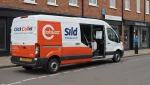
| The vehicle at the curb | Scale, permanence, local presence | Almost always |
| The driver’s handoff | Whether you keep promises | Almost always |
| Delivery notification and ETA | Respect for the customer’s time | Almost always |
| What happens when it goes wrong | Whether you can be trusted at all | Almost always |
The bottom half of that table is where a delivering business differs from a purely online one, and it is the half most branding guidance skips entirely. A national e-commerce brand hands its final touchpoint to a carrier and hopes. You do not have to. The person at the door works for you, drives your route, and carries your box.
That is an advantage, but only if it is treated as a brand asset rather than a logistics cost.
Why business branding matters more when you deliver your own orders
Because the delivery is the product experience, and it is the part most likely to destroy the rest.
Narvar’s 2025 survey of 3,461 US online shoppers found 76% would not buy again after a poor delivery experience, with the effect strongest among younger buyers. Sixty percent of 18-to-29-year-olds said one bad delivery was enough, against 17% of baby boomers (Narvar, 2025). Sendcloud’s 2025 E-commerce Delivery Compass put the global figure at 57.4% who would not buy again after a package failed to arrive (Sendcloud, 2025).
The numbers differ because the questions differ, but the direction does not. A single bad handoff costs more than a single good one earns. Branding, for a business that delivers, is largely the discipline of making the last ten minutes consistent.
There is an upside case too, not just a defensive one. Research collected by Shorr Packaging associates investment in custom, branded packaging with higher repeat purchase rates, and roughly 40% of consumers say they would be more likely to buy again from a retailer after receiving premium branded packaging. Treat these as directional rather than precise, because they come from vendor research with a commercial interest in the answer. They point the same way as the delivery data.
What this adds up to: the two most expensive branding mistakes a delivering business makes are spending on a rebrand while the boxes stay generic, and spending on advertising while the eight o’clock drop keeps landing at ten.
Brand consistency is the mechanism, not a nice-to-have
Consistency is the part of branding with the most evidence behind it and the least glamour.
Lucidpress surveyed more than 400 brand management professionals for its 2019 State of Brand Consistency report and found consistent presentation associated with revenue lifts of up to 33%, a rise from the 23% reported in its 2016 edition (PR Newswire, 2019). The same body of research found 81% of companies dealing with off-brand content. These are self-reported figures from brand managers, not audited revenue data, so read the 33% as a strong directional signal rather than a guarantee.
For a business with three delivery routes, consistency is concrete:
- The same box, tape and label on every order, including the rush ones you packed at six in the morning.
- The same arrival window promised and the same one hit, so “we deliver Tuesday mornings” means something.
- The same voice on the notification text, the invoice and the card in the box.
- The same answer from anyone who picks up the phone about what happens if something arrives damaged.
None of that requires a design budget. It requires deciding once and then not drifting.
How to build a business brand in five steps
This is the short version. Each step has depth behind it, and two of them have dedicated guides on this blog.
1. Write down what you actually stand for. Not aspirations. Write the two or three things you would not compromise on even when it costs you. Same-day is never late. Nothing leaves the kitchen you would not serve your family. The grower gets named on the card.
2. Decide who you are for, specifically. “Local businesses” is not an audience. Cafés within fifteen minutes that reorder weekly is an audience. Branding gets easier the moment the customer becomes a particular person.
3. Build the visual identity from those values. The mark, the colors and the type should be readable consequences of step one, and they have to survive being printed on a box and stuck to a van door. That whole process is covered in the brand identity logo guide.
4. Apply it to the touchpoints in the table above, worst first. Start with whatever is most visible and most neglected, which for most delivering businesses is the packaging and the vehicle rather than the website.
5. Then promote it. Once the experience is consistent, amplification works, because every new customer you attract gets the same experience the last one did. The tactics are in the branding promotion guide, and the wider commercial context is in our piece on enterprise marketing strategies, which is useful once you are selling to larger accounts.
Doing step five before steps one through four is the most common sequencing error, and it is expensive: you pay to send more people through an experience you have not fixed yet.
Signs your business branding is costing you money
Branding problems rarely announce themselves. They show up as commercial symptoms:
- Customers ask what you charge before they ask what you make. You have given them nothing else to evaluate.
- Repeat orders need a discount to trigger. The experience is not doing the work.
- You are regularly confused with a competitor, or people cannot recall your name after buying from you.
- Wholesale accounts treat you as interchangeable and switch on price.
- Your own staff describe the business differently from each other.
Any two of those together usually mean the brand is a default rather than a decision.
How long does business branding take to pay off?
Longer than a campaign, faster than most people fear. The touchpoint fixes (consistent packaging, a reliable arrival window, a notification that sounds like you) change customer perception within a delivery cycle or two, because customers experience them immediately and repeatedly.
The reputational compounding takes longer. A year of consistent delivery is what turns “the bakery we use” into “our bakery,” and that shift is what shows up as retention rather than as any single sale. Budget for both horizons, and measure the near one with repeat-order rate rather than with brand awareness surveys you cannot afford to run properly.
Content is one of the levers that compounds over that longer horizon; if you are outsourcing it, a specialist content marketing service is usually better value than hiring for it before you have volume to justify the headcount.
Frequently asked questions about business branding
What is the difference between business branding and a logo?
The logo is one component of your visual identity, which is one component of your brand. Your brand includes your pricing, your reliability, your tone and your recovery when something goes wrong. A logo makes you recognizable; the rest determines whether being recognized is good news.
Does business branding matter for a company that only sells wholesale?
Yes, and more than in retail. Wholesale buyers are repeat buyers, so every delivery is an audition for the next order, and a brand is what stops the relationship being decided purely on unit price at renewal.
How much should a small business spend on branding?
There is no useful universal figure, but sequence beats budget. The highest-return spending for a delivering business is usually the cheapest: consistent packaging and labelling, a defined arrival window you actually hit, and a single clear answer to what happens when an order is wrong. Full identity work is worth commissioning once those are stable.
Can you rebrand without losing existing customers?
Generally yes, provided the experience stays constant while the visuals change. Customers tolerate a new look; they do not tolerate a new look arriving alongside missed deliveries. Change one thing at a time and tell regular accounts before they see it on the van.
Where to start this week
Business branding is not a project you complete, it is a set of decisions you stop leaving to chance. The order that works: define what you stand for, name who you serve, express it visually, apply it to the touchpoints your customers actually encounter, which when you run your own deliveries means the box and the doorstep long before it means the homepage, and only then spend money telling people about it.
If you want one thing to do this week, take the touchpoint table above and mark which rows were designed and which just happened. The unmarked rows are your brand too, and right now somebody else’s default is speaking for you.