
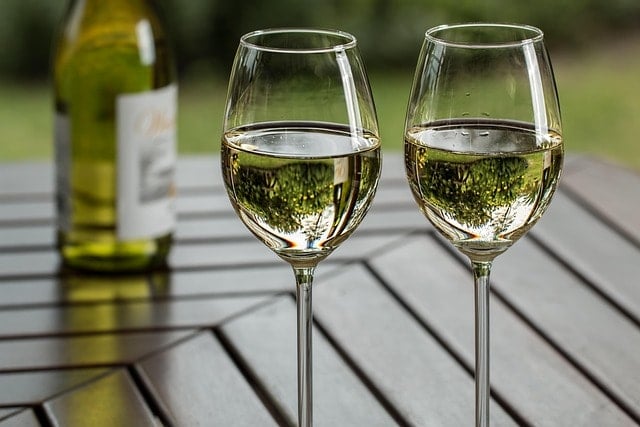

Wine pairing for catering is a different craft from wine pairing in a restaurant. A sommelier has one table, one course at a time, a cellar behind them and a chance to correct course. You have 80 covers, a menu locked three weeks ago, one van, and a venue with no temperature control and nowhere to chill anything.
So the useful version of this skill is not an encyclopedia of grapes. It is a small set of rules that hold up across most menus, a way to count bottles that doesn’t leave you short at the toast, and a plan for the part nobody writes about: what happens to the pairing between your kitchen and the client’s room. Get those three right and clients remember the dinner as better than catering, which is the whole commercial point: pairing menus carry a higher per-head price and they are what gets you recommended to the next host.
A note before the rules: wine is one part of a beverage program that is widening. Low- and no-alcohol options now sit alongside the wine list rather than apologizing to it, which is one of the clearer shifts in our roundup of key trends in catering. Offer both and you lose nobody.
The Bottom Line
- Five rules cover most catering menus: match intensity, pair the sauce rather than the protein, keep the wine more acidic than the dish, use tannin against fat, and keep the wine sweeter than anything sweet you’re serving.
- Count pours, not bottles: a standard 5 oz pour gives about five glasses per 750ml bottle, and roughly one glass per guest per hour is a workable planning figure.
- Serving temperature breaks more pairings than grape choice does. Sparkling runs at 43–47°F, whites 45–55°F, reds 55–68°F.
- Wine begins to degrade above about 70°F and cooks near 86°F, which makes the transport leg a real risk on a summer drop-off, not a theoretical one.
- Price the pairing per head in your costing system along with the glassware and the staff time, so the upsell is actually profitable.
Boost customer satisfaction with just a few clicks
Most-Loved Features:
- On-demand drivers
- Real-time GPS tracking
- Delivery confirmation photos
- Over 50% of customers report a smoother delivery experience
The five wine pairing rules that cover most catering menus
Wine Folly’s pairing framework reduces to six tastes (salt, acid, sweet, bitter, fat and spice), with wine mainly contributing acidity, sweetness and bitterness, and it produces a handful of rules to memorize (Wine Folly):
- Match intensity before anything else. A delicate dish under a big wine tastes of nothing; a rich dish under a thin wine makes the wine taste sour. This single judgment fixes more bad pairings than any varietal knowledge.
- Pair the sauce, not the protein. Chicken in a lemon-caper sauce and chicken in a mushroom cream sauce want different wines. The sauce is the dish, as far as the wine is concerned.
- Keep the wine more acidic than the food. Serve a low-acid wine after a vinaigrette and it collapses. High-acid whites also cut through rich, fatty dishes, which is why Sauvignon Blanc survives a buffet.
- Use tannin against fat. Tannic reds balance fatty foods, because the bitterness and structure in the wine read as refreshing against fat, which is why Cabernet works with beef and aged hard cheese.
- Keep the wine sweeter than the dish. Anything sweet on the plate makes a dry wine taste bitter and thin. This is also the trick for heat: an off-dry Riesling against a spiced dish works where a dry white fights it.
Congruent and complementary pairings, and when to use each
Two mechanisms are at work and it helps to name them. A congruent pairing reinforces a flavor the dish already has: smoked gouda mac and cheese with a Syrah, where the shared smoke echoes. A complementary pairing balances through contrast, with the same dish’s fat met by the wine’s tannin, or a rich cream sauce cut by a high-acid white (Wine Folly).
For catering, contrast is the safer default. Congruent pairings are more impressive when they land, but they depend on the dish arriving exactly as designed. Contrast still works when the kitchen ran the sauce slightly heavier than the tasting.
A wine pairing chart for common catering dishes
The dishes below are the ones that actually recur across corporate lunches, weddings and buffets. Use it as a starting point, then adjust for the sauce.
| Dish on the menu | Pair with | Why it works |
|---|---|---|
| Passed canapés, charcuterie, soft cheese | Sparkling wine or Champagne | Acidity and bubbles reset the palate between bites; versatile across a mixed tray |
| Salmon, white fish, shellfish | Sauvignon Blanc, Pinot Grigio, unoaked Chardonnay | Light-intensity protein needs a light-intensity wine; acid handles butter and citrus |
| Creamy pasta, lobster, rich chicken | Oaked Chardonnay | Congruent richness; body matches body |
| Roast chicken, pork, turkey | Pinot Noir or dry rosé | Light enough not to flatten the meat, structured enough for the gravy |
| Beef, lamb, short rib, aged hard cheese | Cabernet Sauvignon, Syrah, Malbec | Tannin against fat; dark fruit against char |
| Spiced or chili-forward dishes | Off-dry Riesling | Residual sugar cools heat a dry wine would amplify |
| Vegetarian and plant-forward plates | Grüner Veltliner, dry rosé, light Pinot Noir | Matches earthiness and acidity without overwhelming vegetables |
| Dessert, fruit, chocolate | Sweet wine or Moscato d’Asti, sweeter than the dish | A dry wine next to sugar tastes bitter |
For a reception or cocktail hour where you cannot predict what each guest eats, versatile wines with higher acidity and lower tannin do the most work: Sauvignon Blanc, Pinot Gris, Pinot Noir and Merlot. A sparkling option covers the toast.
How much wine to order per guest
Count glasses, then convert to bottles. A standard still-wine pour is 5 oz, which gives about five glasses from a 750ml bottle; sparkling stretches further, at roughly six to eight flutes per bottle depending on the glass (Domaine LeSeurre).
The planning arithmetic:
- Drinking guests × hours × one glass per hour ÷ 5 = bottles. Twenty drinking guests over three hours works out to 12 bottles.
- For a drinks reception only, about half a bottle per guest is a common planning figure.
- For a seated dinner with wine throughout, roughly one to one and a half bottles per two drinking adults across three to four hours.
Three adjustments that matter more than the formula:
- Split the count by color before you buy. A summer lunch skews white and rosé two to one; a winter plated dinner flips it.
- Add a 10% buffer on the sparkling if there is a toast. Toast pours run generous and you cannot send someone for more mid-speech.
- Confirm who is drinking. Corporate lunches often run far below the per-guest averages, and a 26-person office order is not a wedding.
Serving temperatures that keep a pairing intact
Temperature ruins more pairings than varietal choice. A red served at room temperature in a warm marquee tastes flabby and alcoholic; a white served ice-cold tastes of nothing at all, which wastes whatever you spent on it.
- Sparkling and Champagne: 43–47°F.
- Light-bodied whites: 45–50°F, and full-bodied whites 50–55°F.
- Light-bodied reds: 55–60°F, and full-bodied reds 65–68°F, below room temperature rather than at it (Wine Insiders).
On site, the practical version: whites and sparkling go into ice water, not just ice, roughly 20 to 30 minutes before service; reds come out of a cool car or a cold room about 20 minutes before pouring and are better slightly too cool than slightly too warm, since a glass in a warm room climbs on its own.
A service pattern that holds up for seated events: open and place the reds as you lay the tables, then bring chilled whites out as the starters go down, rather than having everything on the table from the start and warm by the entrée.
Keeping the pairing intact when the wine travels
This is the part of wine pairing for catering that no sommelier’s guide covers, and it is where an otherwise excellent pairing gets wrecked: in the back of a vehicle, in July, between your kitchen and the client’s room.
Wine starts to degrade when held above about 70°F. Above 80°F it begins to deteriorate in earnest, and nearing 86°F it effectively cooks: heat accelerates aging, flattens the delicate aromatics you chose the bottle for, and can push the cork. A vehicle interior that starts at a manageable 80°F can reach triple digits in about ten minutes, even with the windows cracked.
So treat the wine as a temperature-sensitive item on the load sheet, not as freight:
- Load wine last and unload it first. Minutes in a hot vehicle are the whole risk.
- Keep bottles out of direct sun and off the floor near the exhaust tunnel, which is the hottest part of the load space.
- Transport whites and sparkling already cold in insulated containers, rather than planning to chill a warm case on arrival, because you rarely have the ice or the hour.
- Never leave a case in a parked vehicle between a morning drop and an evening event. Store it at the venue, even if that means a walk-in you have to ask for.
- Pack reds away from heat too. A “room temperature” wine is not a heat-tolerant one; the damage threshold is the same bottle to bottle.
- Build the wine into the delivery timing, not after it. If the drop window is tight, the wine should be on the first run, not the one that waits.
If deliveries and event drops are stretching your own vehicles thin, this is the point where a dedicated delivery operation earns its place: Metrobi is built for local food, floral, catering and wholesale deliveries, with multi-stop route optimization, real-time driver tracking, proof-of-delivery photos and customizable recipient notifications, and a 93% on-time score across its driver network, defined as couriers arriving within 15 minutes of the delivery request.
Building a pairing menu the client will actually approve
A pairing menu is a pricing exercise as much as a culinary one. Three things decide whether it sells:
- Give the client three courses, not seven. A three-to-five course pairing is approachable and runs within a normal event timeline. Seven reads as a tasting dinner and prices itself out of most budgets.
- Build the progression properly, lighter wines to heavier, sparkling early and sweet at the end, then sell it as a progression. The sequence is what makes it feel curated rather than assembled.
- Cost it per head with everything in. Bottles per guest, glassware rental, the extra service staff a pour-by-course model needs, corkage if the venue charges it, and the chilling logistics. Pairing menus lose money when the wine is costed and the labor isn’t. If you are doing this on a spreadsheet, platforms that cost recipes and packages per head make this faster, and the shortlist is in our guide to catering software for small businesses.
Then offer a no-alcohol parallel pour for every course. It costs little, it covers a growing share of guests, and it is noticed by exactly the people who recommend caterers.
Pairing mistakes that cost caterers compliments
- Pairing to the protein and ignoring the sauce. The single most common error, and the easiest to fix.
- One red and one white for a six-dish buffet. If the menu is that wide, choose for versatility, high acid and low tannin, rather than pretending the pairing is precise.
- Serving a dry wine with a sweet dish. It reads as a flaw in the wine, and the client blames the bottle you chose.
- Letting the whites get warm during the toast. Ice water, not a bucket of dry ice cubes, and not twenty minutes too early.
- Overbuying the sparkling and underbuying the first white. Guests drink most in the first hour; that is the pour that runs out.
Frequently asked questions about wine pairing for catering
What wine goes with most catered dishes?
If you need one white and one red to cover a mixed menu, choose a high-acid, low-oak white such as Sauvignon Blanc or Pinot Grigio and a lighter red such as Pinot Noir or Merlot. Both have the acidity to handle a buffet’s range and neither overwhelms a delicate dish. Add sparkling for receptions and toasts.
How many bottles of wine do I need per guest?
Plan about one glass per drinking guest per hour and divide by five glasses per 750ml bottle. Twenty drinking guests over three hours comes to roughly 12 bottles. For a drinks reception alone, about half a bottle per guest is a common figure; for a seated dinner with wine throughout, one to one and a half bottles per two drinking adults.
What temperature should wine be served at an off-site event?
Sparkling at 43–47°F, light whites at 45–50°F, full-bodied whites at 50–55°F, light reds at 55–60°F and full-bodied reds at 65–68°F. At an off-site event, aim slightly cooler than the target, because glasses and bottles warm quickly in an occupied room.
Does transporting wine affect how it tastes?
Yes, if it gets hot. Wine degrades when held above roughly 70°F, deteriorates faster above 80°F, and starts to cook near 86°F, losing aromatics and tasting flat or stewed. A vehicle left in the sun can cross those thresholds in minutes, so wine should be loaded last, kept out of direct sun, and never left in a parked van between drops.
Should I offer non-alcoholic pairings?
Offer them as a parallel pour rather than an afterthought. Low- and no-alcohol beverage programs are growing, the cost per head is lower than wine, and having a considered option for every course covers guests who would otherwise sit through a pairing dinner with water.
Start with three pairings
You do not need a wine list to sell a pairing menu. Pick the three dishes you cater most, pair each one properly using the rules above, cost them per head, and put them in your next proposal as a named option.
Then protect them on the way out the door. The pairing you spent an hour choosing is only as good as the temperature it arrives at.