How much does it cost to start a brewery depends almost entirely on one decision: how big the brewhouse is. Everything else in the budget follows from it.
A nanobrewery can open for $150,000. A production brewery with a canning line can pass $3 million. Most people asking the question are planning a taproom brewery on a 7 to 15 barrel system, and that lands between $500,000 and $1.5 million all in.
This guide breaks the number down line by line at each scale, so you can build a figure for your own plan rather than adopt someone else’s. It is the money stage of a longer project, so the whole sequence is in how to start a brewery, and two of the biggest variables in the budget get decided elsewhere: the building you choose and the licences you need.
The Bottom Line
- A taproom brewery on a 7 to 15 barrel system typically needs $500,000 to $1.5 million in total capitalisation. The full range across all brewery types is roughly $150,000 to $3 million.
- Equipment is 50% to 70% of the budget. Size the brewhouse and you have estimated the project.
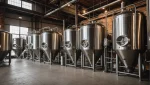
- A 10 barrel two-vessel brewhouse commonly runs $300,000 to $500,000 installed; fermentation and brite tanks are $10,000 to $30,000 each and you need four to eight.
- Licensing is cheap at $2,000 to $15,000. The expensive part is paying rent and payroll during a 60 to 120 day permit wait.
- Used equipment cuts 30% to 50% off purchase price, with no warranty and possible repair costs attached.
Boost customer satisfaction with just a few clicks
Most-Loved Features:
- On-demand drivers
- Real-time GPS tracking
- Delivery confirmation photos
- Over 50% of customers report a smoother delivery experience
What a brewery costs at each scale
The honest answer to the cost question is a range, because “brewery” describes four different businesses with different capital profiles.
| Nanobrewery | Taproom brewery | Production brewery | |
|---|---|---|---|
| System size | 1–3 bbl | 7–15 bbl | 20–30 bbl+ |
| Total capitalisation | $150K–$500K | $500K–$1.5M | $1M–$3M+ |
| Brewhouse installed | $25K–$100K | $150K–$500K | $500K–$1M+ |
| Tanks (4–8) | $30K–$80K | $60K–$200K | $150K–$400K |
| Buildout | $50K–$150K | $150K–$500K | $300K–$1M |
| Packaging | Manual / none | Canning via mobile | $100K–$300K line |
| Licences and fees | $2K–$10K | $2K–$15K | $5K–$20K |
| Working capital (6 mo) | $40K–$100K | $100K–$300K | $250K–$600K |
Opening a microbrewery with a taproom typically requires $250,000 to $2.5 million in total capitalisation, with most 7 to 15 barrel systems landing between $500,000 and $1.5 million all in (StartupCostHub). Nanobreweries run $150,000 to $500,000 and production breweries start around $1 million.
Build your own figure from the bottom of each row, then add 20%. Brewery projects overrun, and the overrun lands in buildout and working capital rather than in equipment, because the equipment quote is the only number anyone pins down in writing.
Metrobi is transforming beverage deliveries
Specialized solutions for beverage businesses:
- Beverage-trained drivers
- Proper handling equipment
- Peak day delivery support
- 23% average cost reduction
Why equipment is most of the budget
Equipment accounts for 50% to 70% of a brewery startup budget, which is the most useful ratio in brewery planning (YoLong Brewtech). Once you have a firm equipment quote, you can estimate the whole project with reasonable confidence.
The brewhouse
Brewhouse systems range from $100,000 to over $1 million depending on capacity and automation, with a 10 barrel two-vessel system commonly running $300,000 to $500,000 installed.
Note “installed”. The quote from the manufacturer is for steel on a truck. Rigging, plumbing, electrical connection, and commissioning are separate and substantial, and they are the line founders most often omit from the first budget.
Fermentation and brite tanks
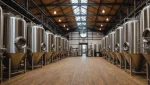
Tanks cost $10,000 to $30,000 each depending on size, and most startups need four to eight to maintain a rotation.
This is the line that decides how much beer you can actually sell. Brewhouse size sets how much you can brew in a day; tank capacity sets how much you can have fermenting at once, and fermentation takes weeks. A brewery with a 10 barrel brewhouse and three fermenters is a 10 barrel brewery on paper and a much smaller one in practice.
Packaging
Canning lines run $100,000 to $300,000 for semi-automated systems, which is why almost no brewery buys one at opening.
The standard route is a mobile canning service that arrives with the line, cans your beer, and leaves. You pay per can rather than per machine, and it defers a six-figure decision until you know whether packaged beer sells for you.
Cellar and support equipment
The unglamorous list is real money: glycol chiller, walk-in cold room, kegs, a keg washer, a cleaning system, hoses, pumps, a small lab setup. Budget $50,000 to $150,000 at taproom scale. Kegs alone are a surprise, since a few hundred of them at $100 to $150 each is a line item nobody remembers.
Used equipment
Buying used can cut equipment costs 30% to 50%, though it may bring repairs and maintenance with it (YoLong Brewtech).
The sensible split: tanks used, brewhouse new. Tanks are simple vessels and a good used tank is a good tank. A used brewhouse is a control system, a set of pumps, and someone else’s wiring, and when it fails you cannot brew at all.
Buildout, rent and the costs the building adds
Buildout is the most variable line in a brewery budget, because it depends entirely on what the building already has.
A warehouse with trench drains, three-phase power, and an adequate water service is a cheap conversion. The same square footage without them is a construction project. Drainage needs the slab cut and repoured, and a single-phase building needs the utility to run three-phase service in, quoted per foot from the nearest transformer and occasionally a six-figure number on its own.
Costs that come from the building rather than the brewery:
- Tenant improvements: $50,000 to $500,000 depending on how much of the above applies.
- Taproom fit-out: bar, seating, restrooms, and HVAC. A taproom is a bar build and is priced like one.
- Architect and engineering: required for permits in most jurisdictions, and a structural review if the cellar is not slab-on-grade.
- Rent during buildout: four to twelve months of it, before any revenue.
- Security deposit and often a personal guarantee.
This is why site selection is a financial decision rather than an aesthetic one. Two buildings at the same rent can differ by $200,000 in conversion cost, and the cheaper lease is frequently the more expensive building.
Licences, fees and professional services
Licensing is the cheapest major stage and the one most likely to cost you money indirectly.
Total licensing for a craft brewery generally runs $2,000 to $15,000 across federal, state, and local layers (LiquorLicenseCost). The federal TTB Brewer’s Notice itself has no application fee. State manufacturer licences range from about $100 a year to around $3,700.
Then the professional services, which are not optional in practice:
- Alcohol beverage attorney for the federal filing. The fee is small next to the cost of a returned application.
- Accountant familiar with excise tax, because the Brewer’s Report of Operations is quarterly from the moment you are licensed.
- Insurance: general liability, liquor liability, property, and workers’ compensation.
The real licensing cost is time. The Brewer’s Notice takes roughly 60 to 120 days, and the clock only starts once the TTB agrees the application is complete. If your buildout finishes before your licence arrives, you pay rent and payroll on a brewery that legally cannot sell anything. Budget that gap as its own line.
Working capital: the line that sinks breweries
Underfunded working capital closes more new breweries than bad beer does.
A brewery has months of costs before meaningful revenue, and then slow revenue while the taproom builds a habit in its neighbourhood. Budget six months of full operating costs on top of the buildout: rent, payroll, utilities, ingredients, insurance, excise tax, and debt service.
Three specific traps:
- The licence gap. Equipment installed, rent running, no legal sales. Normal, and it must be funded.
- The first brew cycle. Beer takes three to six weeks before it can be sold, so there is a hard lag between your first production spend and your first dollar.
- Distribution receivables. Wholesale accounts pay on terms. If you self-distribute, you carry 30 to 60 days of invoices while still paying for the ingredients and the driving.
That last one is worth modelling before you sign accounts. Self-distribution keeps far more margin per barrel than a distributor does, but it adds a vehicle, cold chain, routing, and the cash-flow drag of receivables, and it is usually the dispatch and delivery side rather than the selling side that founders underestimate.
How breweries actually fund this
Almost nobody writes one cheque. Brewery capital stacks, and each layer has its own timeline.
- SBA 7(a) loans reach $5 million and cover working capital, equipment, and real estate, with terms to 10 years or 25 if the building is included (ICSC). Expect 30 to 90 days, and a lot of paperwork.
- Equipment financing is fast, often decided in one to three business days. Most brewery equipment lenders require an active TTB Brewer’s Notice before funding, so your licence sits on the critical path of your capital.
- Local and friends-and-family equity, which is how most taproom breweries close the final gap.
- Landlord contribution toward tenant improvements, negotiable in industrial space and routinely left on the table.
Sequencing note: because equipment lenders want the Brewer’s Notice first, filing federally early is a financing decision as much as a compliance one.
Costs people forget
The budget items that show up late and in cash:
- Branding and label design, plus federal label approval if you package.
- The website, which should be live during the buildout to collect an opening-week audience. It is a small line item that starts working before you open, and the build is covered in the guide to brewery website design.
- Point of sale and taproom software, now cloud-based at 78% of breweries.
- Signage, including the permit, which is a routine two-month wait.
- Initial grain and hops, often on prepaid terms for a brewery with no credit history.
- Delivery vehicle, if you self-distribute. A used refrigerated van is a real five-figure line.
- Opening event, which is marketing spend and worth doing properly once.
Frequently asked questions
How much does it cost to start a small brewery?
A nanobrewery on a 1 to 3 barrel system runs $150,000 to $500,000 all in. A small taproom brewery on a 7 barrel system is more typically $500,000 to $900,000, with equipment accounting for 50% to 70% of either figure.
How profitable is a brewery?
Profitability depends on channel mix far more than volume, because a barrel sold in your own taproom is worth roughly four times a barrel sold through a distributor. A taproom brewery can be comfortably profitable at a few thousand barrels a year, while a distribution-only brewery usually needs real scale first.
How difficult is it to start a brewery?
Financially, the hard part is that most of the money goes out before any comes in, and the licence timing is outside your control. The US had 9,344 operating breweries in June 2026, down 1.8% year over year (Brewers Association), so a thin plan no longer gets carried by a rising market.
How do you open a brewery with no money?
You generally do not, but contract brewing is the real alternative. You sell beer under your own brand made at someone else’s licensed facility, with no brewhouse and no buildout, which builds the brand and the sales record that make financing a facility possible later.
Can you buy used brewery equipment to save money?
Yes, and it typically saves 30% to 50%. Tanks are the safest used purchase since they are simple vessels. Be more careful with the brewhouse, where you are inheriting a control system and someone else’s wiring, and a failure stops all production rather than one batch.
Building your own number
Work it in this order. Pick your system size from your sales plan, not your ambition. Get a real installed quote for the brewhouse and tanks. Divide that by 0.6 to get a first estimate of total project cost.
Then price the building separately, because that is where the estimate will be wrong, and add six months of operating costs plus 20% contingency. The resulting figure will be larger than you hoped and considerably closer to what the project actually costs than any published average.