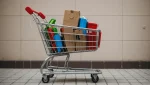

The day you put “same-day delivery” on your website, you stop running one business and start running two. There is the business that makes the thing: the kitchen, the cooler, the workbench. And there is the business that gets it to a door before dinner.
Most owners add the second one without changing anything about how they run the first. Orders still arrive all day, production still starts when someone gets to it, and the driving gets sorted out around 2 p.m. by whoever is free. That works until volume doubles, and then it breaks in public.
Small business management for same-day delivery is mostly about five decisions: when you stop accepting orders, who drives, how an order moves from screen to vehicle, what a drop actually costs you, and which numbers you look at every week. Get those settled and the promise becomes routine. Leave them informal and every busy Friday is a crisis. The back-office side of this (bookkeeping, IT, the website that takes the orders) is a separate set of calls, and it pays to know which of those business support services are worth outsourcing first before you try to absorb all of it yourself.
The Bottom Line
- A cut-off time is the single most useful thing you can add. Without one, you are promising same-day delivery on an order that arrived at 4:50 p.m., and the only way to keep that promise is to break something else.
- Demand is real, not aspirational. Roughly 80% of consumers now expect same-day delivery to at least be an option, and 76% pick it when it’s free (ClickPost, 2025).
- The last mile is where the money goes. Last-mile delivery now accounts for about 53% of total shipping costs, up from 41% in 2018 (Net Zero Insights, 2024).
- Failures are expensive in two currencies. A failed delivery costs around $17 per attempt, and about 70% of shoppers say they won’t order again after one (SmartRoutes, 2025).
- Track cost per drop and first-attempt success rate. Almost every same-day problem shows up in one of those two numbers before it shows up in a complaint.
Lower your delivery costs by 23%
How we reduce costs:
- No delivery vehicle expenses
- Optimized local routes
- Pay-per-delivery model
- Average 23% delivery cost reduction
What same-day delivery changes about running a small business
Standard shipping is forgiving. You batch orders, print labels in the afternoon, hand them to a carrier, and the carrier owns the clock. If something goes wrong on Tuesday, it arrives Thursday instead of Wednesday and most customers never notice.
Same-day removes the buffer. Every order has a deadline measured in hours, which means production scheduling, order intake and driving are now one connected system rather than three separate chores. Three things change immediately:
- Your production schedule becomes a dispatch schedule. It no longer matters only that an order is finished today — it matters that it’s finished before the vehicle it’s supposed to be on leaves.
- Capacity becomes a hard limit you have to publish. A kitchen that can produce 60 orders can only deliver as many as its routes hold. Whichever number is smaller is your real capacity, and customers need to see it as a cut-off or a sold-out notice.
- Coordination becomes a job. Someone has to watch the order queue, confirm addresses, sequence stops and field the “where is it” calls. At low volume that’s the owner. Past that, it’s a role — an operations or admin hire, and plenty of good candidates come up through experience rather than a diploma, which is worth knowing if you’re hiring or if you’re the one trying to become a business administrator without a degree.
The owners who struggle with same-day aren’t the ones with bad drivers. They’re the ones who never wrote down which of these three things they’d changed.
Set an order cut-off time before you promise same-day delivery
A cut-off time is the moment you stop accepting orders for today. It is not a customer-service concession. It’s the thing that makes the promise keepable.
Work backwards from when your last vehicle has to leave:
- Find your latest acceptable arrival time. For food that’s often before an evening service; for flowers, before the recipient leaves work; for wholesale, before the receiving bay closes.
- Subtract route time. Count actual driving plus two to four minutes per stop for parking and handoff. A ten-stop route is rarely under 90 minutes in a city.
- Subtract pick and pack. Time how long it really takes to assemble, check and label an order. Use the slow version, not your best day.
- Subtract production, if the item is made to order.
- Publish what’s left, rounded down. If the math says 1:20 p.m., say 1 p.m.
Then hold it. A cut-off you quietly break for good customers turns into a rumour, and within a month everyone is calling at 4 p.m. asking for the exception they heard about. If you want to serve late orders, sell them as a separate thing: next-morning, a premium rush fee, or a second afternoon run on specific days.
One more detail worth getting right: show the cut-off at checkout, not in a policy page. The reason failed deliveries are so costly is that the customer has already formed an expectation. Setting it accurately at the point of sale is the cheapest expectation management you will ever do.
Small business delivery options: in-house drivers, couriers, or both
There are three realistic ways to move same-day orders, and the honest answer for most small businesses is a mix rather than a pure model.
| In-house drivers | On-demand courier platform | Dedicated delivery partner | |
|---|---|---|---|
| Best at | Fragile, custom or high-touch orders | Unpredictable one-off orders | Repeatable daily routes with several stops |
| Cost shape | Fixed: wages, vehicle, insurance, fuel | Per order, surges at peak | Per route or per stop, predictable |
| Control over handoff | Full | Low | Medium to high |
| Scales up by | Hiring and buying vehicles | Instantly | Adding routes |
| Breaks down when | Volume is uneven — you pay idle time | Volume is steady — per-order fees stack up | Orders are one-off and scattered |
| Hidden work | Scheduling, maintenance, compliance | Chasing status, re-sends | Route planning handoff |
The pattern that works for most operations: a standing route for the predictable core of the day, and an on-demand option for the overflow and the awkward one-offs. Running everything in-house means paying for capacity you don’t use on a Tuesday. Running everything on-demand means paying surge pricing on exactly the days you’re busiest.
Two cost realities should shape the choice. Labour alone is roughly half of last-mile expense, with fuel adding another 10–25% (SmartRoutes, 2025), so an in-house driver is only cheap if that driver is busy. And US delivery costs rose about 12% between 2024 and 2025 (SmartRoutes, 2025), which means a model you costed two years ago needs re-checking.
How to work out your real delivery cost per order
Most owners underprice delivery because they only count the obvious line. The number you want is cost per drop, and it has four parts:
- Driving cost. Wages for the time the driver is working, or the courier fee. Include the return trip and the time spent loading.
- Vehicle cost. Fuel, insurance, maintenance and depreciation, divided by the drops that vehicle makes. A van doing 8 stops a day carries a very different per-drop cost than the same van doing 20.
- Packing cost. Materials plus the labour minutes to assemble and check the order. Same-day packing is usually slower per order than batch packing, because you’re doing it in ones and twos.
- Failure cost. Redelivery, refunds and the time spent on the phone. Budget it as an average across all drops rather than pretending it’s zero.
For context on where you should land: urban deliveries commonly run around $10 per package, rising toward $50 in rural areas, and temperature-sensitive categories like grocery typically cost $10–20 per package (SmartRoutes, 2025). If your calculated cost per drop is $3, you have forgotten something.
Once you have the number, two decisions get much easier. The first is your minimum order value for free delivery, which should comfortably clear cost per drop plus your margin rather than matching a competitor’s number. The second is your delivery zone. A stop twelve minutes past your normal radius can cost more than the order is worth, and drawing that boundary on a map is less painful than discovering it one Friday at a time.
Build a pick, pack and dispatch flow that survives a busy day
A same-day operation needs orders to move through the same sequence every time, so that a busy day is just more of the same rather than a different process.
A flow that holds up looks like this:
- Order lands in one place. Website, phone and walk-in orders all end up on one list. Two lists is how an order gets missed.
- Address and access get checked at intake. Apartment number, buzzer code, loading dock, “leave with the neighbour.” Catching this at intake costs thirty seconds; catching it at the door costs a redelivery.
- Orders are grouped by route, not by order time. Pick everything for the north run together. This is the single biggest time saving in the whole flow.
- Each order is checked once, by someone who didn’t pack it — or against a printed list if you’re a one-person shop. Fresh eyes catch substitutions and missing items.
- The route is sequenced before loading, and the vehicle is loaded in reverse stop order so the first drop is nearest the door.
- Proof of delivery is captured at every stop. A photo and a timestamp end most disputes before they start, and they’re the only reliable way to know your real first-attempt success rate.
The handoff point between “packed” and “on the vehicle” deserves a physical marker: a shelf, a bin, a taped-off area. Orders that live in an ambiguous space are the ones that get left behind, and no software fixes a packing bench where everything is in a pile.
Staff a same-day operation without hiring four people
Same-day work creates demand for four different kinds of attention: producing, packing, driving and coordinating. Small teams cover all four with two or three people, and the way to do that is to split by time of day rather than by job title.
A typical shape:
- Morning is production and intake. Whoever is coordinating also confirms addresses and flags anything unusual while there’s still time to call the customer.
- Midday is packing and sequencing. This is the hour that decides whether the afternoon is calm. Protect it.
- Afternoon is driving. If your owner is the driver, accept that the business is uncontactable for those hours and set expectations accordingly, or move the phone to someone else.
Cross-train deliberately. One person who can both pack and drive gives you more resilience than one more vehicle. And write the routine down, not as a policy manual but as a one-page sequence pinned near the bench. A new hire who can read the flow is useful on day two instead of week three. If your team doesn’t all share a first language, it’s worth having that one-pager and any safety notices handled by a professional translation service rather than a free tool, because an ambiguous instruction about handling or temperature is exactly the kind of thing that costs you an order.
Where a role needs a specific competency (food handling, a vehicle class, an insurance endorsement, a compliance certificate), track who holds what rather than keeping it in your head. A compliance skills matrix template does this on one page: people down the side, required certifications across the top, expiry dates in the cells. It takes ten minutes to fill in and it tells you immediately whether you can cover Saturday if your only certified driver calls in sick.
Which delivery numbers to review every week
You don’t need a dashboard. You need five numbers, looked at on the same day each week:
- First-attempt delivery rate. The share of orders delivered on the first try. Well-run operations sit around 90–95% (Shipsy, 2025). Anything lower is usually an address-data problem, not a driver problem.
- On-time rate against your own promise. Measured against the window you published, not against what you privately hoped.
- Cost per drop. Calculated as above. Watch the trend more than the absolute number.
- Stops per hour. The cleanest measure of whether your routes and sequencing are improving.
- Orders refused or rescheduled at the cut-off. If this is growing, your cut-off is too early or your capacity is too small — and those have different fixes.
Review them together. Stops per hour rising while first-attempt rate falls means you’re going faster and getting it wrong more often, which is worse than slow. Cost per drop falling while refused orders climb means you’ve quietly shrunk the business to make the numbers look good.
The reason to keep this list short is that it’s the list you’ll actually keep. A weekly five-minute look at five numbers beats a monthly report nobody opens, and it catches the drift that turns a good delivery promise into an unreliable one.
Frequently asked questions
What time should a small business set its same-day delivery cut-off?
Work backwards from when your last vehicle must leave, subtracting route time, packing time and production time, then round down and publish the result. For most local operations that lands somewhere between 11 a.m. and 2 p.m. Publishing the cut-off at checkout matters more than the exact hour.
Is it cheaper to use your own drivers or a courier for same-day delivery?
Own drivers are cheaper when volume is steady enough to keep them busy, because labour is roughly half of last-mile cost and idle time is pure loss. Couriers are cheaper when volume is uneven or scattered, since you pay per order rather than per day. Most small businesses end up with a standing route for the predictable core and on-demand coverage for overflow.
How much should a small business charge for same-day delivery?
Price above your cost per drop, counting driving, vehicle, packing and an allowance for failures, rather than matching a competitor. With urban drops commonly costing around $10 per package, a $5 delivery fee on a small order is a subsidy, not a service.
Does offering same-day delivery actually increase sales?
The demand signal is strong: around 70% of consumers say they’re more likely to shop online when same-day delivery is offered, and 46% will pay extra for it (ClickPost, 2025). The caveat is that an unreliable same-day promise does more damage than no promise at all, since about 70% of shoppers won’t return after a delivery failure.
What’s the most common reason same-day deliveries fail?
Bad or incomplete address and access information, captured too late to fix. Buzzer codes, apartment numbers and dock access collected at intake cost seconds; discovered at the door, they cost a redelivery at roughly $17 a time.
Start with the two decisions that fix the most
If you only change two things this month, change these: publish a cut-off time you will actually hold, and calculate your real cost per drop. The first makes the promise keepable. The second tells you whether the promise is profitable.
Everything else here (route grouping, proof of delivery, cross-training, the weekly five numbers) is easier once those two exist, because you finally have a boundary and a benchmark. Same-day delivery stops being the thing that disrupts your week and becomes another part of the operation that runs the same way every day.